At the heart of many major protest movements lie students. At the height of the Civil Rights Movement in 1960, four Black college students boldly protested segregation by sitting at an all-white lunch counter in Greensboro, N.C. Just 10 years later, Kent State University (Ohio) watched in horror as the National Guard shot and killed four students who were protesting U.S. involvement in the Vietnam War. In 1985, a blockade of students at Columbia University (N.Y.) overtook an academic building for three weeks, demonstrating against the apartheid system in South Africa. Students return to the power of protest time and time again, looking to their First Amendment right to challenge global tensions and change the course of history.
Today, colleges and universities attempt to preserve these legacies of student activism in their institutional histories, aiming to show modern-day students what they can achieve when they raise their voices — Emory University is no different. The Stuart A. Rose Manuscript, Archives, and Rare Book Library maintains meticulous records concerning racial justice protests on campus, including the Four Days in May demonstrations. In 2o21, Emory News Center even featured the 1969 movement as a significant moment in institutional history, citing protesting as an opportunity “to develop leadership skills and advocate on and off campus for issues important to them.”
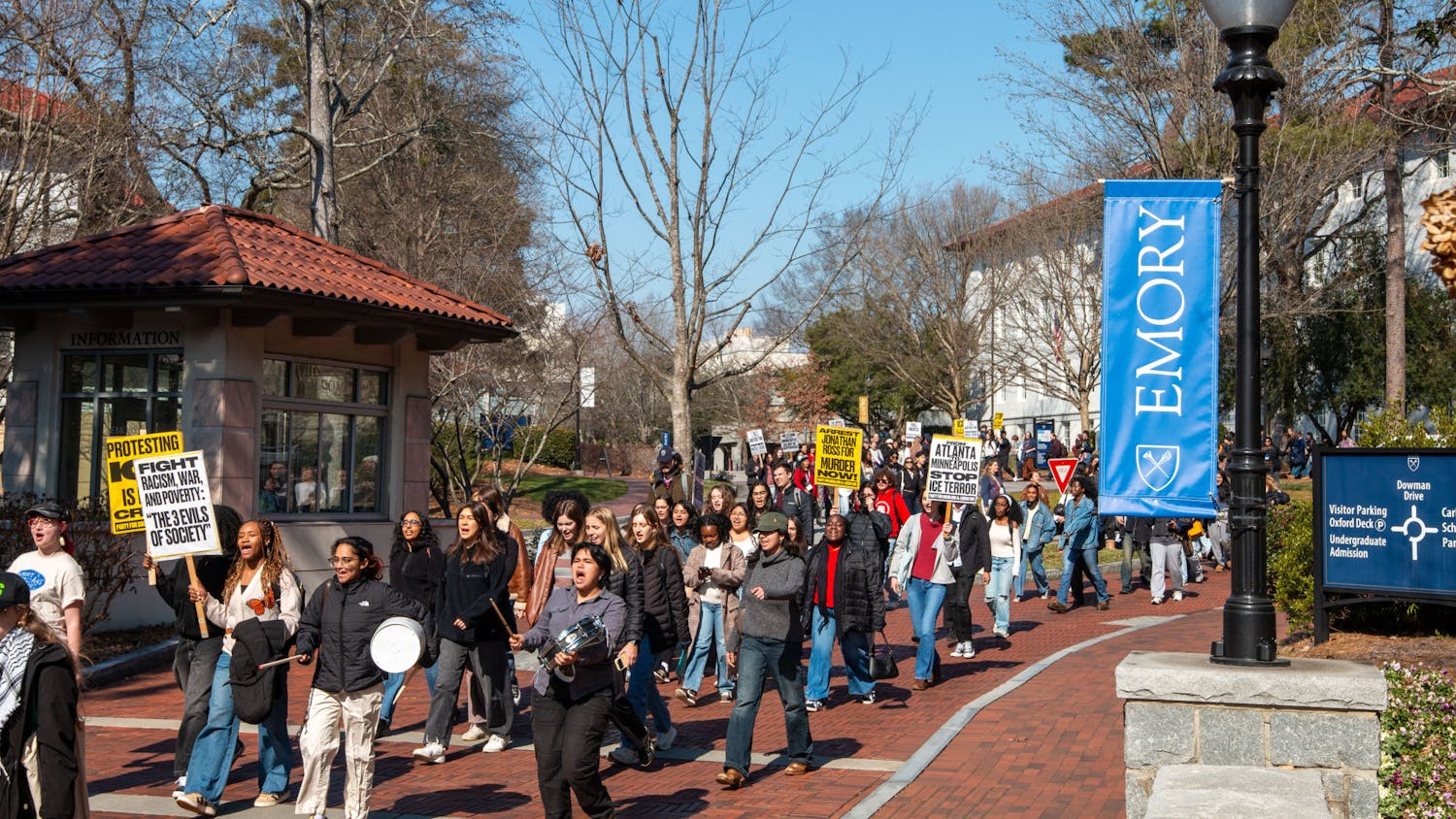
The University’s touting of past protest movements juxtaposes much of what some current Emory students feel about protesting at Emory. April 25, 2024, rests in infamy for many Emory community members: That morning, students gathered on the University Quadrangle to condemn Israeli actions in the Gaza Strip and demand that the University divest from Israel. Emory administration called the Atlanta Police Department (APD) — who then called the Georgia State Patrol — onto our campus, permitting officers to brutalize protesters by throwing them to the ground and releasing PepperBalls on the site.
Now, over a year and a half since April 2024, Emory administration has continued to crack down on protesting and campus expression, ignoring even its own policies and pledges to protect free speech for community members.
Emory’s Open Expression Policy acknowledges that, as a private institution, the University is “not bound by the First Amendment,” but states that Emory “respects the protections and principles of free speech and assembly as set forth in the First Amendment.” This policy should imply that Emory students and faculty have ample opportunity to express their beliefs and challenge the beliefs of others, yet the policy’s granting of the right to free speech exists only on paper.
Following the April 2024 demonstrations, community members began urging administration to revise the former Respect for Open Expression Policy, feeling as though the previous policy did not adequately protect student rights. After months of collaboration between administration and the University Senate, a shared governance body composed of students, faculty, staff and administrators, the University announced a new policy on March 20.
This new policy was a bright spot for open expression advocates at Emory, but since then, the administration has continually failed to support its own revised policy. The University has repeatedly cast away students and professors whose actions challenge its image. The University’s complete disregard of the Open Expression Policy is a threat to the Emory community, and the administration must do more to protect its students.
What Emory’s Misleading ‘Green Light’ Free Speech Label Ignores
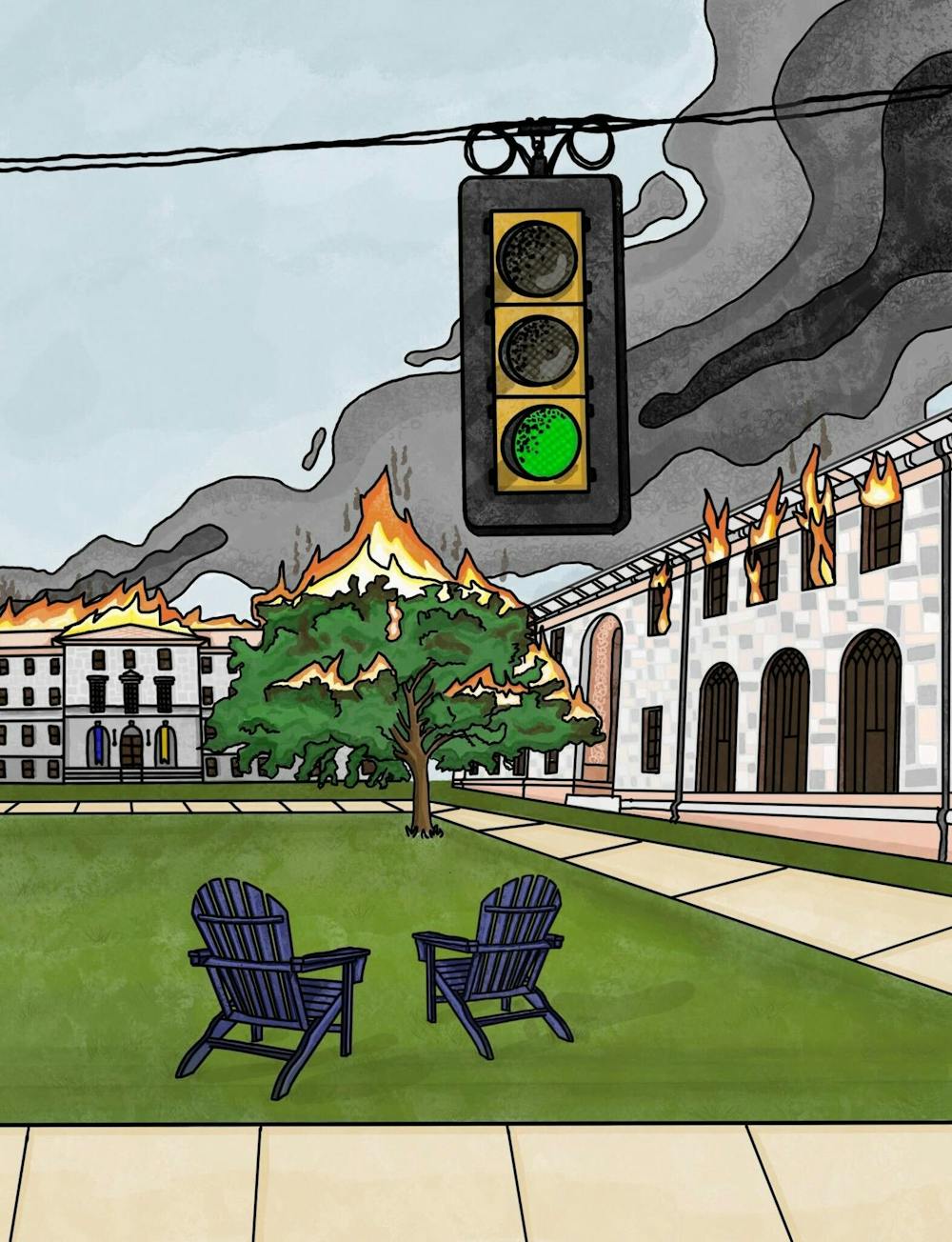
In late September, the Foundation for Individual Rights and Expression (FIRE) granted Emory’s free expression policies a “green light” rating for the extent to which they threaten free speech. Out of 257 ranked U.S. universities, Emory stood at 67th place, climbing 87 spots from the previous year — an admittedly positive improvement. While this fact alone may encourage administrators to pat themselves on the back and pronounce the University as a protector of free speech, I urge students to think more deeply about what this rating means. With their green light rating, FIRE is looking solely at the policy Emory has written on paper — not the way they continue to dismiss their own rules.
Another part of this rating should further alarm our community: FIRE stamped Emory with a D- grade for its speech climate, which refers to how safe students feel expressing their views on controversial topics. For Emory community members, a flashing red light should go off in their minds upon seeing this rating.
According to a FIRE survey, 41% of Emory community members report they are self-censoring at least once a month. Students and professors do not feel safe expressing their opinions, even though there is a policy supposedly protecting us, and that should frighten all of us.
Professor of Law and University Senate Committee for Open Expression Chair Sasha Volokh said in an interview with The Emory Wheel that he believes this self-censorship could be inhibiting the transformative dialogue meant to make Emory a place of growth. One of Emory’s missions is to create and apply knowledge, but the University cannot do this when its speech climate stifles necessary dialogue. The University should be appalled: By shutting down its community’s ability to learn, administration is in direct contrast to what it preaches. It is no wonder community members feel the need to self-censor when our institution so blatantly shows its distaste for open expression.
Rather than allow a space for the community to create new ideas, University pushback against beliefs that veer away from the political center — such as its crackdown on a Stop Cop City protest in 2023 and pro-Palestine protests in 2024 — will push us all back to the center and stunt the growth of our learning. Administrators should do everything in their power to prevent Emory from becoming an echo chamber, this intellectual brainrot inflicts harm on both students and faculty alike. By enabling an environment that promotes and rechurns existing perspectives and shuns students’ unique thoughts, the University takes away the community’s ability to cultivate the type of critical thinking Emory claims to promote.
Emory Denies Umaymah Mohammad Her Right to Free Speech
The Open Expression Policy upholds First Amendment principles for community members on campus, but there is another barrier that chills many students from exercising those rights — a lack of protection from University retaliation. If students are chilled away from using their free speech rights, this is a clear issue: Open expression has essentially become meaningless, with this policy as a mere facade.
The University has repeatedly violated its own Open Expression Policy by suspending and even terminating students and professors who publicly voice their opinions. In November 2024, the School of Medicine suspended MD-PhD student Umaymah Mohammad for publicly calling out a professor for his volunteer work for the Israeli Defense Forces. According to a lawsuit the Georgia chapter of the Council on American-Islamic Relations filed on behalf of Mohammad, Emory claimed Mohammad’s actions were a breach of “professionalism standards.” Although the University granted her a hearing, Mohammad said to The Guardian that the hearing was “dehumanizing” and claimed that the medical school refused to engage the University Senate’s Committee for Open Expression. Alarm bells should go off: This is not how Emory pledges to protect open expression on campus.
Despite pressure from the Committee for Open Expression, the School of Medicine refused to consider the Committee for Open Expression’s report on the incident in Mohammad’s hearing. If this isn’t a blatant rejection of the University’s supposed protection of open expression, then it is unclear what would qualify.
The committee’s report shows that this incident was littered with misdoings. According to the report, Executive Associate Dean of Medical Education and Student Affairs William Eley (80C, 83M) asserted that the medical school does not “include a role” in student disciplinary matters for open expression and refused to engage with the University Senate. Despite the committee recommending the University drop conduct code proceedings against Mohammad in September 2024, the University ignored the University Senate and her case continues to be strung out in court.
I am troubled by the report’s blatant neglect of the policy — and everyone else who values their voice and freedom to speak on campus should be as well. The University cannot claim to allow “broad latitude to speak” while it disciplines Mohammad without full consideration of open expression. If the School of Medicine, and thus, the University, can cherry-pick when it implements this policy and when it does not, then there truly is no free expression. This puts the entire Emory community in danger.
Open expression cannot just be a limp written document. The Emory community must pressure the University to use the policy consistently, or else these rights will remain hidden in the dark — no green lights in sight.
Emory Withholds Open Expression from Anna Kenney
The Mohammad incident does not exist in isolation. Emory administration has openly ignored the new Open Expression Policy — its own policy — just a few months into its revision. Most recently, the Emory School of Medicine terminated School of Medicine Associate Professor Anna Kenney after she made several comments on Facebook about the murder of right-wing podcaster Charlie Kirk. In these posts, she called his ideology “disgusting” and responded to his death with “good riddance.” Even though Kenney’s statements were repulsive, the University needs to follow the Open Expression Policy to ensure that free speech is protected – even when the University may disapprove of it.
In a recent interview with the Wheel, Interim University President Leah Ward Sears (80L) said the University consults the Open Expression Policy in personnel decisions, but, damningly, the Committee for Open Expression issued an opinion on October 22, finding that the University failed to consider the policy in Kenney’s termination. The president’s statements have left the Emory community no choice but to wonder if we can trust her, clearly seeing that evidence shatters her claim.
Other Emory governing bodies are essentially powerless in stopping the University from committing these policy violations. Neither the Faculty Council, composed of Emory professors, nor the University Senate, which includes faculty, staff, administrators and students, can do anything beyond publicly pressuring University leadership. This is emblematic of the problem that all higher education shared governance systems face, but it is deeply concerning that community members are meant to simply ignore the lack of care that University leadership has for the protections only they can act to preserve.
Emory has discovered that it can rip away the community’s protections when doing so is beneficial to it, leaving the Open Expression Policy undefended and unenforced. Emory first tested the waters when it called in APD, leading to an overblown response to the 2024 pro-Palestine protests. Emory administration has shown through its actions that the revisions of the Open Expression Policy, meant to partially address issues brought up by April 2024, were implemented for show, not to truly uplift open expression. Opposition to the University’s preferred narrative is not protected — no matter how much the University has preached its protections of free speech. From Mohammad’s suspension to Kenney’s termination, University-sanctioned silence screams for the community to see that Emory leadership’s word will always trump ours.
It is hard to foresee what the future holds for open expression and free speech at Emory. As FIRE’s rating epitomizes, Emory’s policies might have a green light — but its implementation and follow-through have a failing grade as the University continues to trample expression. Until administration commits to fostering spaces where open dialogue is not just possible, but encouraged, and does not reprimand community members for voicing opinions that oppose its interests, our campus will remain hostile to the pursuit of knowledge.
The University must rip its hand from the mouths of its community members and allow everyone to engage with pressing issues without fear of censorship. Time and time again, critics of the University have recited Emory’s own mission statement back to the institution: If Emory truly stands for the pursuit of knowledge, then its actions of silencing figures like Kenney and Mohammed are bullets it is shooting into its own foot. Emory’s future lies in its community, and with each wound it allows to be inflicted upon us, Emory bleeds too.
Josselyn St. Clair (26Ox, she/her) is a native of Eugene, Oregon, and is double majoring in International Relations and German on the pre-law track. Outside of the Wheel, she is an avid fiction writer and language learner. She hopes that she will be fluent in three or more languages by the time that she graduates from Emory.