
Content Warning: This article contains references to murder.
Seven months after Emory University adopted an updated Open Expression Policy, the University Senate Committee for Open Expression found that the administration violated the updated policy.
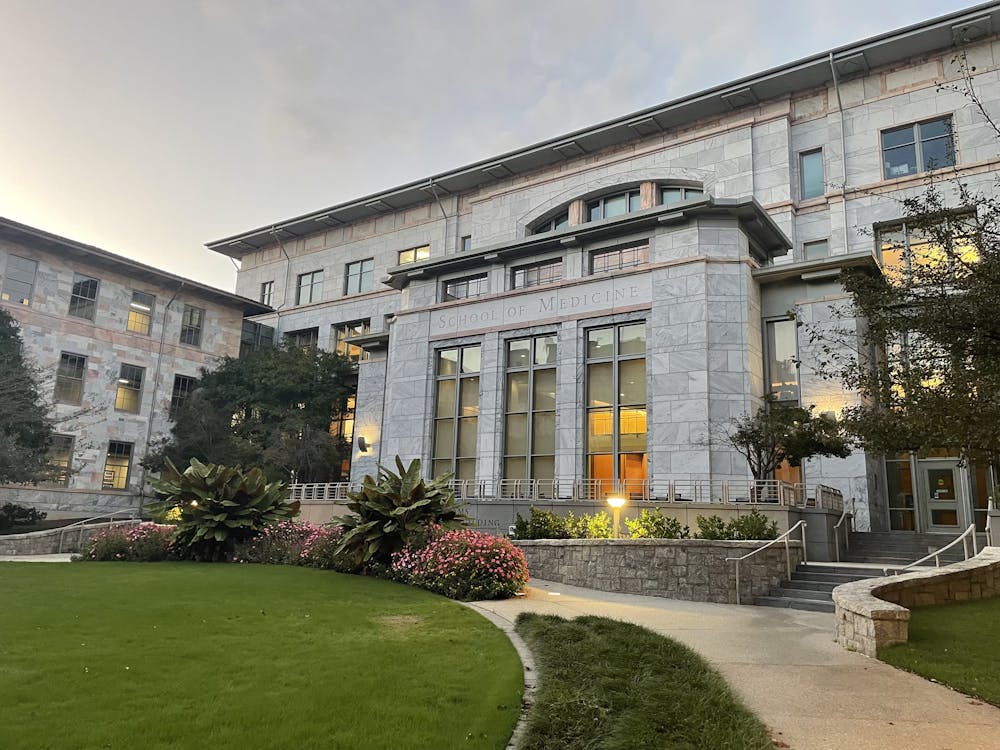
In September, the Emory School of Medicine fired a professor for social media posts, but the University declined to comment on who was fired as they do not comment on personnel issues.
In an article in The Atlanta Journal-Constitution, former School of Medicine Associate Professor Anna Kenney confirmed that she was the professor terminated after she posted “good riddance” in reference to the assassination of right-wing political figure Charlie Kirk. Additionally, Kenney called Kirk’s ideology “disgusting.”
After an investigation, the Committee for Open Expression issued an opinion finding that the medical school did not sufficiently consider the Open Expression Policy in terminating Kenney. The committee’s opinion included excerpts of Kenney’s termination letter sent by her department chair.
According to the termination letter, the medical school fired Kenney because her posts violated “Emory’s conduct expectations and applicable policies,” including the Standards of Conduct Policy and Social Media Guidelines.
The letter mentioned that Kenney’s comments could have incited others to violence and caused distrust from parents and patients alike. Additionally, the letter said Kenney’s social media posts did not align with Emory’s values, caused community “distress” and risked reputational harm to the University.
“Your social media statements concerning the murder of another human being were inflammatory, inappropriate, and wholly inconsistent with Emory’s values and mission,” the termination letter reads.
In response to the termination, the Committee for Open Expression reviewed the background of Kenney’s social media posts, her termination letter, Emory’s Open Expression Policy and drew on existing First Amendment legal precedents to evaluate her firing.
Emory’s Open Expression Policy states that the University should give “substantial consideration” to First Amendment protections before administering any disciplinary action against an Emory community member. The committee found that the medical school had not fully considered open expression protections in their decision to terminate Kenney.
“There is no evidence that this was done in this case,” the opinion reads. “The professor’s termination letter does not mention any consideration of Open Expression rights, and nobody mentioned Open Expression rights to the professor at any point in their disciplinary process.”
As a private university, Emory is not obligated to abide by First Amendment protections.
However, Committee for Open Expression Chair and Professor of Law Sasha Volokh emphasized that because the policy is based on First Amendment principles, the University’s actions should align with how public universities handle free speech issues.
“[Federal courts] have been ruling on cases like this for decades, so we know what the law would be if it were a professor at Georgia State or UGA, where the First Amendment applies,” Volokh said. “It’s a balance between the professor’s free speech interests and the interests of Emory.”
According to the committee’s investigation, in two separate interviews, Kenney told the University that her Facebook account was hacked and denied posting “good riddance.” However, according to her termination letter, technology experts established that nothing tampered with her account.
The committee found that the only “potentially valid reason” for Kenney’s firing was this claim of being “hacked,” but they believe that the statement was “unlikely to have been a deliberate lie.”
Regarding Kenney’s potential violations of Emory's Social Media Guidelines, the committee wrote that, in their view, the rules are “not binding.”
“Violation of Emory’s Social Media Guidelines cannot be the basis for termination, because these guidelines do not present themselves as being mandatory; and if they did, a termination cannot be based on the failure to provide a disclaimer in a context like this one, where a disclaimer would serve no useful purpose,” the opinion reads.
All members of the Committee for Open Expression who voted did so in favor of the opinion. One of the members who supported the opinion was Emory Student Government Association Speaker of the Legislature Sohan Bellam (26C).
“The University had a chance to say what they did and did not want in the policy in a months-long process,” Bellam said. “For them to just violate it, it questions what the point of this policy is, if it has no ability to protect the Emory community.”
The committee’s opinion on the termination reflects a similar sentiment to Bellam’s.
“This incident represents not only a failure of the University to respect Open Expression, but also a failure to respect the procedural requirement to consider Open Expression,” the opinion reads.
Representatives from the Committee for Open Expression attended the Oct. 21 meeting of the Faculty Council, a University governance body composed of faculty representatives from each school, to share their findings about Kenney’s termination.
During the meeting, Faculty Council and University Senate President Noëlle McAfee introduced a motion to urge Sears to “reconsider” Kenney’s termination in light of the committee’s opinion and asked Sears and other administrators to follow the Open Expression Policy. The Faculty Council voted to pass the motion 17-0.
Volokh said that since the University Senate is an advisory body, they have no authority outside of presenting their opinion about Kenney’s firing to Emory’s administration. Likewise, the Faculty Council lacks any formal power to compel the University to act.
“What Emory should not be able to get away with is to try and take the credit for having a pro-free speech policy,” Volokh said. “It would be better to not have a free speech policy at all, so that everyone understands where we stand, rather than to have a free speech policy on paper, which the administration routinely ignores.”
If you or someone you know have been affected by homicide or murder, you can reach Emory’s Counseling and Psychological Services at (404) 727-7450. You can reach the Emory Police Department at (404) 727-6111 or the Atlanta Police Department at (404) 614-6544.

Ellie Fivas (she/her) (26C) is from Cleveland, Tenn., and is majoring in political science and history on the pre-law track. When she is not working for the Wheel, she works in prison education, leads a human rights club and works at the Emory Writing Center. In her free time, you can find her reading trashy romances and The New York Times, basking on the Quadrangle and doing crossword puzzles.


