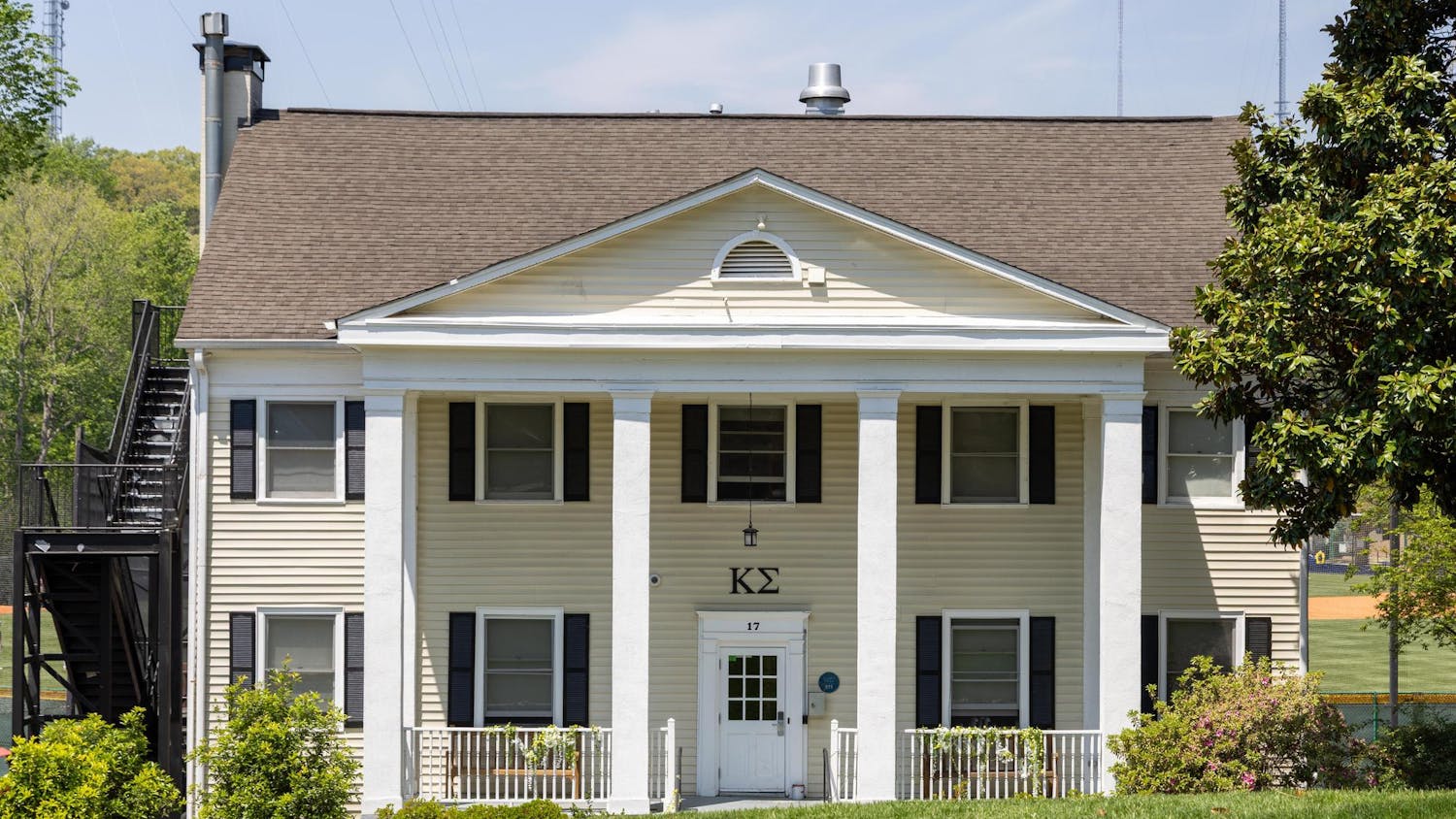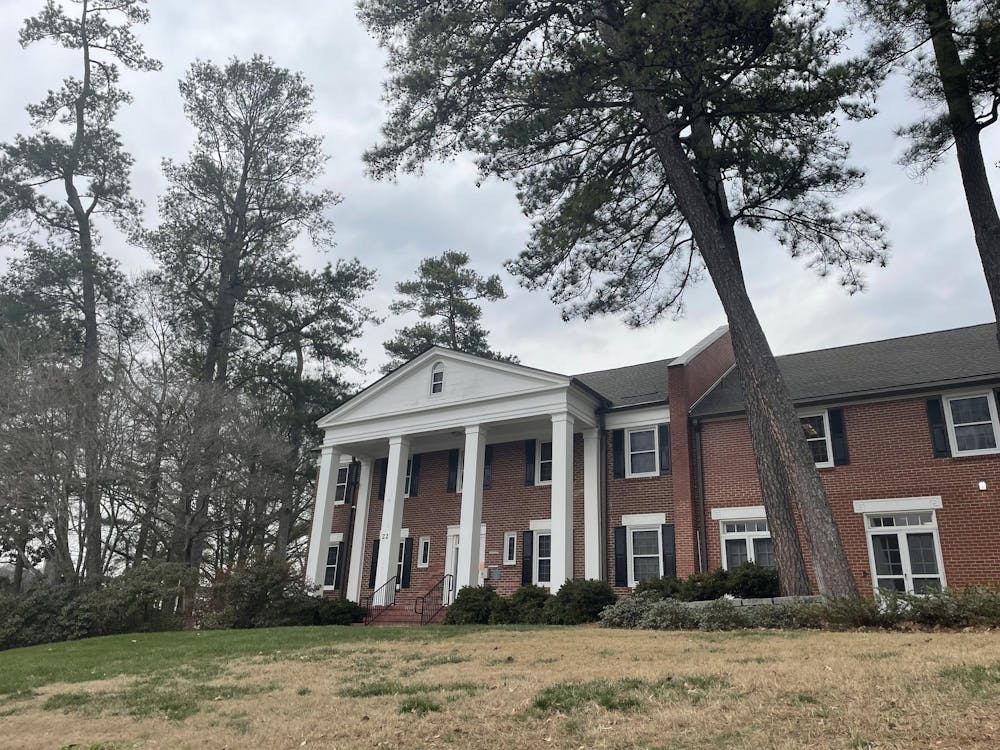
An institution may choose to rename a building for many reasons, including to avoid controversy, memorialize a prominent figure or simply rebrand. However, in the case of Emory University’s “Uhuru House,” which the University renamed in Summer 2025, the administration gave no clear explanation for the change.
Previously known as the Black Student Alliance House, Uhuru is one of Emory’s several themed housing options focusing on creating a space for “authenticity, reflection, and connection.” While the house has always been open to all students, it has historically been a space for Black students to host events, gather and find community on campus. While some may find the decision to rename the house to Uhuru seemingly inconsequential, in reality, this choice has contributed to a growing dearth of trust between students and the University.
Uhuru means freedom in Swahili — a touch that I am sure the Emory administration thought the student body would appreciate, but in reality, fails to wholly represent Emory’s diverse African diaspora. Rather than being explicitly called a “Black” space, “Uhuru” is African in origin and specifically, the term has linguistic roots in Southeast Africa. Names have power: While the material conditions of the Uhuru House may remain the same, and the name change does not bar Black students from using the home as a gathering space, Uhuru does not capture the rich Black community at Emory, isolating some students who previously felt at home there.
In the wake of Emory renaming the building, some community members feel personally threatened, slighted or caught off guard by the decision. Right now, marginalized groups are looking toward Emory to honor our concerns and desires, but instead, the University has opted to diffuse the identity of one of the few safe spaces for Black students on campus. What appears to be a minor cosmetic alteration to a nondescript building actually marks a shift in our University’s attitude toward student wellbeing, belonging and equity — instead of community-based decision-making that incorporates the hopes and ideas of students on campus, Emory has resorted to imposing policies made by a handful of higher-ups onto its community.
Although Emory did not publicize its rationale for renaming Uhuru, the decision appears to be one of the school’s attempts to brace itself against anticipated scrutiny from a federal government looking to eliminate Diversity, Equity and Inclusion (DEI) programs in higher education. I assume our administration concluded that the U.S. government might perceive housing with “Black Student” in the title to be racially exclusionary and therefore discriminatory. In fact, you can find “Black” on a list of words that President Donald Trump’s administration is using to purge federal funding from “woke” initiatives and organizations, including universities. Along with that unofficial list, Trump’s hostility toward universities with affirmative action policies or programs that propagate “woke” ideologies is well-recorded. Thus, the University’s fears of retaliation from the federal government for seemingly “woke” initiatives are not unfounded.
I do not claim to be privy to the University conversations that determine how to address complex political or social issues, nor do I believe that our administration acts with ill intent when making decisions. University President Leah Ward Sears (80L) said herself that Emory is not just changing the names of buildings and programs to be in compliance with federal demands — however, I struggle to believe that with the Uhuru House’s new name.
Trust between students, faculty and the University is rapidly deteriorating in the wake of a litany of the administration’s controversial actions because there has been little to no communication with the Emory community. Altering the Black Student Alliance House’s name is not the only way in which Emory has recently alienated its students and staff. Emory ended its DEI programs in September 2025. Additionally, several departments across Emory faced a hiring freeze in 2025, which former University President Gregory Fenves justified by claiming that Emory was attempting to “create financial capacity” in the face of potential future federal funding cuts.
It is frustrating that the bulk of these contentious decisions lacked meaningful dialogue between the administration and the students, faculty and staff who live, learn and work at Emory. When Emory acts in fear of retribution from Trump rather than from a place of care for its community, it sows disillusionment between students and those in charge.
Therefore, when the University unilaterally changed the name of a building that served as a safe space for Black students last semester, it felt shady in light of other recent decisions. A GroupMe chat filled with students from our community expressed displeasure — not necessarily because the change was explicitly offensive, but because Black students naively had expected a reaffirmation of the University’s prioritization of DEI after the Board of Trustees appointed a Black woman as our new interim president. Whether subtle or not, actions such as changing a historically and culturally significant building name reads as hostile, especially amid this tense political climate.
Students feel safe on campus when the actions of those responsible for their well-being reflect their concerns and hopes. Emory’s recent actions feel as though the adults in the room are dictating the appropriate direction for our University’s future while relegating our community’s voices to the kids’ table. It is infantilizing when the Emory administration performatively listens to student opinion, only to factor none of our feedback into its decision calculus. The result is a divided community in which students are constantly disappointed by or pushing back against institutional decision-making.
I cannot fault Emory, or any university, for making decisions that prioritize its survival. Any institution's primary goal is to exist for as long as possible and serve as many people as possible. Given this imperative, I try not to be too disappointed when entities with incentives that are adversarial to my beliefs fail to uphold my standards. What rubs me the wrong way, however, is when the University that flaunts commitments to serve my community reneges on those very statements the moment things get tough.
When Emory shutters DEI programs and declares free tuition for lower-income families and the end of need-blind admissions in the same breath, it feels as though efforts to make certain members of our community feel welcome are no longer a priority. As a Black student aware of Emory’s history involving slavery and racial discrimination, I find this show of apathy toward inclusivity to be disappointing.
If Emory’s mission to cultivate a community in which all members feel secure, heard and respected rings true, the administration must make decisions in collaboration with those affected. If the University has any interest in maintaining the faith of its community, it would be wise for administrators to descend from their ivory tower and solicit student and staff opinions before rolling back the umpteenth initiative and compromising the small things that make Emory feel like home.
Contact Hope Habia at hope.habia@emory.edu