
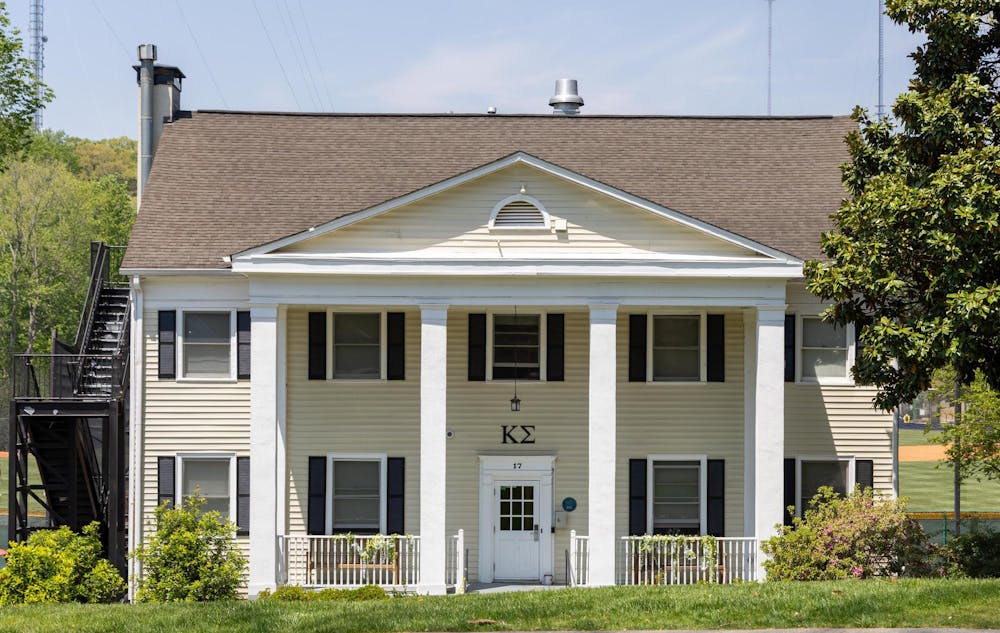
With fraternity recruitment ending this past weekend at Emory University, a new wave of students will join the Greek Life scene on campus. Emory released its Campus Hazing Transparency Report at the end of last semester, which publicly disclosed all their administrative adjudications of hazing or hazing-related convictions between March 2021 and December 2025, as well as crime statistics for hazing.
The University released the report in compliance with recent Georgia legislation. In July 2021, the state legislature passed the Max Gruver Act, requiring public and private institutions of higher education in Georgia to disclose hazing incidents and student conduct dispositions online for a minimum of five years within 15 days of their adjudication. Emory published its report before the state-mandated 2026 deadline, including all hazing incidents between March 2021 and December 2025.
Additionally, on Dec. 23, 2024, former U.S. President Joe Biden signed the Stop Campus Hazing Act into law, which requires any federally funded university to report hazing incidents in annual security reports and publish campus transparency reports.
According to Associate Director of University Communications Rachel Smith, the report includes only “formal disciplinary findings” of hazing incidents within the required time period.
Emory reported that four Greek life organizations violated the anti-hazing policy with incidents, including Kappa Sigma, Kappa Alpha Order, Delta Sigma Theta and Beta Theta Pi. In the report, the University disclosed the details of each incident, the results of the investigations and the sanctions Emory placed on the organization. Additionally, the report discusses Emory’s anti-hazing policy and describes preventative initiatives, including the Bystander Intervention Workshop and Student Hazing Prevention Training.
Kappa Sigma faces deferred suspension until May 2028
Most recently, the report stated that Emory held a student conduct disposition against the University’s Kappa Sigma fraternity chapter in Spring 2025. After its investigation, the University found that Kappa Sigma violated the University Anti-Hazing Policy, the University Alcohol and Drug Abuse Policy and the Office of Sorority and Fraternity Life Social Event Policy. As a result, Kappa Sigma faces a three-year deferred suspension through May 1, 2028, which requires the organization to go through a mandatory hazing education series and leadership training.
The report said that throughout the Spring 2025 semester, Kappa Sigma violated University policies during activities associated with their new member education process by organizing events where new members participated in coercive alcohol consumption, physically demanding tasks, underage drinking and verbally degrading behavior.
According to the Office of Sorority and Fraternity Life (OSFL) Constitution, under deferred suspension, Kappa Sigma will face a “definite period of observation and review,” and any further misconduct would result in “suspension of all chapter activity.” Additionally, the fraternity must submit a revised new member education plan and a social event risk mitigation plan to the University, in addition to holding monthly accountability meetings and a reintegration review before reinstatement.
Kappa Sigma President Gavin Poore (28B) did not respond to The Emory Wheel’s request for comment by press time.
Kappa Alpha “new member activity” in Spring 2025 violated anti-hazing policy
On Feb. 11, 2025, Emory’s Kappa Alpha Order chapter organized an on-campus gathering tied to “new member activity,” which involved practices defined as hazing under Emory’s policy, according to the report.
The report stated that active members, including chapter leadership, “oversaw” an event in which new members lined up in the chapter facility basement for a “sustained” time period, constituting coercion and causing stress and humiliation for new members. According to the report, this activity was unapproved, lacked a legitimate educational purpose and chapter leadership “failed” to prevent it.
Additionally, the report stated that Kappa Alpha also violated a University no-contact directive by disclosing the hazing investigation to new members. Under the directive, the University had prohibited the current members from disclosing information about Emory’s investigation into the incident.
In April 2025, the Foundation for Individual Rights and Expression wrote a letter to Emory on behalf of Kappa Sigma, demanding that the University drop a similar no-contact order, arguing the order violated the First Amendment.
Kappa Alpha was under organizational probation until October 31, 2025, after the investigation and Emory obligated all members to undergo an anti-hazing education series and risk management session. Emory required Kappa Alpha to submit a revised new member education plan to the University and hold monthly accountability meetings with OSFL and the Office of Student Conduct.
The national Kappa Alpha office commented on behalf of Emory’s Kappa Alpha chapter in an email to the Wheel. Kappa Alpha Assistant Executive Director for Advancement Jesse Lyons wrote that the Emory chapter had already fulfilled the University’s conduct requirements.
“Kappa Alpha Order, our Emory Chapter and local alumni advisors, and Emory University, successfully partnered to satisfy the probationary period and complete and exceed the necessary restorative educational programs,” Lyons wrote. “We all remain in close partnership for a positive experience for our members.”
Delta Sigma Theta off probation after 2023 hazing
According to the transparency report, Emory’s Delta Sigma Theta Sorority chapter engaged in hazing during the Fall 2023 intake process, with hazing taking place from Oct. 25 until Nov. 18, 2023. These actions included “physical exertion as a condition of membership, punitive measures for failing tasks” and emotional or psychological harm directed toward new members, according to the University’s report.
The University placed the sorority under organizational probation until December 2025. Delta Sigma Theta was required to follow up with the Department of Campus Life to discuss an action plan for moving off probation, to complete an organizational improvement plan and host a campus-wide prevention and education session throughout the probation period.
Delta Sigma Theta President Aniya James (26C) did not respond to the Wheel’s request for comment by press time.
Beta Theta Pi members broke into chapter facility in 2021, alumnus calls finding ‘ludicrous’
The University cited members of Emory’s chapter of Beta Theta Pi for holding an unauthorized event on March 28, 2021. According to the report, fraternity members broke into the chapter facility to hold this in-person event during the COVID-19 pandemic, violating health restrictions, the anti-hazing policy and the Undergraduate Code of Conduct. As a result, Emory placed the fraternity under probation until 2022, terminated its housing agreement for the 2021-22 academic year and required members to complete a University-wide anti-hazing seminar. The fraternity also lost social event privileges until December 2021.
Beta Theta Pi Chapter Counselor Bruce Garner (71C) said he disagreed with the University’s choice to include the incident in the report, stating that the event did not constitute hazing. He said the event is an initiation “ritual” that has taken place since he became a member in 1968. In his role, Garner mentors undergraduate Beta Theta Pi members at Emory.
“I find it ludicrous to think that they could be guilty of breaking into their own house,” Garner wrote. “So, even that is a very weak case at best. While there were also COVID protocols in place, even those do not rise to the level of hazing. Again, a very weak case for a conduct violation might have existed.”
Garner added that, at the time of the incident, the chapter made appeals to the University in an effort to remove it from the report or reduce the citation to a conduct violation rather than a hazing incident. However, Garner said that the University did not rule in favor of Beta Theta Pi.
In his email, Garner said the University's classification of the event as hazing “constitutes a lie.” Given the public nature of the report, Garner said he would like to see a “higher level of integrity” from the University regarding the Beta Theta Pi incident.
In the transparency report, the University emphasized that students affected by hazing have access to mental health resources, reporting and medical care.
The Wheel contacted OSFL to request more details and clarification on probation and suspension periods, but the office did not respond by press time.
Executive Editor Maddy Shapiro (26C), Managing Editors Catherine Goodman (26C), Lauren Yee (27C), Jack Rutherford (27C), Section Editors Siya Kumar (28C), Carly Aikens (27C), Hunter Buchheit (28B), Amelia Bush (28C), Sammy Brodsky (28C), Chloe Nam (28C), Ivana Chen (27C), Alex Gerson (27C) and Assistant Editors Clara Hilsman (29C), Mia Hamon (29C) and Joshua Glazer (29C) are current members of Greek life organizations. None were involved in the writing or editing of this article.

Clement Lee (he/him) (24Ox, 26B) is majoring in Business with area depths in Information Systems and Operations Management and Business Analytics. He is originally from Strasbourg, France, but now resides in Virginia Beach, Virginia. Outside the Wheel, Clement enjoys watching movies, running long distances and playing golf. You can find him leisurely reading Marcel Proust's, "In Search of Lost Time" on the Quad.


