CW: Content Warning: This article contains references to gun violence.
Across campus, students reacted in various ways to Emory University’s new policy of requiring students to tap their EmoryCards to unlock academic and office buildings at the Atlanta and Oxford campuses. While some students look at this policy with warranted skepticism as to its efficacy in an emergency, others expressed support. While this new approach is a step in the right direction, it is clear that this effort is merely a starting point in a much larger campus safety initiative. To inspire long-lasting trust and build the necessary infrastructure to effectively protect the community, Emory must have more extensive guidelines and clearer protocols for both faculty and students in emergencies.
Last year, Emory witnessed the Aug. 8 shooting at the Centers for Disease Control and Prevention (CDC). Not long after, the Jan. 16 incident of someone spotting a “suspicious individual" at Emory Point caused further anxiety among students and prompted official responses. Finally, after the discovery of concerning posts from an Emory Law community member, Emory implemented EmoryCard access regulation on Jan. 21.
Emory’s new initiative, although well-intentioned, will go down as ineffective security theater if not followed by further substantive safety reforms. After all, a strong security system should not be thwarted by the basic act of kindness of holding the door open for the person behind you. Students should not be paranoid of community members or slam doors in classmates’ faces only to watch them fumble for their EmoryCard. Rather, an effective system should work irrespective of such simple circumvention.
Emory severely lacks standardized emergency lockdown procedures for staff and students. EPD and Emory administration rely on the Emory Emergency Notification System , which alerts via text and email, as well as through the Emory Safe app. While the aforementioned app does have resources and guidelines for dealing with danger, it suffers from a convoluted user interface and overly vague information in its scenarios that requires a much-needed update. For instance, Emory Safe tells one to “RUN, HIDE, FIGHT,” which is not particularly helpful without additional information in an immediately dangerous situation.
Emory appears to assume that its students, staff, and community are prepared to respond appropriately to such threats, which is not only unsafe but also irresponsible. While 95% of U.S. public schools conduct active shooter drills, it is incredibly dangerous to assume that all students in America understand proper response protocols, particularly at Emory, where nearly 3,400 international students make up the student body.
While Emory mandates modules on substance misuse and sexual assault prevention as a part of the orientation process, there are no required modules in place to teach students specific emergency response protocols for potential lockdown scenarios. Many students may not know specifically what to do in a crisis situation and are left waiting for infrequent text updates, which are useless in an immediate crisis. When the emergency alerts do provide guidance, they tend to be vague, like “avoid the area.”
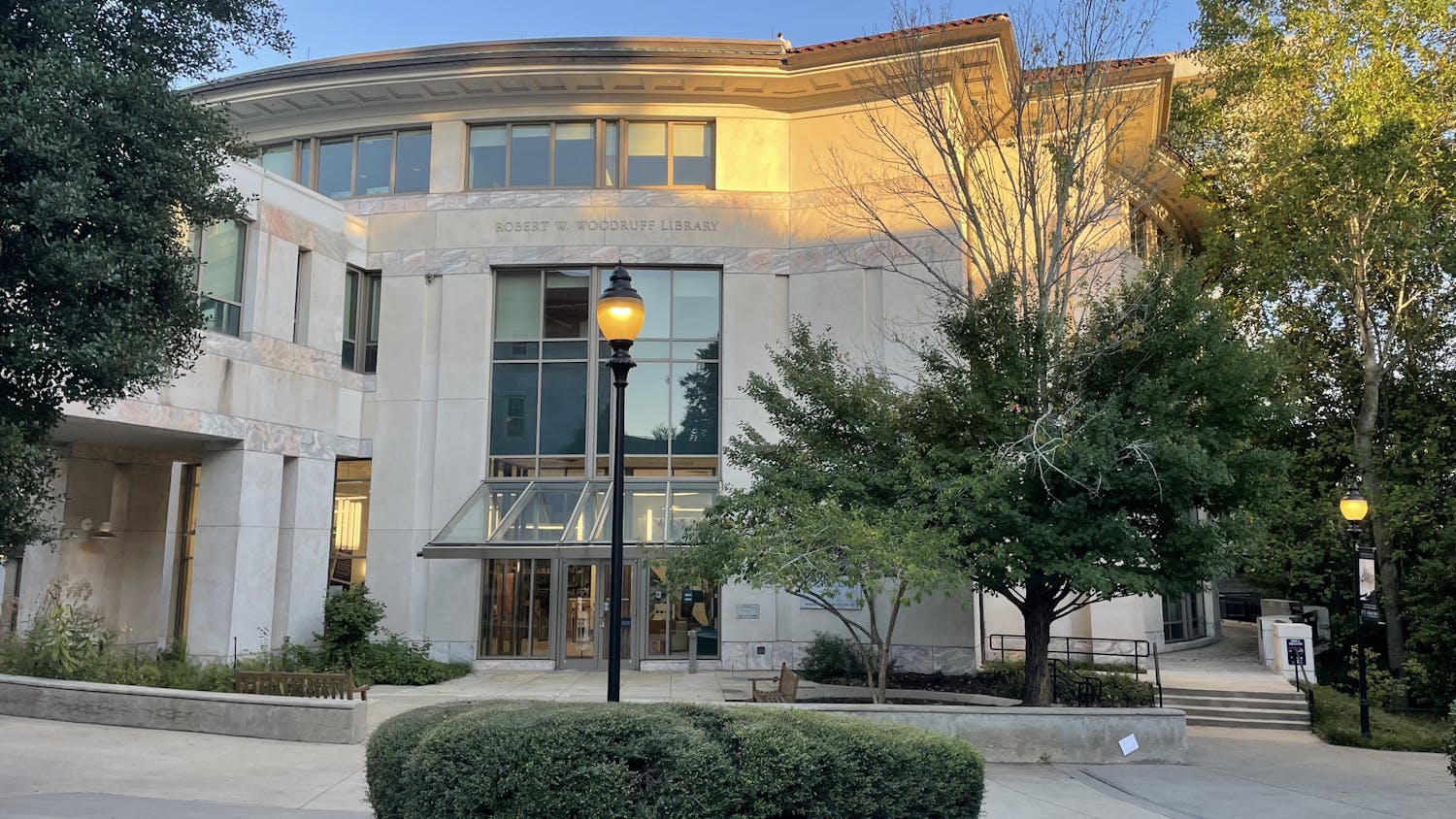
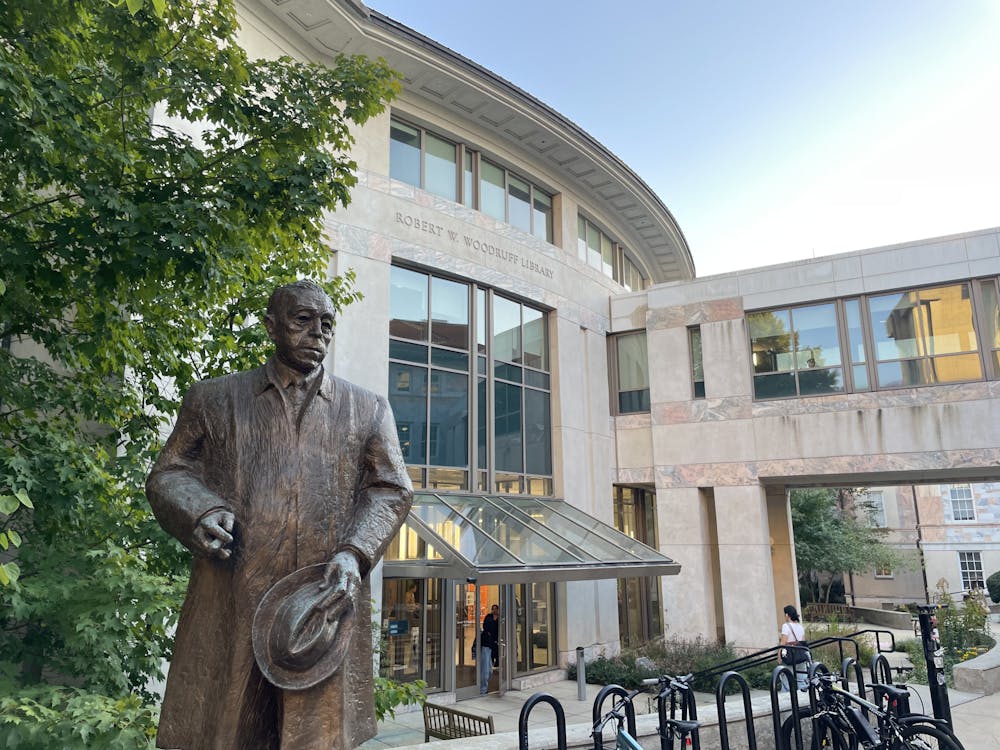
Look no further than Sept. 27 for proof of this insufficient system, when community members evacuated Emory’s Robert W. Woodruff Library after reports of an armed individual in the building. During the police response, Emory did not even issue an alert, with students outside the library learning about the incident on Fizz. A witness to the incident noted that many students showed “little urgency” during evacuation, due to widespread confusion, with one sophomore stating they thought it was “a drill” because of a lack of institutional direction. As this scenario indicates, the lack of real-time direction and convoluted communication produces a chaotic, or in other cases delayed, exit situation that would be catastrophic in the event of a real emergency.
In light of Emory’s past insufficient emergency response, the University must remodel its emergency communications system to, for lack of a better description, be more communicative. In times of danger, the University has the responsibility to be the authoritative informant. Failing to share the details in emergencies leaves community members vulnerable to the whims of student speculation.
Emory does not need to make every detail public if doing so poses safety risks. However, future Emory emergency alerts should further elaborate on the location and nature of the threat. A student responding to a potential active shooter at Emory Point would take vastly different steps than one responding to a fire at Cox Hall. During last year’s Aug. 8 shooting at the CDC, Emory advised students to “shelter in place,” which provided insufficient guidance for students living at Emory Point. Emory must make clear in its alerts the distinction between real scenarios and exercises, as well as the different types of danger. For instance, Vanderbilt University’s (Tenn.) emergency alerts identify locations such as “residence hall” or “fraternity” to protect ongoing investigations while providing community members with relevant information.
Beyond providing more comprehensive emergency alerts, Emory must better educate students, staff and faculty on lockdown protocol. The optional exercises for “faculty, staff and students” offered on Emory’s website are general and do not train professors to undergo classroom-specific crisis responses— amplifying anxiety. There should be procedures for every class in the syllabus. Moreover, Emory’s information page on preparing for a campus emergency provides little guidance on what to do in a lockdown. There should be a more comprehensive manual that outlines the proper procedures for handling dangerous incidents and provides precise information when relaying updates. For instance, peer institutions like Tufts University (Mass.) maintain webpages with specific instructions for dealing with various situations. Additionally, Vanderbilt has guidelines for faculty with extensive steps for becoming familiar with exit locations, being alert and describing in detail the process of implementing “Run. Hide. Fight,” that goes beyond Emory’s brief webpage description of each.
These positive examples from peer institutions demonstrate that a safe campus is a very real possibility and not a far-off goal. A webpage, email or mandatory module covering lockdown procedure is the least Emory can do to responsibly prepare for the harsh reality of a U.S. college campus. However, this responsibility does not rest solely on the shoulders of the University — students themselves should take initiative to use the provided resources and to be proactive in being conscious of their environment and potential dangers. Otherwise, real campus safety, institutional trust and mutual emergency preparedness will further plummet, potentially risking lives.
If you or someone you know is struggling in the aftermath of gun violence, you can reach Emory’s Counseling and Psychological Services at (404) 727-7450 on Monday-Friday at 8:30 a.m. to 5 p.m or https://counseling.emory.edu/ or the Substance Abuse and Mental Health Services Administration Disaster Distress hotline 24/7 at +1 (800) 985-5990.
The above editorial represents the majority opinion of The Emory Wheel’s Editorial Board. The Editorial Board is composed of Editorial Board Editor Carly Aikens, Shreyal Aithal, Editorial Board Assistant Editor Mira Krichavsky, Wayne Liang, Eliana Liporace, Pierce McDade, Niki Rajani, Robyn Scott, Ilka Tona, Meiya Weeks and Crystal Zhang.