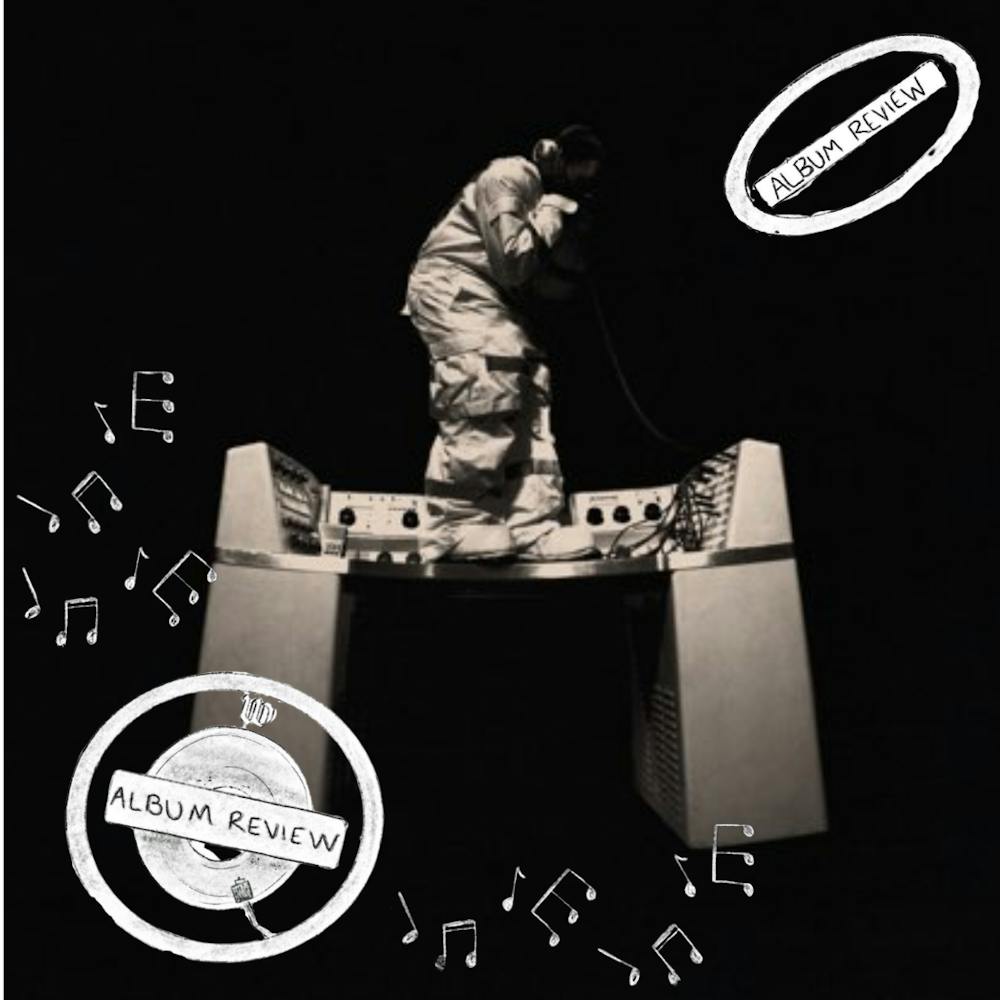
Once celebrated for his creative, dominant musical style, rapper Don Toliver falls short on his fifth studio album, “OCTANE.” While Toliver found virality in his past work, such as “No Idea” (2019) and “After Party” (2020), his new project prioritizes overused beats and vocal manipulation over innovation. “OCTANE,” released on Jan. 30, spans 18 tracks, many of which fall flat, making the record feel too long and disengaging.
Tracks “Rendezvous,” featuring Yeat, and “K9,” featuring SahBabii, share a similar format, with numerous beat drops and extensive autotune. However, “K9” offers less frequent autotune and is not as sonically jarring. Additionally, “K9” shares a compelling analogy of the symbiotic bond of his relationship with his partner — not unlike Leon Thomas’ “MUTT” (2024). “It’s the relationship that keeps me comin’ back, oh / I’m sittin’ by myself, wonder when you comin’ back home,” Toliver sings, comparing himself to a canine waiting by the door.
“Long Way To Calabasas” exemplifies the softer tone that the album attempts but does not often reach. Varying the album’s sonic landscape, this song starts with an acoustic guitar rather than an electric one. Lyrics such as “I found drugs, found peace, found happiness / Lookin’ in a mirror, is it happiness?” make this track the most personal and cathartic of the album. On this track, Toliver captures fleeting emotion and ponders profound questions. While others like “ATM” and “Call Back” remain surface-level, “Long Way to Calabasas” is intimate, with Toliver opening up to the audience, sharing his struggles and providing a rare glimpse of vulnerability.
The following track, “Rosary,” features Travis Scott and balances a classic R&B beat. The track’s autotuned ad-libs have a softer, more romantic tone, amplifying the intimacy of “Long Way to Calabasas.” The song shifts throughout the track, transitioning from passion to stability. Along with Scott, Toliver sings, “Don’t sweat it, she just get me right tonight, she can be my medic.” Although not the only love song on the album, “Rosary” is the most distinct from Toliver’s past discography, creating an idyllic atmosphere of falling in love rather than the hyper-sexualization he describes on other tracks, such as “Tiramisu” and “Tuition.”
In “TMU,” Toliver crafts a personal connection between the listener and himself through the beginning of the track, starting out vulnerable: “Are we still young? / Waiting back for our lovers.” The track’s female backing vocals complement Toliver, and the unique combination of masculine and feminine revives the album’s backend. However, the track’s inescapable repetition makes it difficult to remain engaged. With the chorus consisting solely of “Just turn me up, just turn me up,” Toliver does not offer any distinctive production style or vocal technique to warrant such tireless repetition.
At times, “OCTANE” shines, showcasing Toliver’s vulnerability and talent. However, the album presents a strange listening experience, where glimpses of excellence collapse under monotonous production and familiar beats. Where “OCTANE” could be transformative and meaningful through polished production and thoughtful lyrics, the generic production, repeated beats and adlibs hold the project back. “OCTANE” lacks a timeless quality, leaving listeners wanting more and less at the same time.