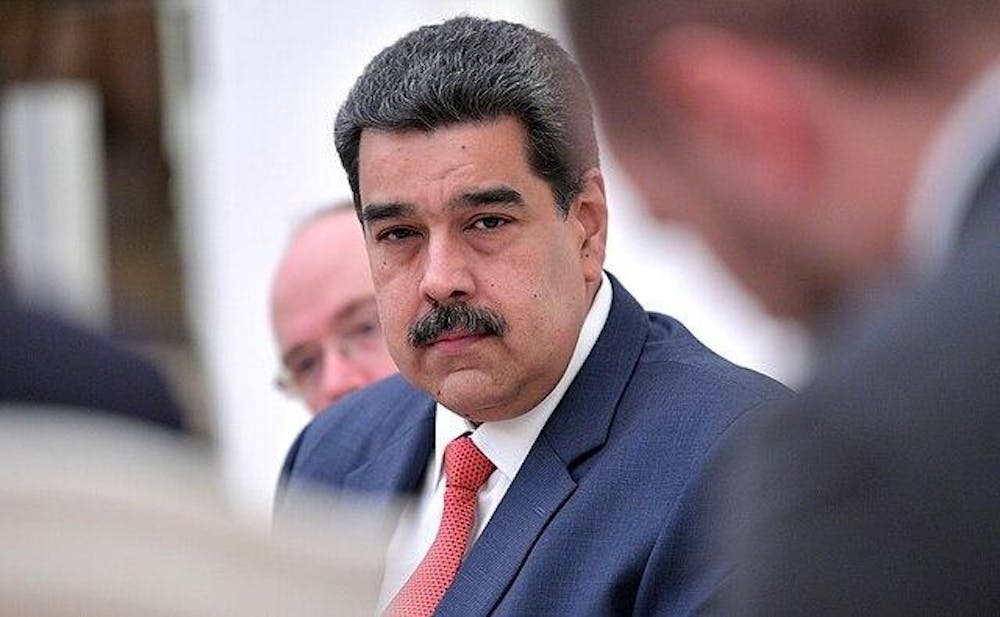
On Jan. 2, U.S. President Donald Trump ordered American military forces to capture Venezuelan President Nicolás Maduro from his home in Caracas, Venezuela. The U.S. Department of Justice charged Maduro with narco-terrorism, drug trafficking and two other federal crimes. Maduro is currently being held in a federal prison in New York City, with his case being tried in New York.
Trump’s capture of Maduro has triggered international reactions, raising questions about the action’s constitutionality and ethics. Some figures, such as Spanish Prime Minister Pedro Sánchez, accused Trump of being flagrantly in “violation of international law in Venezuela.”
The intervention in Venezuela has led Emory University professors and students to debate its legality, precedents and implications for the United States and Latin America.
Senior Associate Dean of Faculty and Professor of Modern Latin American History Thomas Rogers expressed concern that Trump’s removal of Maduro may violate international agreements. While Rogers called Maduro not a “good leader,” he maintained his belief in the importance of world leaders abiding by international laws.
“It’s really dangerous to suggest that the ends justify the means when the means include completely contravening settled international agreements and law,” Rogers said.
Associate Professor of Latin American and Caribbean Studies Pablo Palomino highlighted that Trump’s intervention could exacerbate existing political instability in Venezuela. According to Palomino, U.S. intervention in foreign countries has historically yielded further political instability.
“Through history, all these illegal interventions, all these violations of international treaties and international law committed by the U.S. have been in support of local political actors, often the local military against a government that was perceived as a threat or as unfriendly with the United States,” Palomino said. “Typically, you have a change in the government, but not necessarily leading to a stable one.”
However, Palomino indicated a key difference between Trump’s justifications for intervention and justifications employed by U.S. leaders in the past. He explained that Trump does not apply the language of freedom and democracy to defend his intervention. Breaking from this historical trend, Palomino said, erodes the values of American democracy.
“Traditionally, all the U.S. policies in Latin America, the good ones, the bad ones, the violent ones, the peaceful ones, they were always dressed in the language of expanding democracy, freedom, … even if the acts did not match that rhetoric,” Palomino said. “The novelty of the current administration in the U.S. is that those trappings, that actual belief in the function of the U.S. in the region, is gone.”
Emory’s Latinx Student Organization (LSO) President Angel Sosa Llanos (26C) criticized the broader history of U.S. imperialism in Latin America. Sosa Llanos called Trump’s intervention a “warning sign” and cautioned that it may set a “dangerous precedent” for the security of other Latin American countries in the face of Trump.
“The actions conducted by the Trump administration fall in line with a larger theme and pattern of intervention that has been used by the United States in order to intervene and rule over Latin America,” Sosa Llanos said.
Emory LSO Political and Social Justice Chair Glenda Vega (28C) emphasized the loss of around 100 lives during the recent military action in Venezuela.
“Yes, it is worth celebrating the end of Maduro’s dictatorship and presidency, but in a terrorist attack, the way it was performed, I don’t think it was justifiable,” Vega said.
Sosa Llanos said among Venezuelan and Latin Americans, attitudes toward the Trump administration are mixed, and he has observed many celebrating Trump’s capture of Maduro.
“Some people might be in the stage where they are just celebrating the fall of Maduro more than they are raising concerns about Trump’s intervention and potential future interventions,” Sosa Llanos said.
Despite the celebrations, many are still concerned by Trump’s actions and rhetoric, especially when considering the possibility of future interventions in Latin America and beyond. Rogers shared his concern that there may soon be an increase in incursions of the U.S. military in Latin America.
“There’s the prospect, the possibility of intervention in other countries that the United States objects to for one reason or another,” Rogers said.