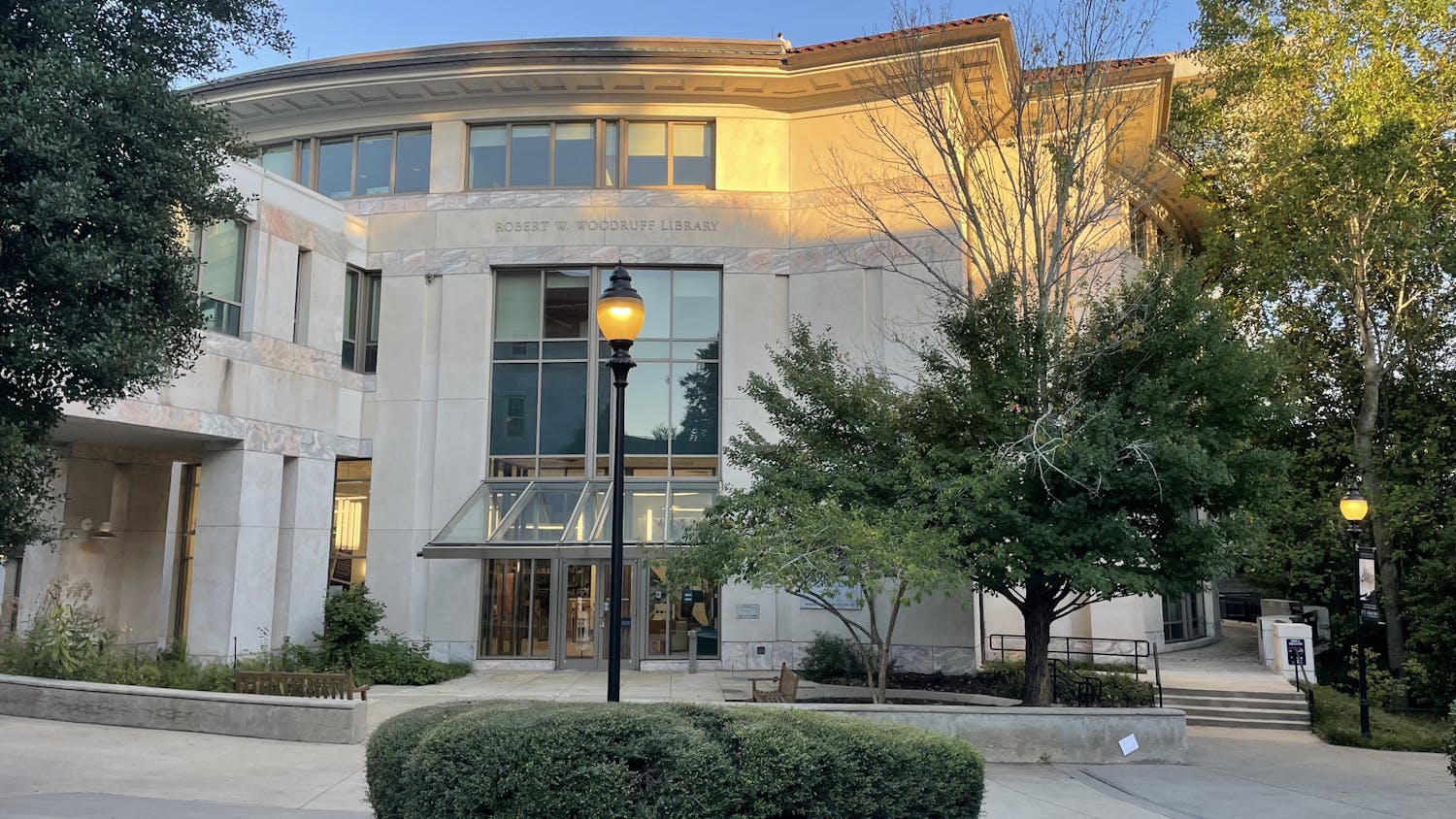
For the past two months, the Emory University Chorus and Emory Concert Choir have been rehearsing a series of carols for a performance in early December. The candlelit choral concert, an annual Emory tradition since 1935, remains a favorite among community members. From performing classics like “The First Noel” (2018) to new favorites like “Trinity Te Deum” (2012) and the Nigerian carol “Betelehemu” (1992), choir director Eric Nelson ensures a diverse representation of voices, languages and backgrounds. However, one thing is for certain: The carols do not shy away from their Christian roots. Although I observe a different faith, I appreciate the warmth and beauty behind the traditions and values these carols carry for our audiences.
While performances like the Festival of Nine Lessons and Carols at Emory still celebrate and welcome the birth of Jesus, the celebration of Christmas in the United States has become more secularized and commercialized than ever. Pop-up villages like the Bank of America Winter Village at Bryant Park in New York City capitalize on the holiday by selling goods and food at exorbitant prices. Hallmark’s Holiday Movies and Series television program captivates millions, even outperforming CNN in views during one November week. These money-making machines are just two examples of how many U.S. corporations use the guise of Christmas to sell secular products — a cheesy rom-com and a $10 specialty hot chocolate appeal more to the Instagrammable winter spirit than to the holy spirit. As a result, we have reached a point in the United States when someone like me, a member of a different faith, feels like the Christmas celebration is barely Christian at all.
The history of Christmas celebrations in the United States elucidates how the holiday became so secular. Around the time of independence, U.S. society held a more restrictive Puritan attitude toward Christmas, which condemned the merriment and mirth associated with the holiday. By the mid-19th century, Charles Dickens’ novel “A Christmas Carol” shifted the narrative around holiday celebrations through its message of charity and goodwill toward all people. Decorating trees, sending holiday cards and giving gifts soon became the norm, with Americans essentially reinventing the celebration of Christmas to fit their cultural needs in the 1800s. Thus, former U.S. President Ulysses S. Grant’s recognition of Christmas as a federal holiday in 1870 reflected the trend toward a more universal, family-centered and festive holiday. Dickens reminds us through Tiny Tim that Christmas should be about personal reflection, tradition and time spent with people in our lives worth celebrating. However, the oversensationalized Christmas of today often falls short of these ideals.
Once a time for reflection and giving back, the 21st-century celebration of Christmas in the United States has now morphed into something so mainstream and commercialized that it no longer reflects its central values or pertains to any one group. This may appear harmless. After all, everyone loves decorating cookies, drinking hot cocoa or listening to the Pentatonix on the radio — if people even listen to the radio anymore. Furthermore, as commerce shifts to digital, the United States is on track to generate $250 billion in online shopping revenue during the 2025 holiday season alone. The issue with the modern celebration of Christmas is not necessarily Amazon or the Pentatonix, but the drift is worth acknowledging: When popular culture turns a religious holiday into just another profitable seasonal aesthetic, it loses the very reason that holiday is worth celebrating in the first place.
This fall, in Jay and Leslie Cohen Assistant Professor in Religion and Jewish Studies Kate Rosenblatt’s Religion and American Capitalism class, we have learned to recognize patterns of when the U.S. market absorbs religious traditions and repurposes them for visibility, growth and mass appeal. Christmas is just another example of this wider pattern of commercializing religious holidays, no different from St. Patrick’s Day or Halloween. Corporations have leaned into elements that sell — such as Santa Claus, ugly sweaters and gingerbread houses — and ignored religious aspects like attending church or caroling. The result is a bizarre tension: Christmas is now universalized to fit every American’s way of life, yet the holiday bears little resemblance to its original religious core.
When I celebrated Christmas while studying abroad in Spain in 2023, I experienced the harmonious balance between celebration and religious observation for the first time. Festive lights and holiday cheer filled the city, and incredible holiday markets sold knick-knacks and mulled wine. But, at the center of each city was a giant nativity scene, retelling the story of Jesus’ birth. Lastly, despite widespread secularization among the younger generation of Spaniards, my host family and many others still attended Misa de Gallo, the midnight mass on Christmas Eve. In the United States, the same dedication persists among a dwindling number of families. To me, the mass secularized appeal of commercialization often makes these remaining faithful observers seem invisible.
If anything warrants preserving, it’s the holiday’s religious roots. A change is necessary. I am not arguing for shutting down the Winter Villages in New York or banning cheesy Hallmark rom-coms — my mother would kill me if I suggested such a thing. We, as Americans of all faiths, need to do a better job of acknowledging these observant families in how we represent the holiday, especially as statistics show the churchgoing population shrinking year after year. At the very least, we should return to the family-centered, reflective celebration that Christmas once was by celebrating the people at our table and ensuring there is room for traditions to keep flourishing.
For decades, Emory has tried to preserve these traditions through the Festival of Nine Lessons and Carols. On Dec. 5 and 6, you can find me in my black robe and white cotta, standing with the Concert Choir baritones, singing carols written centuries ago. The warmth of the organ and brass fills the room. The sopranos sing with such purity that it sounds angelic. These carols are grounding, a reminder that celebration can be sacred and joyful at the same time. Even as an outsider, I can recognize the power and clarity in that.
Contact Joshua Glazer at joshua.glazer@emory.edu