Each year, thousands of students leave home to attend Emory University — even fewer of these students are varsity athletes, expected to balance academic demands with maintaining excellence in their sport. An even smaller percentage of these student-athletes are international students, who not only leave home for college but leave home for a new country.
At Emory University, international student-athletes navigate intense practices, heavy course loads and the challenges of adapting to a new culture, all while being thousands of miles from their home. Behind each international student-athlete’s jersey are not only impressive wins and exciting moments on the field, but journeys shaped by change, their identities and pride in both the school they represent and the countries they come from.
The United States is unique in the scale of its commercialization and the cultural significance of its college sports, attracting international students who dream of competing in the sport they love at the next level. With its elite Division III (DIII) athletic programs and world-class academics, Emory has become a destination for many international student-athletes seeking to pursue both their sport and their education at the highest level.
How International Athletes Choose Emory
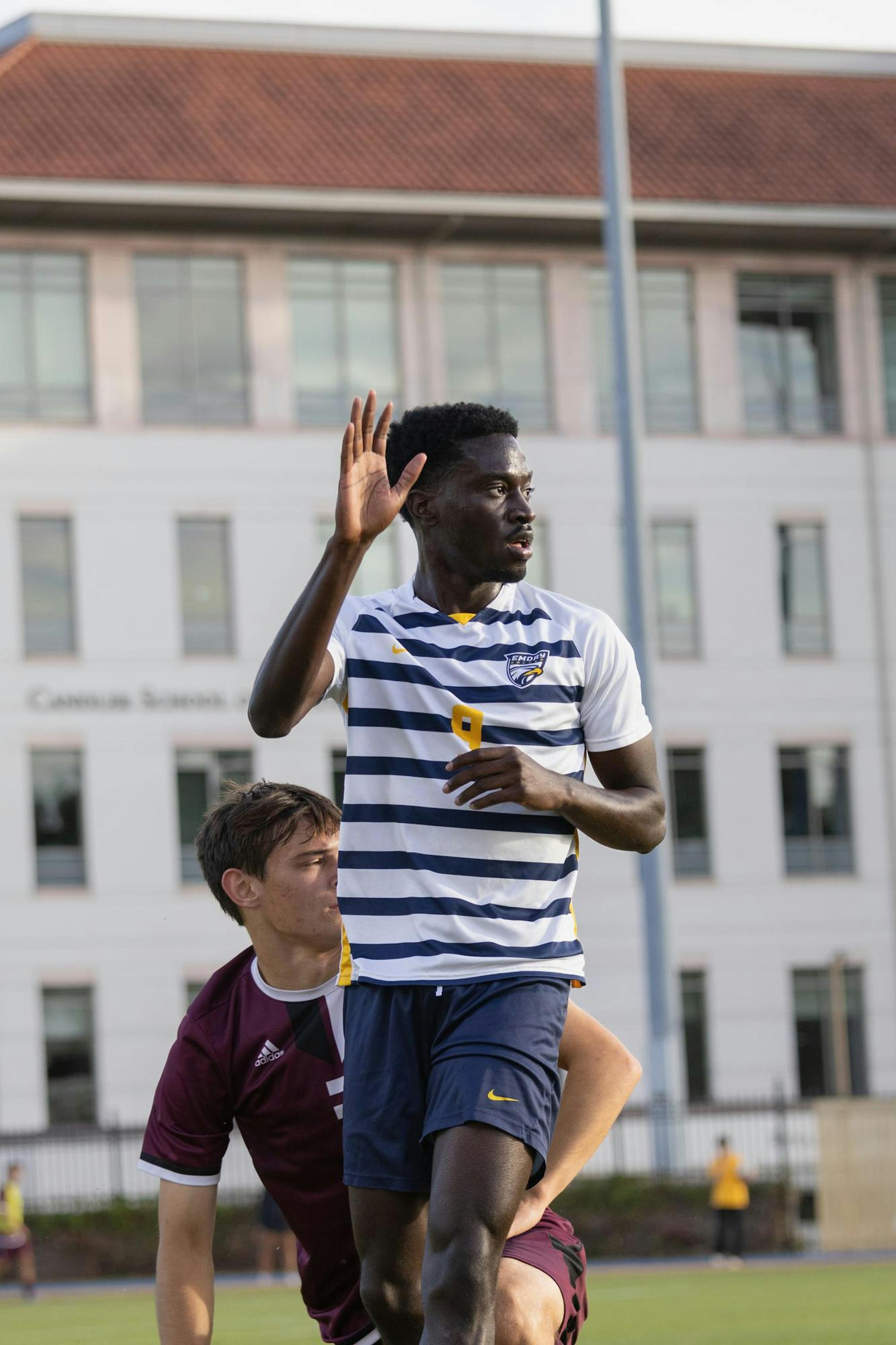
Adeyemi Oni, a senior forward on the men’s soccer team, is originally from Lagos, Nigeria. Oni knew he wanted to attend college in the United States after attending boarding school in the United Kingdom. There, he learned about American universities, leading him to begin his collegiate career at St. Mary’s College of California, a Division I school. In his junior year, Oni decided to transfer to Emory, drawn to the academics and strong soccer program.
“I chose Emory because obviously it’s a very good school, and also, the soccer is growing in the DIII space,” Oni said. “The main reason was the reputability of the school, and access to the business school, Goizueta, as well as the amazing professors we have on campus.”
Similarly, Kevin Zhong, a sophomore jumper on the men’s track and field team, said he chose Emory for its perfect blend of great academics and a successful track and field program. Zhong said he and his family wanted his college education to get him outside of his comfort zone — before growing up in Vancouver, British Columbia, the jumper lived in China.
“My parents definitely wanted me to come to the States because I had stayed in Canada for about a decade,” Zhong said. “It was definitely one of my goals to try something new, coming to the States.”
While balancing academics and athletics, incoming international student-athletes face the challenge of settling into life in the United States. The first few months on campus can be a difficult transition for many students, but coming from a different country can add to the stressors of being a first-year student.
For Jessy Chen, a freshman on the women’s tennis team, having a group of supportive teammates and coaches made the sometimes-treacherous journey a little easier.
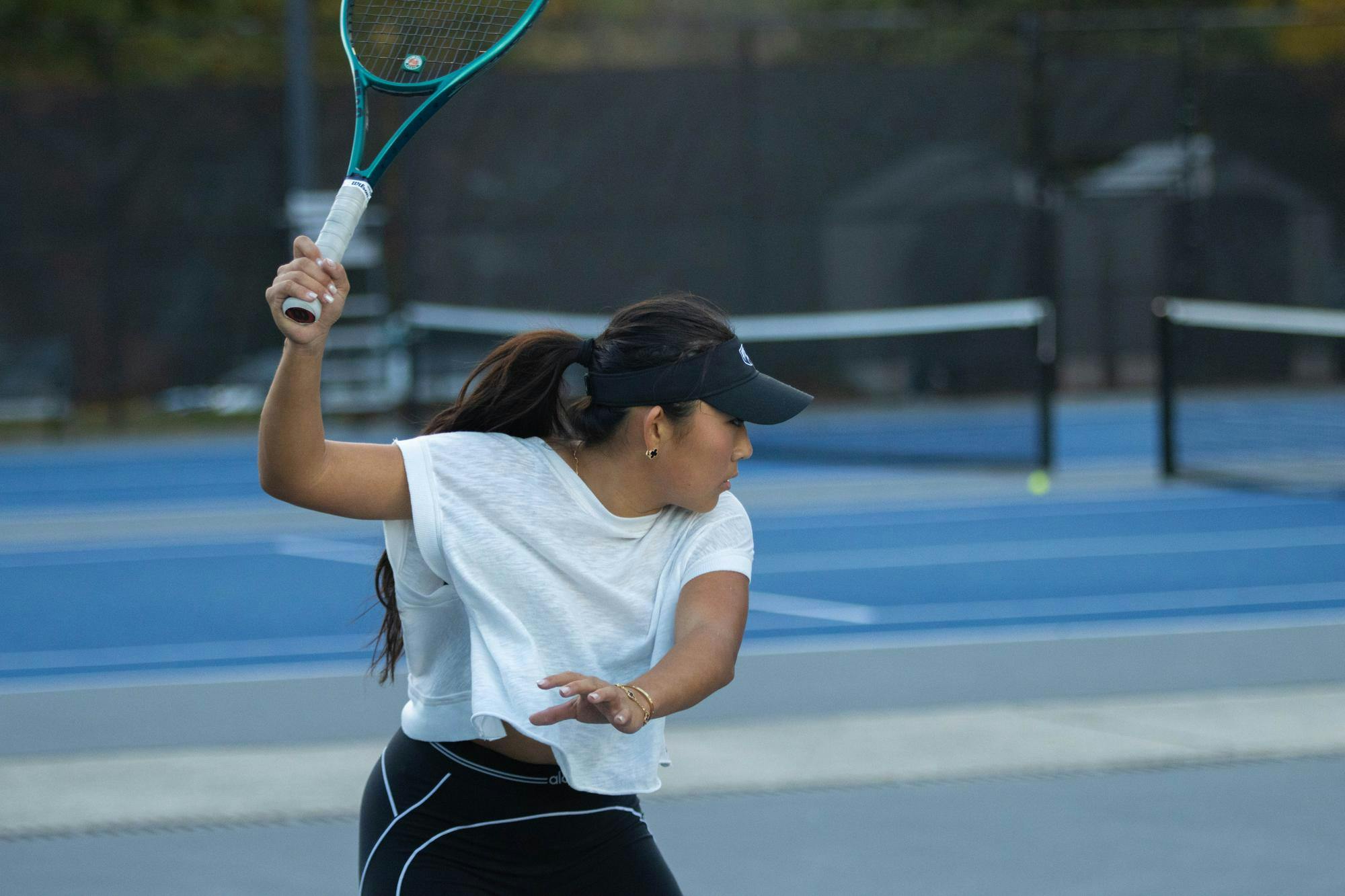
Chen grew up in Limassol, Cyprus, and said she is still getting acclimated to life as a student-athlete in the United States. Chen said her teammates and coaches have supported her by showing her around Atlanta, helping her move in, and being there for her when she has any problems, whether academic or personal. Chen said that the exciting and shocking cultural differences made her transition to the United States much easier.
“I never had Chick-fil-A, Chipotle, stuff like that, before coming here, but it was cool seeing a lot of the stuff that you saw online and seeing them here in the U.S.,” Chen said. “Everyone here is really friendly and welcoming, so I really felt that since the first week of school.”
‘Someone to Turn To’: Finding Support at Emory
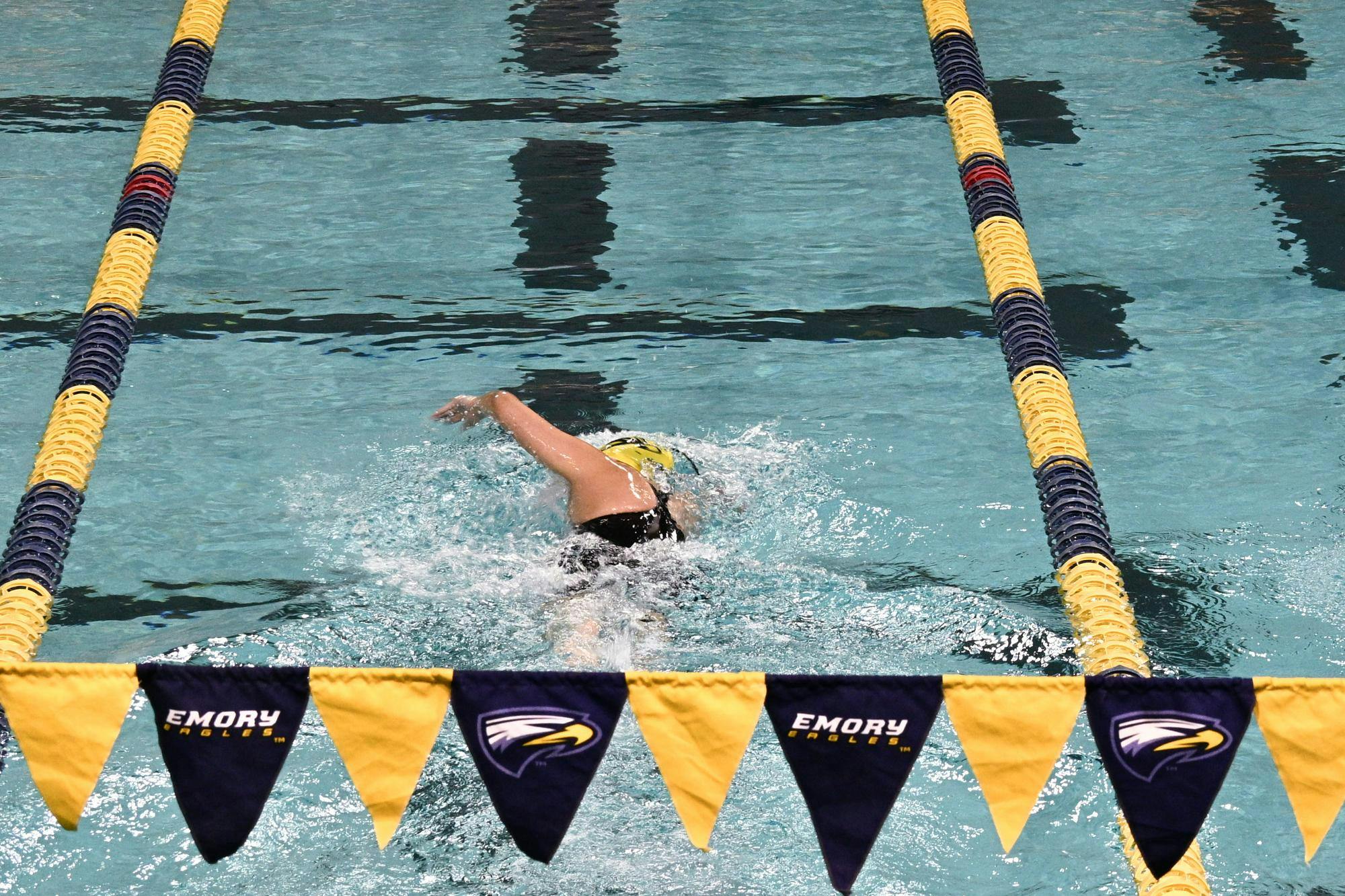
For many international athletes, early support from teammates and coaches laid the foundation for turning Emory into home. Senior swimmer Meredith Liu, who hails from Toronto, said it was only after she was admitted to Emory that she emailed the coach to discuss joining the swim and dive program. Unlike her teammates, who had already toured the school on recruitment trips, her introduction to Emory’s athletic programs and meeting her teammates was during pre-orientation. Still, Liu said her team quickly welcomed her, helping ensure her success in the pool and in the classroom.
“Freshman year, nearly all of my classes were with teammates, and so that was really helpful,” Liu said. “If we had questions or if we missed a lecture or whatever, there was always someone to turn to.”
Despite the support on Emory’s campus, many international student-athletes are still far from home and their support systems and comforts. Chen said her distance from Cyprus has brought challenges that some domestic student-athletes do not face. She shared that she misses her parents’ support at matches and dislikes the uncertainty of when she will next see her family.
“I am the only one without any family members here in the U.S.,” Chen said. “I won’t be seeing [my parents] until Christmas, and if that doesn’t work out, because there’s a lot of issues going on with traveling, I might not even see them till next year.”
Sophomore golfer Covi Yan, who calls Hong Kong home, also shared how difficult it can be to live so far from her family. Yan said she is reminded of the distance between her and her family when her teammates’ parents attend games to cheer on the team.
“When we travel to other states or from states that they’re from, their families are able to drive out and watch them, or maybe fly out from nearby states to watch them,” Yan said. “That’s very difficult for me because my parents are 15 hours away.”
While Yan said the distance was hard to deal with, she also mentioned that her community on and beyond the golf team makes it easier. When U.S.-based teammates’ parents attend games, they are not only cheering on their student-athletes — they are also supporting and uplifting Yan.
“[They] come and they watch us like we’re all their kids, which is really amazing,” Yan said.
Athletes Rep Blue, Gold and Flags
Many international student-athletes take pride in representing both Emory and their home countries. These student-athletes are often competing in their sport at a level far beyond what is available back home.
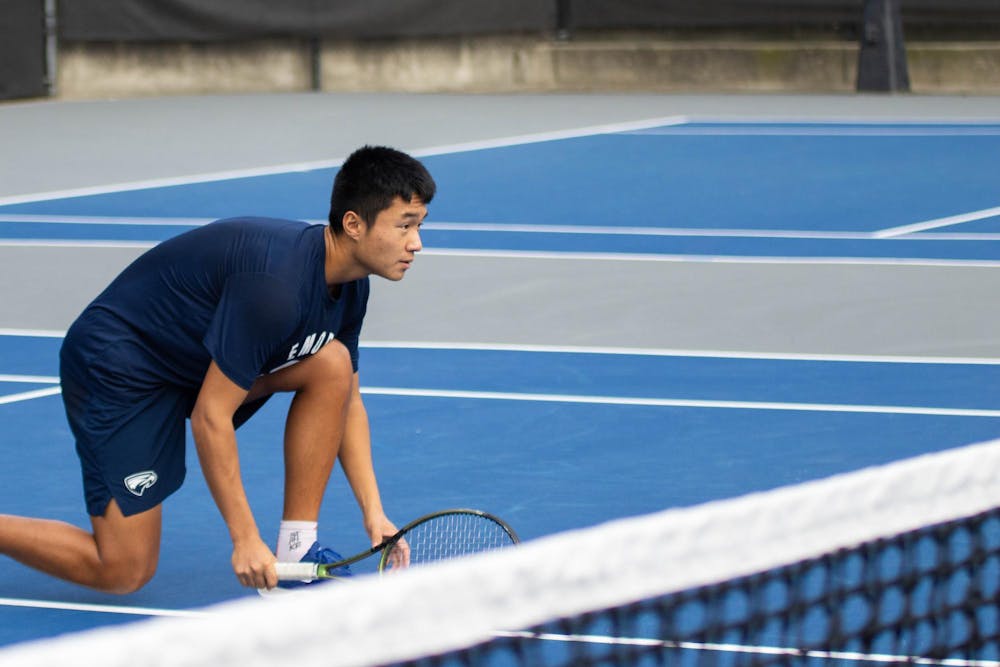
Sophomore tennis player Ruilin Feng from Shanghai said he takes pride in making his country, family, and friends back home proud. He was the first Chinese student-athlete to be crowned the Intercollegiate Tennis Association Cup DIII national champion this past October.
“I made my country proud, because I’m a little influencer on social media in China,” Feng said. “When I posted it, I felt so good.”
Like Feng, Chen is motivated by her ability to represent her country in high-level college athletics. She said she plays not only for herself and her family, but for people back home who look up to her. According to Chen, she wants to do well so younger athletes can see her success and strive toward their own.
“I do feel like there’s a lot of people that look up to me, like younger people from back home [in] Cyprus … and a lot of younger players who also want to come to the States,” Chen said. “I want to do well so they can see that and want to do the same thing, and come to the States to play a sport that they love as well.”
Senior swimmer Henri Bonnault feels similarly to Chen and said the opportunity to represent his home country of France motivates him.
“You’re not racing only for yourself, you’re racing for your country,” Bonnault said. “It’s definitely something that boosts me and it makes me mentally stronger.”
Aside from their teams, many of these athletes have found community with other international students at Emory who share similar experiences. While originally from China, sophomore golfer Zimo Li and her family moved to Vancouver when she was in 10th grade. Whenever she is on the course, Li keeps a Chinese flag on her golf bag, repping her country with pride. Although close with her teammates, Li has also sought out other communities for Chinese Emory students, including in places like the Emory Chinese Student Association.
Unlike in the home countries of some international student-athletes, Americans approach sports culture as a highly competitive environment and a defining part of school identity, where representing one’s school at this high level is a major source of pride and identity. Zhong said the sports culture in the United States is far more serious and competitive as compared to in Canada.
“Canada is all supportive, but the competitiveness is not that big,” Zhong said. “In the States here, when I went to competitions, everybody was really locked in and focused, and that’s a really good thing because that can also help me push myself.”
Moving Beyond Emory Athletics
Learning to adapt to a new culture while navigating a sense of dual representation is challenging, but the pressure does not stop there. These athletes are also students and have to balance their sports with Emory’s rigorous academics. Bonnault said that, compared to France, a difference for him as a student at Emory was the high expectations he had to meet in the classroom and in the pool simultaneously.
“Academic-wise, we have to be more autonomous here,” Bonnault said. “In France, we don’t have any college teams so it’s very difficult to keep swimming or doing your sport at a very high level while pursuing your academics.”
Like domestic students, international student-athletes are focused on building their futures beyond Emory, for which the university provides countless opportunities to form connections in various fields. Bonnault, a senior, will be pursuing a master’s degree in finance at Emory next year. He said he hopes to continue competing while continuing his education, a path made possible with the support he has on both the academic and athletic fronts.
“My goal would be to keep training as a pro next year, while studying at the same time, to potentially make it to the French Olympic trials and make it to the Olympics for the French national team in 2028,” Bonnault said.
Unlike Bonnault’s ambitions, other athletes do not plan to continue competing after graduation but remain grateful for the opportunities their teams have provided, both athletically and in shaping them as individuals. Yan said competing at Emory has opened numerous doors for her, giving her a valuable opportunity that will shape her future.
“I am not sure if I will continue my sport professionally,” Yan said. “I’ll be able to take so many skills and connections, and that’s always what’s most important when it comes to receiving an education outside of your home country.”
Yan’s experience reflects a broader impact that many other international student-athletes experience. Their presence enriches the Emory community not only on the field, but also by diversifying the University’s campus with different cultures, languages and traditions. Athletes from all around the world come together on Emory’s campus to compete, but this phenomenon is also about something bigger, according to Bonnault.
“I bring a new approach of collaboration,” Bonnault said. “Being international, my background is very different from the others, and this is a strength for me.”
For athletes who are unsure about moving internationally to pursue their sport, the message from Emory’s student-athlete community rings loud and clear: Students should “take the leap,” according to Oni.
“It might be daunting at first to think about moving to a different side of the world and being alone, away from your family,” Oni said. “But once you do it, you would not regret it.”