Content warning: This article contains references to suicide.
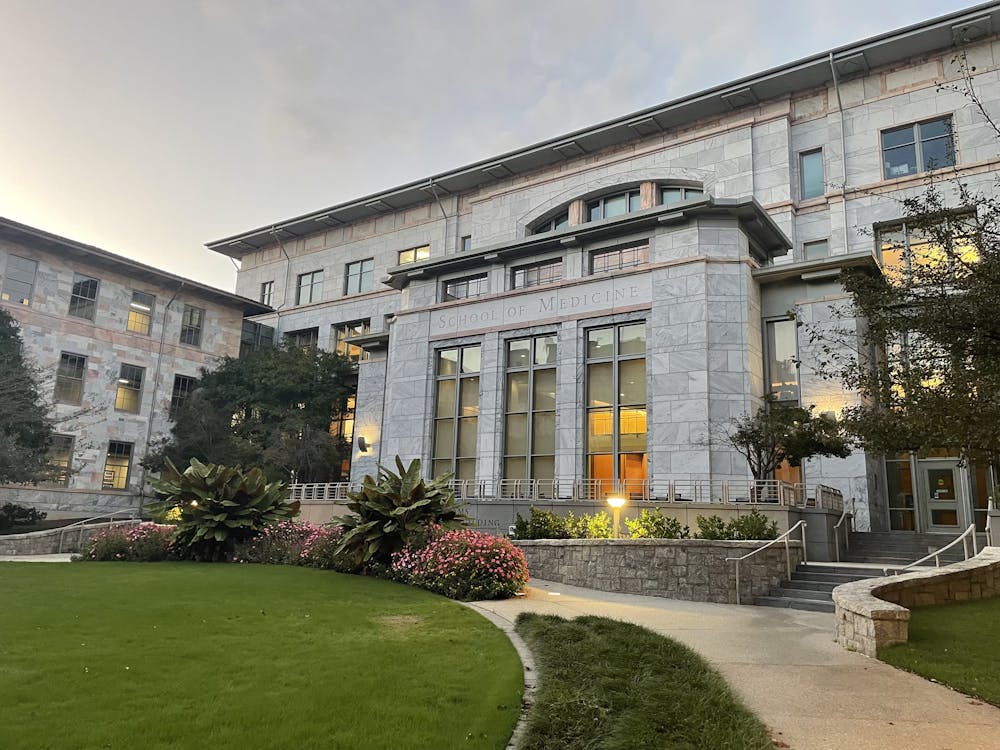
The Action for Women’s Health initiative from Lever for Change awarded the Emory University School of Medicine’s Nia Project with a $2.5 million grant on Nov. 12 to expand its program. The Nia Project, which provides mental health services to Black women struggling with trauma and suicidal ideation, helps clients heal from their traumas, find purpose in their lives and engage in their communities. Over 4,000 organizations applied for funding, but Action for Women’s Health only awarded grants to just over 80 organizations, including the Nia Project.
Emory Professor of Psychiatry and Behavioral Sciences Nadine Kaslow, founder and director of the Nia Project, started the program in 1993. The program’s name is based on the principle of “Nia,” which means “purpose” in Swahili, and is the fifth principle of Kwanzaa, a celebration of African American culture.
“Our core mission, our core values have stayed pretty consistent, and they will transform as we grow, but we’re always going to be a program that puts the [women] first,” Kaslow said.
Associate Professor of Psychiatry and Behavioral Sciences and Research Director at the Nia Project Dorian Lamis emphasized the immediate transformations the grant will bring to the program.
“We’re going to be able to provide many more services to the women that we serve,” Lamis said. “Those include individual therapy, group therapy, case management services, medication management services, so it’s really just going to provide an extensive amount of services to many more women than we are at this time.”
Kaslow said there is a current need to expand the Nia Project team and make more mental health services available for women of color. With the grant, Kaslow hopes to sustain the program further into the future — according to her, the project team has “always” been concerned about their funds. Additionally, Kaslow discussed her plan to build the “Nia House” to bring a greater sense of community to the program.
“For over 30 years, we never had enough money, and this really helps with our sustainability and then hopefully growth,” Kaslow said. “We can have a house where everything can be together, and people can come together for support and therapy and camaraderie and community building and gardening.”
Kaslow attributed the project’s success to their focus on community engagement as well as her passionate team.
Brittany Borzillo, a psychology postdoctoral resident at the School of Medicine, runs two therapy groups within the Nia Project and serves on its executive board. According to Borzillo, the new grant will allow the Nia Project to expand its reach and move closer to its long-term vision of creating the community house that Kaslow described.
“We have such big dreams,” Borzillo said. “In the short term, it might look more like bringing on more diverse professionals to help psychiatrists, social workers, stuff like that. In the longer term, we’re really working towards building something that can be in the community.”
Assistant Professor of Psychiatry and Behavioral Sciences Sarah Dunn, the clinical and education director at the Nia Project, said the team’s perseverance has led to their hard work being rewarded with funds to bring more initiatives to life, despite struggling with money over the years.
“We have been able to stay open and offer their services and it’s been able to build over time,” Dunn said. “This money just allows us to build bigger and better things now.”
Borzillo said the program is unique in its supportive approach to help women from underserved backgrounds receive the care they need.
“It’s just this beautiful collaborative of people who are just trying to lift each other up,” Borzillo said. “It’s very community-centered, as opposed to being a clinical program.”
Borzillo also emphasized how Emory undergraduates can get involved in the project, urging those with a drive to support the program to try it out.
“There are so many opportunities for people at any level of their education to get involved,” Borzillo said. “If people have that passion or desire … It’s an accessible resource that we are only happy to grow further.”
With this recent grant, Kaslow emphasized that the Nia Project will remain true to its mission of helping African American women throughout Atlanta and will continue to be a “person-centered” program.
“We’re about compassion,” Kaslow said. “Our values, they shift a little, but this is not going to change who we are. It’s just like all the other changes in the world have changed who we are. We’re going to continue to want to empower women of color.”
If you or someone you know is having thoughts of self-harm or suicide, you can call Student Intervention Services at (404) 430-1120 or reach Emory’s Counseling and Psychological Services at (404) 727-7450 or https://counseling.emory.edu/. You can reach the National Suicide Prevention Lifeline 24/7 at (800) 273-TALK (8255) and the Suicide and Crisis Lifeline 24/7 at 988.