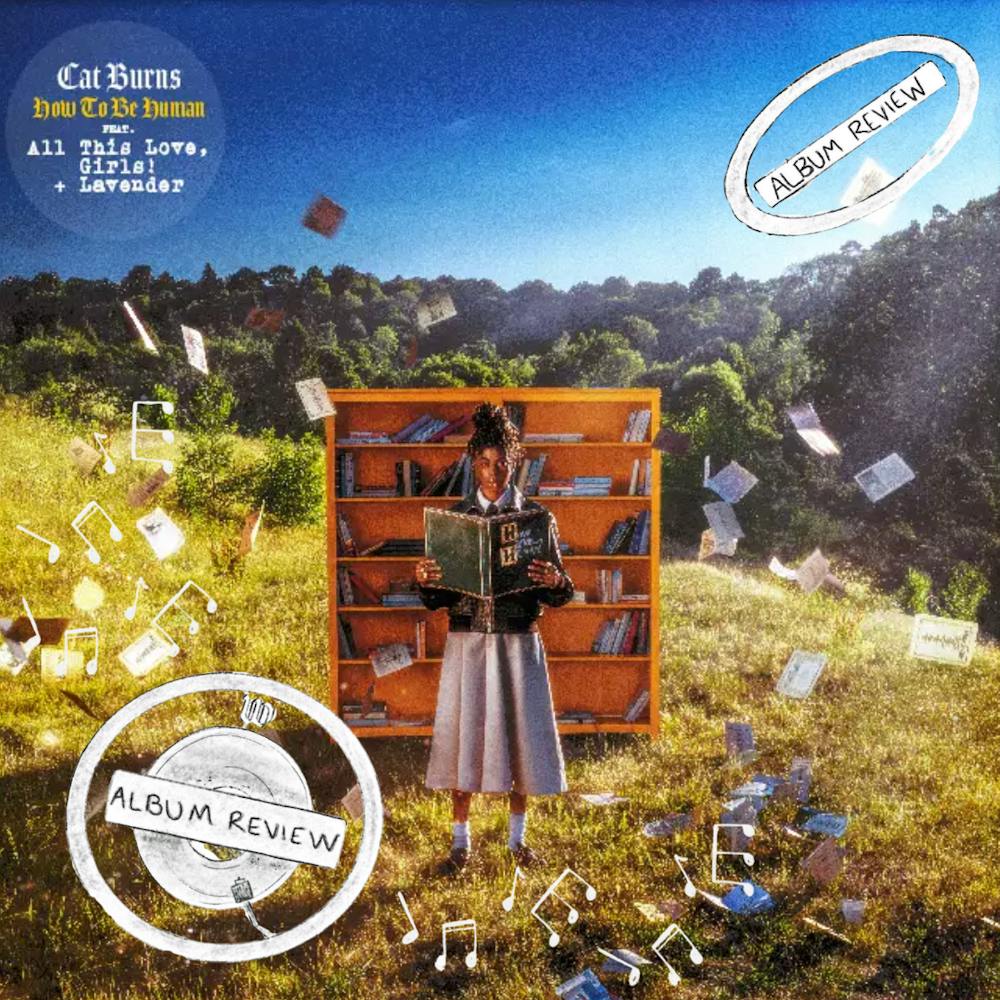
In complete contrast to her smooth yet vengeful breakout hit “Go” (2022), Cat Burns’ new album “How To Be Human,” released on Halloween, sees her adopt a sweet, heartfelt pop sound. On this self-described “comfort album,” Burns blends bright, summery afrobeats with heartfelt lyrics, crafting an intimate and engaging listening experience. Whether begging a past love to release their resentment or reveling in a new relationship, Burns invites the listener into the innermost workings of her life — including her darkest moments.
After a tumultuous year, including the loss of her grandfather and a rough breakup, Burns finds resilience on the first track, “Come Home.” Burns opens the song opens with a gut punch: a voicemail from her late grandfather. This choice sets the tone for the rest of the album, which offers an honest, heartfelt exploration of grief. The singer’s warm vocals glide against a gentle beat while building to an intense chorus reminiscent of gospel music: “You've done everything that I could have wanted / With the time that I gave you / You've loved and lived, got the scars to prove it / There's nothing more I need from you,” Burns sings. The popstar transforms her grief into gratitude, celebrating her grandfather’s life.
The standout track “I Hope It’s Me” leans into Burns’ vulnerability and heartbreak. Burns delivers a heartfelt message to her ex: “You could go any way / Take every sign, or fall for someone else / But in the end, when you love again / I hope it's me.” There is no bombastic chorus or electric beat; instead, a mellow guitar accompanies Burns’ soft vocals, encapsulating the track’s personable and intimate nature. This gentle approach gives the song breathing room, drawing attention to the track’s greatest strength: its language. The song derives its power from tender and honest lyrics rather than relying on glamorous production to convey its message.
On “I Hope It’s Me,” Burns bridges the gap between artist and listener, forging a connection with her fans through admissions of her own hurt and humanity. By pairing minor yet impactful details with a soft vocal delivery, Burns provides a genuine, compassionate pause amid a sea of songs. On “I Hope It’s Me,” Burns peaks, mastering the delicate balance between raw and relatable lyrics.
While “How To Be Human” delves into darker themes, a joyful undercurrent remains. Dreamy, up-tempo tracks like “Lavender” offset the album’s heavier moments with an infectious, playful energy. Burns’ addictive, cheery vocals singing “She's so la-la-la-la-lavender” mark a stark change from previous somber tracks. “I feel bright, life feels light / Now I can't imagine my life without her,” Burns sings, finally content and in love with life. Even the sixth track, “All This Love,” which discusses Burns’ loneliness after her grandfather’s passing, finds a positive note: “And maybe that's the gift in all of this / That I've got all this love (All this love) / And I don't know what to do with it,” she sings. The track’s honest lyrics, paired with its upbeat instrumental, creates a compelling picture in which Burns contemplates her grief with an optimistic outlook.
However, the album is not without its flaws. Burns’ reliance on voice notes, while initially touching, quickly becomes tiresome, bordering on gimmicky, as nearly a quarter of the album’s tracks include such recordings. The singer unsuccessfully toys with conversational lyrics throughout the project, but “Small Talk” is arguably the worst offender, combining an awkward voice memo with unmemorable lyrics. “Everything is changing (All has changed) / Why do we have to speak like strangers? / I can't do small talk with you / 'Cause every time that I do / All I wanna say is something really big,” Burns sings. These vague, simplistic lyrics fail to provide the listener with any genuine insight into Burns’ life, a quality that highlights previous tracks. On top of the lyrics, the song's biggest flaw is that it fails to offer the listener any actual commentary on Burns’ relationship with her ex, leaving the listener confused about the song’s purpose. The backing track on “Small Talk” falls as flat as its lyrics. The guitar strumming establishes the song’s more mellow tone, but it fails to build a catchy chorus and blends into the album’s background.
Overall, “How To Be Human” delivers a compelling blend of vulnerable lyrics and electric beats. Listening to the album feels like having an intimate conversation with a close friend — both instantly engaging and comforting. The album is imperfect and occasionally messy, but so is life. In that sense, Burns perfectly showcases what she set out to do with this project: explaining step-by-step and track-by-track “How To Be Human.”