With tears in her eyes, Lydia Studdard reminisced on the integral relationship between the Bookshop at the Michael C. Carlos Museum and her life. The Bookshop played an influential role for Studdard, serving as a meeting place for some of her first dates and as a consistent presence for her over the last 25 years.
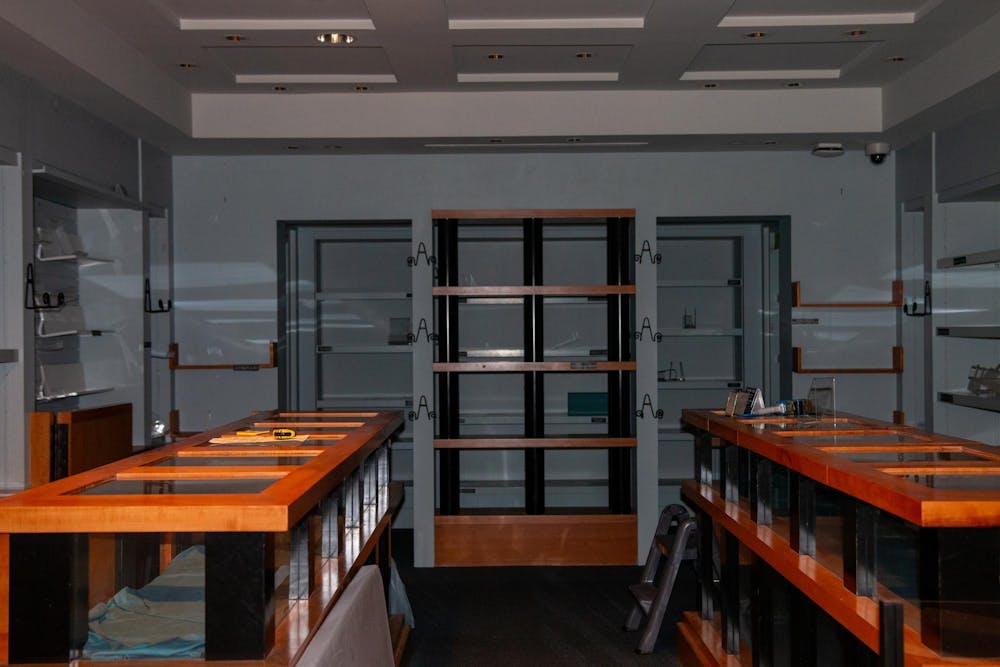
Since its opening in 1993, the Bookshop has served as a cornerstone of the Emory University community. Marking the entrance to the museum, the store offered small trinkets, jewelry and an illustrious inventory of nonfiction and fiction works. The Bookshop sold its final items and closed its doors last month, saddening frequent patrons and past visitors alike.
Studdard emphasized that the store fostered connections between different generations and groups, noting the importance of allowing people to buy books from the museum to take home, facilitating learning beyond the museum's walls.
“The Bookshop gives all generations a place to meet with history and the different books to bridge the gap as well,” Studdard said.
Henry Kim, director of the Carlos Museum, explained that the museum decided to close the Bookshop after the retirement of Mark Burell, the Bookshop’s manager of 32 years.
“It was going to be impossible to find someone who could actually run the Bookshop in the way he managed to do so brilliantly over these years,” Kim said.
Kim said the Carlos Museum plans to convert the Bookshop space into a learning lab, which will house a children’s book library in addition to hosting classes, seminars and teaching activities for students from kindergarten all the way to those enrolled at Emory.
“In that sense, the Bookshop will live on, because the activities that will be based there are very much in line with what the Bookshop was,” Kim said.
Despite promises of continued visitor education and connection, the Emory community grieves the Bookshop’s closure.
For Asmita Lehther (24Ox 26C), the Bookshop was a space of “knowledge and connection” on campus, and one of her first memories of Emory was visiting the store. Lehther believes the Bookshop’s closure diminishes both students’ and visitors’ experience at the museum.
“Every time I walk through it, there's always someone in here who is a little kid, looking through books,” Lehther said. “ I just really loved and enjoyed the space.”
Similarly, Lorraine Rooks Cary, a docent at the Carlos Museum, said the Bookshop helped Emory readers get their hands on niche books and that its closure will have a significant impact on the community.
Cary frequented the Bookshop for about 17 years, recounting how she bought books for her son as he grew up and participated in the museum’s summer reading program. She hopes that despite the closure of the Bookshop, the Emory community will continue to support independent book stores.
Beyond the insightful collection of works and its educational impact, the Bookshop forged community and connection. From first dates to long-term traditions, the space offered much more than retail.
Terry Krugman and Jay Krugman fondly described the many years they spent shopping at the store. Terry, a retired high school Latin teacher, used to bring his students on field trips to the Carlos.
“It's one of the best curated bookstores around, as small as it is — interesting things, stuff you couldn't find anywhere else,” Terry Krugman said.
Jay Krugman said the Bookshop allowed her to find volumes she could not get anywhere else, and she will miss the pleasure of browsing the store’s different collections.
“I'm sure people will miss it after it's gone and regret not using it more.”
After three decades of service to the Emory community, the Bookshop will give way to a new space for engagement. Those who stepped foot in and shopped at the Bookshop will remember it as a place of knowledge, learning and connection on Emory’s campus.