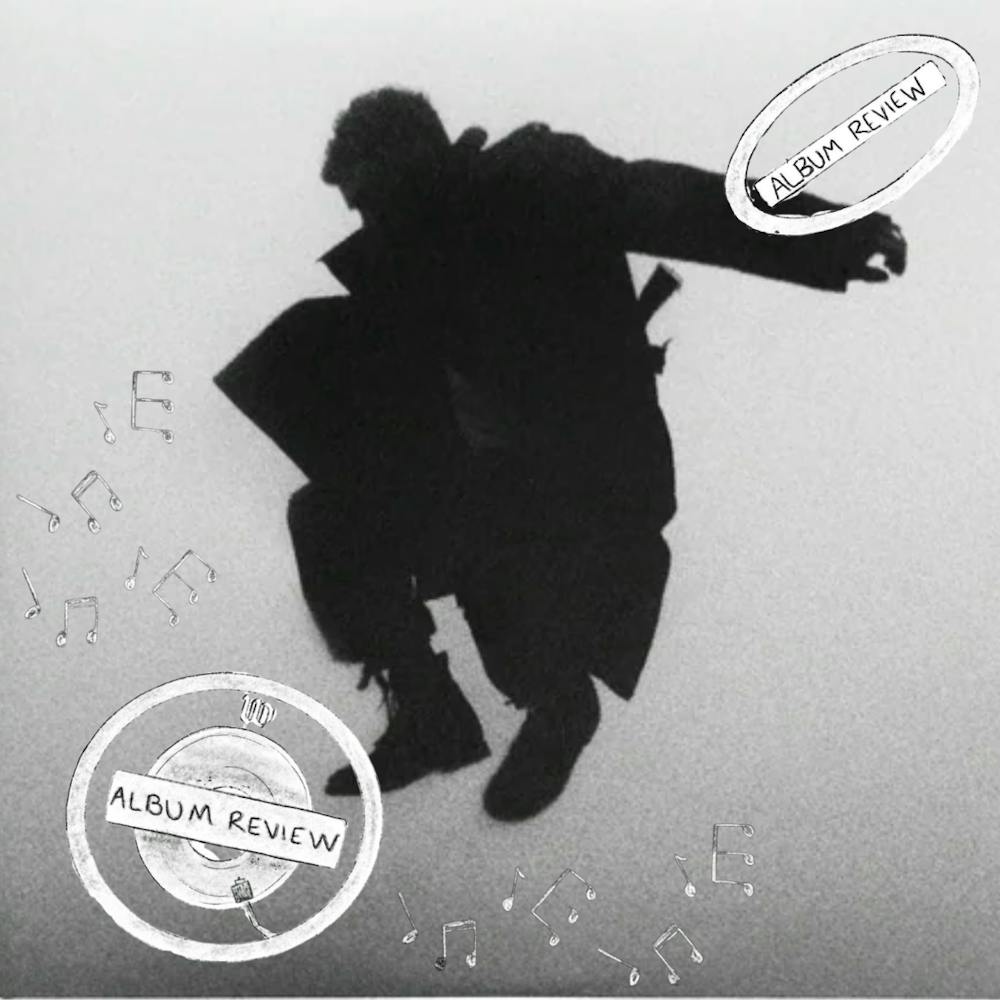
A silhouetted man jumps into the air with no sky behind him and no ground beneath him; his trench coat obscures his body’s form. This is the grainy black-and-white album cover of “Chasing The Chimera,” Del Water Gap’s third album. The album, released on Nov. 7, jumps headfirst into love, regret and the unending pursuit of stability in life.
Samuel Holden Jaffe, the man behind the indie-pop solo project, leaps toward vulnerability with his new record. While the singer’s efforts on the project occasionally fall short, “Chasing The Chimera” focuses more on the attempts to find love, fulfillment and peace rather than final results.
“Marigolds” sets the tone for the record's confessional style. Jaffe struggles with his conflicting feelings, finding comfort in his reunion with an old love while also acknowledging that they are only together because he is seeking shelter from the devastating Los Angeles fires. The singer’s smooth voice and the ethereal piano instrumental glide between an outline of his internal thoughts, recounting conversations with his partner and sharing evocative descriptions of the fires. “And the blood of marigolds met the air / As the city burned / I was in your arms / And in your grandma's prayers,” Jaffe sings. On “Marigolds,” Jaffe masters the distinction between soft and heavy, sweet and somber. While other artists may have succumbed to chaos while describing this tense, fiery moment, Jaffe searches for a catchy yet peaceful melody to parallel his touching words. Jaffe sings, “And I’m afraid to belong to you / But you took me in / As the fires raged,” blending a smooth melody with destructive lyrics. The 32-year-old finds his first taste of serenity in his chaotic world, beautifully capturing a feeling he spends the following 11 tracks trying to replicate.
While “Marigolds” stands out by showcasing Jaffe’s lyrical talent, the album’s songwriting quality declines significantly with “Small Town Joan of Arc.” With an unoriginal tune, the upbeat track describes a girl struggling with mental illness whom Jaffe remains “hopelessly in love” with. Jaffe makes it easy for listeners to picture the cool and jaded girl he pines over, not because his lyricism is outstanding, but by pulling from the familiar archetype of edgy and enigmatic girls that male indie artists idealize. Whether with the lyric “Pulling on a cigarette with her dog in her lap” or noting her antidepressant prescription, Jaffe fails to find unique imagery. And while the song is not a complete disaster, it lacks originality, making it unmemorable and unnecessary.
Jaffe is at his best on “How to Live.” This track touches the heart of the project: finding satisfaction in a life full of letdowns. In each verse, the subdued and simple instrumental suggests a world that will inevitably collapse despite Jaffe’s best efforts. Jaffe describes his self-imposed impossible standards, singing, “I'm so much older than I can take, oh,” crafting a lyric that is simple yet universally relatable. The singer’s lyricism shines the greatest in these quiet moments, rewarding repeat listeners. In the pre-chorus, as the instruments layer and Jaffe’s voice builds in intensity, he sings, “So I count my stones before they're laid / Like the architects of ancient Pompeii,” creating a world in which everything is on the verge of imploding. However, as the chorus continues, despite Jaffe’s ongoing financial struggles and failed relationships, he still finds joy in life. The uplifting instrumental trajectory mirrors Jaffe's mental state — from lethargic to dynamic. Jaffe triumphantly sings, “But there's gold under the rust / Figuring out just how to live.”
Throughout “Chasing The Chimera,” Jaffe vaguely discusses what makes life worth living, an idea that comes into focus on “Eagle in My Nest,” where he reflects on the peace that comes from simple pleasures and familial joy. Describing his mother’s womb, Jaffe sings, “A chest inside a chest / My first platonic lover / The eagle in my nest.” The lullaby delicately balances Jaffe’s joy and pain through uncomplicated and steady production, tying Jaffe’s simplistic declarations together. On “Eagle in My Nest,” Jaffe finally finds the serenity he seeks throughout the album. This track proclaims that although Jaffe may forever chase the impossible, his relationships with loved ones will serve as a guiding light throughout his life.
Through astute observations and relatable lyrics, Jaffe creates a cohesive album despite occasionally cliché imagery and unoriginal resolutions. While Jaffe leaps into the evocative unknown with “Chasing the Chimera,” on tracks like “Small Town Joan of Arc,” Jaffe just barely makes it a couple of inches off the ground. Yet, on other tracks such as “Marigolds” and “How to Live,” Jaffe delicately walks the tightrope between indie-pop earworms and elegant expressions while trying to find his own equilibrium in life.