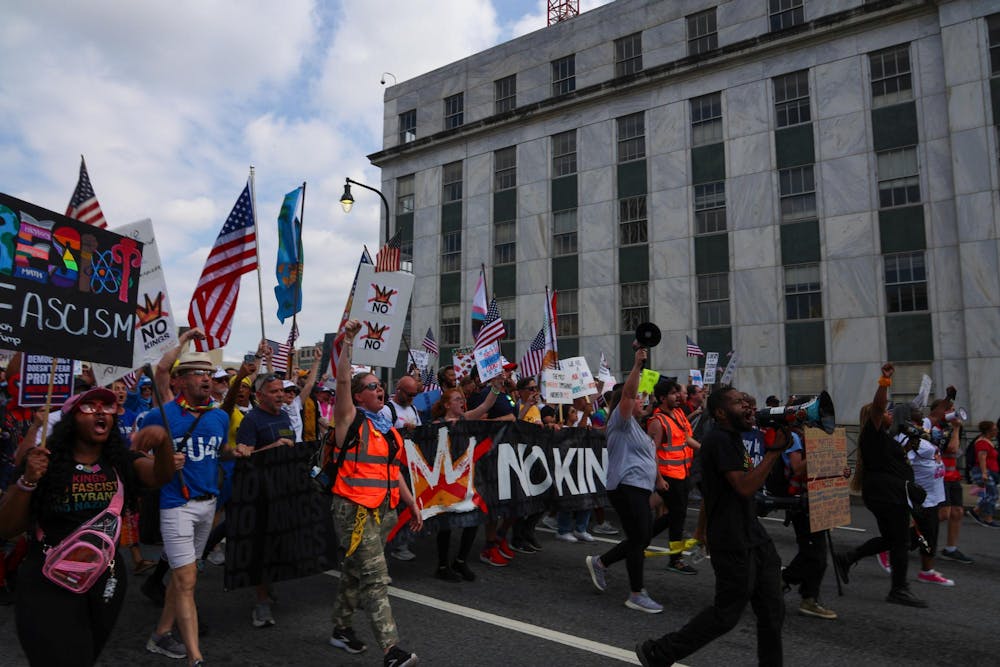
The U.S. Ninth Circuit Court of Appeals will reconsider whether the Oregon National Guard should be deployed to Portland, Ore., according to an Oct. 28 decision. Last week, on Oct. 20, the appeals court overturned U.S. District Court Judge Karin Immergut’s blocks on Oct. 4 and Oct. 5, which previously prevented the deployment of National Guard service members and the Trump administration from sending federal troops to the city.
According to the Trump administration, they are deploying these federal troops to protect government property, particularly the U.S. Immigration and Customs Enforcement (ICE) building in downtown Portland. Approximately 200 National Guard service members are currently awaiting a court ruling on whether they will be deployed.
After district courts issue trial rulings, the U.S. Courts of Appeals review whether those decisions abided by the law. There are 13 appeals courts, most composed of three-judge panels. Most decisions by appeals courts are ultimately final, though a minority of cases are appealed to the U.S. Supreme Court. In voting to reconsider their Oct. 20 overturning, a majority of the Ninth Circuit elected to revisit the case before a larger panel of judges.
This new hearing has not yet been scheduled, but the outcome will determine whether the Trump administration can deploy federal troops into Portland in the coming weeks. For students from Oregon at Emory University, these developments have struck a chord of concern.
Grace Sharman (29C), from Eugene, Ore., about two hours outside of Portland, said the deployment would be an overreaction to anti-ICE protests in the city.
“It’s a little bit uncalled for, having the National Guard deployed because yes, there are protests, but so many of them are nonviolent,” Sharman said.
Sharman said there have been many peaceful protests, such as the Portland protests featuring protesters wearing inflatable frog costumes. By donning these costumes, which aim to convey the city’s identity and strength, these protesters aim to fight back against the narrative of violence being told about the demonstrators in Portland.
“Everyone’s very passionate about what they believe in,” Sharman said. “For the most part, protests are nonviolent, and the people who are violent is a minority.”
While being over 2,600 miles away from home, Sharman emphasized that the issue still feels personal to her.
“I feel a little removed from the issue that I’m not there, but it is also my hometown,” Sharman said. “I’m obviously concerned for the people back home and my friends.”
Katie Gragg (29C), who is from Portland, said she hopes the city will remain peaceful and the citizens will remain resilient, despite federal attempts to quell their voices.
“I really love living in Portland, and I just want to see the city flourish and be a good living place for people,” Gragg said. “I just want it to be a healthy and safe environment.”
National Guard service members are actively deployed in Los Angeles, Memphis, Tenn. and Washington, D.C., implemented as part of an effort by the Trump administration to address various “rampant violence and disorder” in the cities. According to the federal government, the deployments are meant to protect federal buildings and aid local police, with the Trump administration expressing similar concerns about crime in Portland.
Gragg urged her fellow students to stay informed of the situation in Portland, as well as across the United States, and emphasized the importance of voting in local and national elections.
“Voting in general is probably an important thing that everyone can do … and for people who aren’t from Portland, staying informed is important, reading the news,” Gragg said. “If you’re passionate about a cause, advocating for that cause.”
James Gottlieb (25Ox, 27C) is from Oregon and served as the executive assistant to the Oregon Attorney General this past summer. He said his experience working in politics has shown him that Oregon is facing a plethora of other issues, but the protests should not be a primary concern for the federal government.
“There’s nothing for the National Guard to stop,” Gottlieb said. “Oregon’s real problems right now are food insecurity, ICE deportations, those have riled up, and public consumption of drug use.”
Gottlieb praised local law enforcement in Portland for their efforts to rebuild trust in the community even amid the presence of federal troops in the city.
“Portland police is great at communicating with their community,” Gottlieb said. “They’re great at being a reliable presence who’s able to connect with individuals, which is good. People shouldn’t have to be scared of those there to protect them.”
Along with determining whether the federal government can deploy the National Guard into Portland, the upcoming ruling from the Ninth Circuit panel will also carry additional implications.
The decision will impact the way protests in Portland operate as well as influence the decisions to deploy troops to other cities.
“This decision is as relevant as the National Guard deployment in D.C. and in Chicago, like training grounds,” Gottlieb said. “A militarized state is not a good thing. It’s a step towards totalitarianism. It’s a step towards authoritarianism.