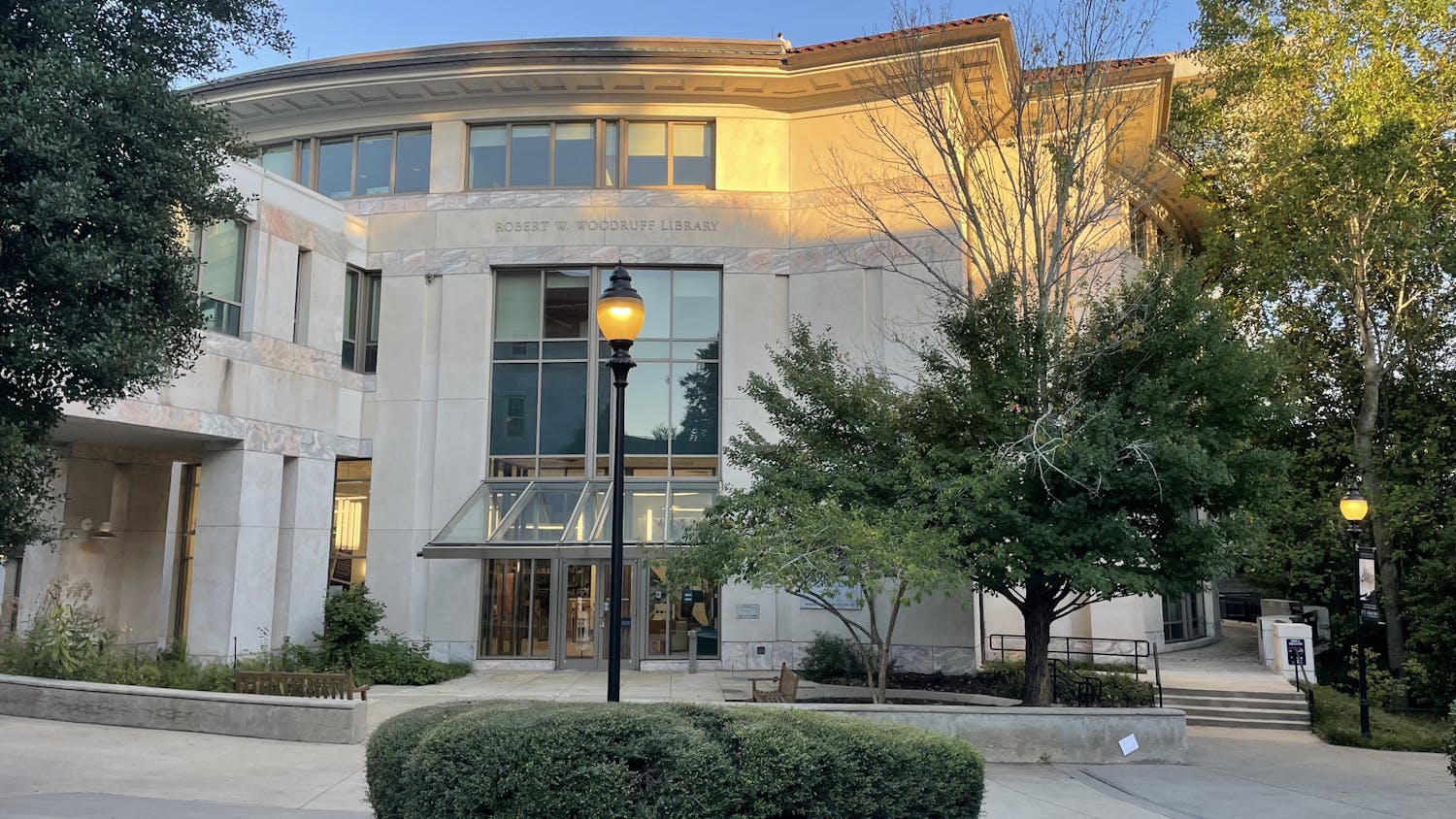
As classrooms fill up with students once again and first-years pile onto the Emory University Quadrangle toasting their glass Coke bottles, another academic year begins. Undergraduate students step into labs for the first time, seniors pull all-nighters to polish their graduate school applications and Ph.D. students launch projects that shape their careers. However, for a period that typically marks a future full of possibility, anxiety and stress clouds optimism like never before.
Ever since U.S. President Donald Trump took office, cuts to research have been obliterating academia. Record-breaking slashes to the budgets of the National Institutes of Health (NIH), the Centers for Disease Control and Prevention (CDC) and many other essential government research agencies have jeopardized the present and future of American science. These cuts have forced graduate programs to accept fewer students. As thousands of students write application essays about contributing to revolutionary medical and technological breakthroughs, the government is sending a clear message: Your future in science is expendable.
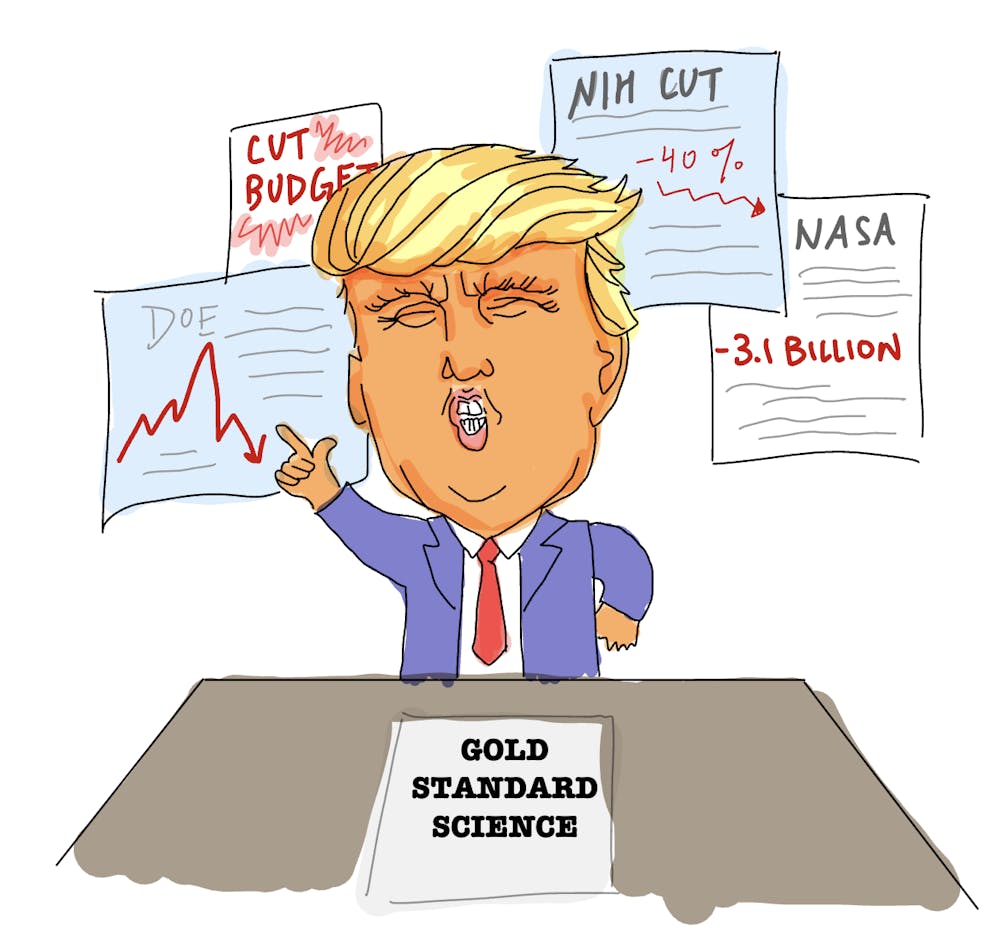
However, at the same time as these cuts, Trump signed an executive order on May 25 for “Gold Standard Science,” demanding more transparency, peer reviews and integrity in response to the American people’s waning trust in science. The hypocrisy is glaring. You cannot demand more and better science while refusing to pay for it. Trump's slashing of research opportunities is a danger to the current and long-term prospects of U.S. advancement, and he must restore funding if he truly wishes to maintain the United States’ position as a global leader in research.
This hypocritical decision to defund federal agencies will halt American innovation. The Trump administration proposed a 47% cut to NASA’s science funding, resulting in potential layoffs for a third of the agency’s employees and threatening more than 40 planetary and earth science projects. The agency uses funding to fuel not only innovation for technology and material science but also free satellite data, which U.S. farmers rely on to improve agricultural practices.
Additionally, Trump proposed a 40% cut for 2026 to the NIH which threatened to disrupt over 2,500 research institutions which the agency supports through grants and infrastructure. Although a U.S. House of Representatives spending committee rejected Trump’s request, their current bill plans on cutting the CDC’s funding by 19%, endangering our nation's health. Even worse, a requested 74% reduction in the Department of Energy (DOE)’s Office of Energy Efficiency and Renewable Energy budget could cripple clean energy initiatives and America’s ability to compete in the global energy market — a direct contradiction to Trump’s pledge to “Make America Affordable and Energy Dominant Again.” Instead of investing in the renewable energy of our future, he will continue to siphon natural resources and pollute the environment. Each of these decisions to forgo research represents a massive strategic investment vacuum for other countries to fill.
The National Science Foundation’s (NSF) Graduate Research Fellowship Program (GRFP) and Research Experience for Undergraduates (REU) programs are also part of this devastating cull. The GRFP has long been regarded as one of the nation’s most prestigious graduate fellowships, providing a fully funded education in the sciences and making the recipient highly competitive for top graduate programs and future career opportunities. Similarly, the REU program has been a lifeline for undergraduates, providing fully funded summer research experiences. The REU is especially crucial to those at institutions such as community colleges, where research opportunities are limited. These programs are foundational to the growth of emerging and early career scientists, and cutting off funding guarantees that America will fall behind in the global race for discovery.
In the past 15 years, the NSF has awarded between 2,000 to over 2,500 GRFP fellowships annually. This year, however, it awarded only 1,000 on schedule, adding 500 more a few months later. The REU program faced even bigger slashes. The NSF historically supported over 200 REU sites every summer. This year, it only approved 52 sites — a 75% reduction — and even terminated 15 active REU grants.
As someone who experienced research firsthand through a government grant, I felt a fervent need to write this article. This summer, I participated in a research fellowship at the University of Missouri, where I spent weeks in a laboratory working on a project that not only refined technical skills but also provided unparalleled mentoring and knowledge about career opportunities. I specifically remember partaking in an eight-week course on the responsible conduct of research — a program that emphasizes the same principles Trump preaches in his “Gold Standard Science.” Week after week, we discussed topics like ethical data collection, the importance of rigorous peer review, predatory journals and research malfeasances. Without this program, I would never have received the mentorship and guidance that I will carry with me in my future. Cutting these programs would allow misconduct to proliferate among the next generation of researchers due to a lack of ethical education.
The losses in these programs go beyond losses of educational resources — they represent lost opportunities for young scientists who are in the most need of assistance. Without the GRFP and REU programs, thousands of students from underprivileged backgrounds will not have the opportunity to enter research, exacerbating inequality in science. Furthermore, this dramatic reduction in funding sends a signal to the entire world that the United States does not value science nor investment in our future.
If the Trump administration demands “Gold Standard Science,” then it must put its money where its mouth is. The students who fill Emory’s halls are the doctors, engineers and innovators of the future, but without meaningful investment, they will never reach their potential. Slashing funding to the NIH, NASA, DOE and NSF will cost the United States money in the long run — it weakens the American people and their propensity to innovate by slowing down scientific breakthroughs. President Trump and Congress must restore federal funding to these research agencies. To do anything less is to watch our global leadership slip away, not because we lack the talent, but because we refuse to pay for a future we demanded.
Contact Cayden Xia at cayden.xia@emory.edu

Cayden Xia (he/him) (26Ox) is from Wellesley, MA, and is majoring in chemistry with a minor in religion. Apart from the Wheel, he designs tests for Emory and Georgia Tech Science Olympiad. Outside of school, Xia likes to watch Tottenham Hotspur (COYS,) speed solving the Rubik's Cube, or binging a TV Show.