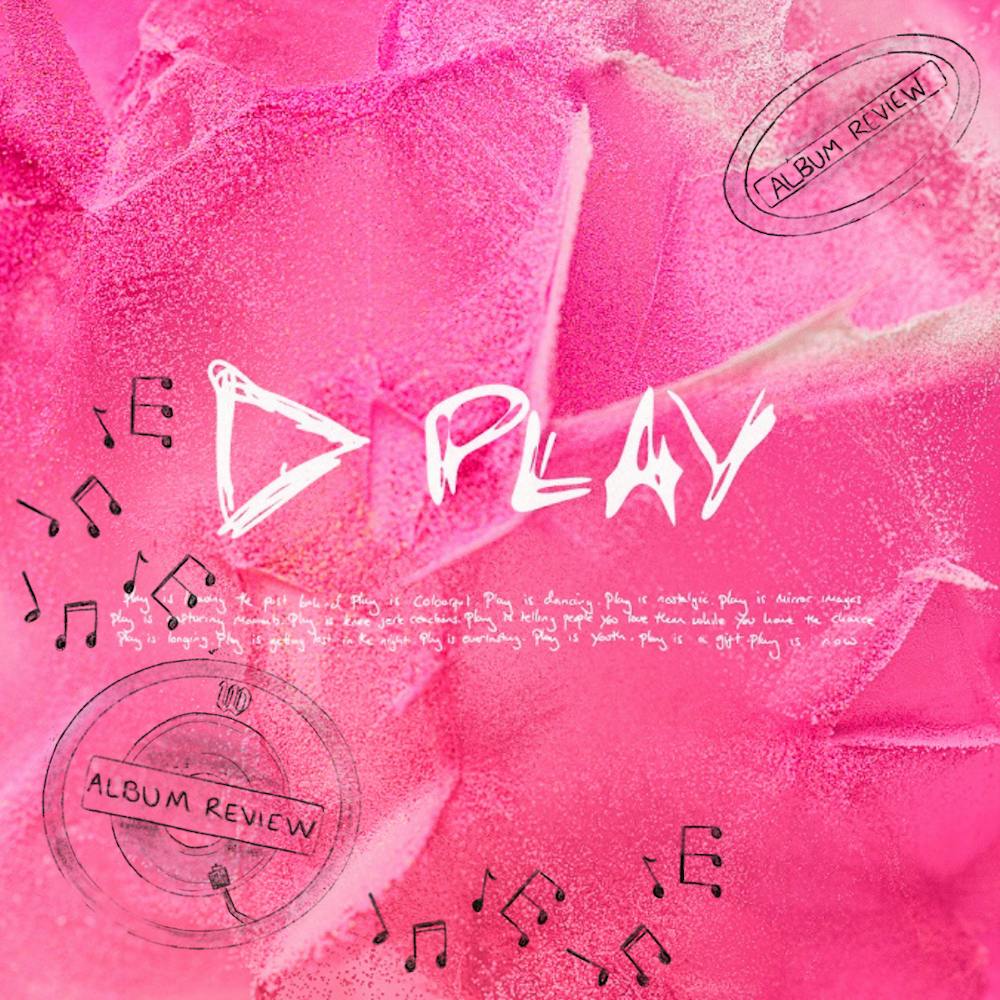
Pause. Rewind. Fast-Forward. Play. Following the success of his “Mathematics” album series, which includes hit projects “Plus” (2011), “Multiply” (2014), “Divide” (2017), “Equals” (2021) and “Subtract” (2023), Grammy-winning singer-songwriter Ed Sheeran transitions to a new theme for his work — the “symbol series” — with the release of his eighth studio album, “Play,” on Sept. 12.
The record begins with the aptly titled “Opening,” a track that encapsulates the album’s three central themes: love, commitment and time. Sheeran details the hardships of life with simple language: “I have loved and lost and feared and prayed,” Sheeran begins, before continuing on a more hopeful note, explaining, “But now the day bursts wild and open.” The British songwriter characterizes the difficult moments in life, death and everything in between. With emotion and a slight crack in his voice, Sheeran leans into his higher vocal range, lending himself to more vulnerable moments as he shares poignant personal anecdotes, like the passing of his brother or his wife’s battle with cancer.
While “Opening” begins with a quaint guitar and Sheeran’s passionate voice, halfway through the song transitions from a slow and melodic tune to the classic fast-paced style present in Sheeran’s past work, which one can find in his hit song “Shape of You” (2017). In this segment of the song, Sheeran describes his career: “Every stadium, I’ve played it, but I would still do it for free,” he sings. And for the people who doubt his career and style, Sheeran has a confident message for them: “Never been cool, but never been a has-been.” The song is cyclical, ending on the same notes and lyrics as in the beginning. However, the conclusion of “Opening” adds a lyric that nods to the rest of the album: “Draw a line, there's future here that's yet to be seen.”
The fourth track and second single, “Old Phone,” undertakes a similar approach to “Opening,” embracing Sheeran’s knack for storytelling. He recounts the tale of discovering his old phone, buried and hidden from sight, and opening it to find a flood of forgotten memories, an experience that reinforces the weight of passing time. Sheeran characterizes this strange feeling as “Nostalgia trying to lead me astray.” Through this phone, Sheeran not only sees the change in people he loves but also in how his life has changed. “Old Phone” closes on a bittersweet note: “Nothing good will come from regretting,” Sheeran sings.
With “In Other Words,” we see Sheeran committing himself to the person he loves. The song tightly weaves simple lyrics together as he sings, “Give me all your flaws and all your quirks / How you braid your hair and tie your shirts.” Here, Sheeran presents his relationship with his wife as a form of undying love, and he demonstrates his commitment to it. In classic Sheeran fashion, the song is slow, tender, thoughtful and sweet. Sheeran does not just wish for the good and beautiful — he wants everything. “In other words, give me all of you,” Sheeran repeats, emphasizing the central message of the song.
But “Play” is not all sunshine and love letters, especially with the eighth track, “A Little More.” Rather than focusing on his current relationship with his wife, as Sheeran does in other tracks of the album, on “A Little More,” Sheeran derides an ex-flame. From the start, we see Sheeran at his most comical. “You think I was born to ruin your life / But you did most of that before I arrived,” Sheeran sings before unpacking past conversations and the excuses his ex gave him.
Sheeran reverts to his rap-like singing style, packing the most punch-per-line possible: “I wish that you would look in the mirror ‘cause, if you did / You'd see the problem is you ‘cause you’re a prick,” Sheeran sings before acknowledging, “And, one day, we'll all be dead / But, between now and then / I never want to see you again.” This track is reminiscent of his fast-paced, quippy track, “Don’t” (2014), which narrates the story of a toxic romance and petty affair.
The twelfth track, “For Always,” returns to the kindhearted nature of “Play.” On this track, Sheeran meditates on fatherly love and expresses his affection for his daughters in a poetic, tear-jerking fashion. Sheeran begins the song with beautiful natural imagery: “Some days, the sun holds you closer than I do / And the wind wraps around you like my arms want to,” creating a peaceful atmosphere. Similar to how the sun will always shine and the wind will always blow, Sheeran recognizes that even when he passes away, he will always be nearby in spirit: “I'm forever, I'm for always,” he repeats.
Sheeran solidifies himself as a permanent figure in his daughters’ lives and is wholeheartedly committed to loving them. “And when winter comes, some birds fly south / I've never been that type and I'm not right now,” Sheeran promises. But the popstar knows time is fleeting, and one day, he will have to leave his daughters behind. Nonetheless, he preaches that, for now, he is not going anywhere: “Your skin, your hair, your world will change / You will trust someone, your heart will break / I will be the constant that remains,” he sings. Sheeran connects his life to the natural world, recognizing that some things are unavoidable — summer will turn to fall and aging is inevitable. By connecting time and nature, Sheeran creates a calming atmosphere around change, encouraging his daughters to be unafraid and rely on the people who love them to get them through hard times.
On “Play,” Sheeran embraces his current phase of life, sharing the trials and tribulations of being a husband and father, brother and friend. He offers insight into grief and accepts the things he cannot change. Sheeran looks toward the past, reminiscing on old nostalgia and pain and toward the future, filled with hope and maturity. He does not shy away from comedy and is fearless in expressing his thoughts and beliefs, all while sticking to his classic form.

Amelia Bush (28C) is double-majoring in English and PPL (philosophy, politics and law). She is from Minneapolis, Minnesota, and enjoys walking around its many lakes. Outside of the Wheel, you can find her reading, scrapbooking, or attempting a New York Times crossword.