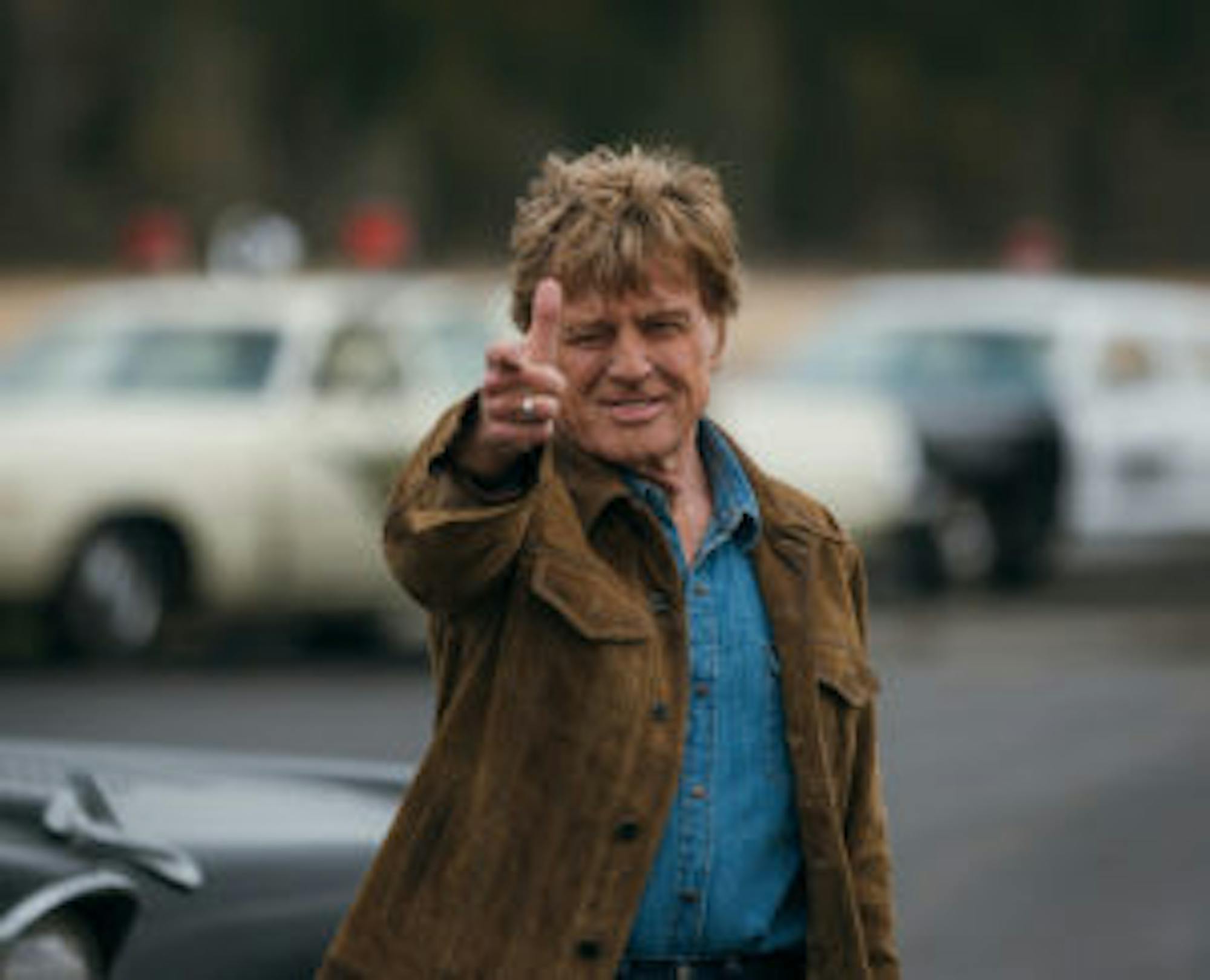
A “feel-good movie” doesn’t seem like the right way to describe “The Old Man and the Gun.” While it does gleam with charm, the film feels less like a relentless attempt to make the audience feel warm and fuzzy as “feel-good” pictures often do, and more like a heartfelt reflection on the life of one old man. That being said, it’s hard to think of another way to describe the film when Robert Redford’s smile makes the audience want to grin back at the screen every time they see it. As the final film in Redford’s career (ranging from his iconic role in “Butch Cassidy and the Sundance Kid” to more recent movies like “Captain America: The Winter Soldier”), it seems fitting that he tackles this thoughtful story about a man who, even in old age, jovially stays true to doing what he loves.
The movie follows Forrest Tucker (Redford), a man in his 70s who has a habit of breaking out of prisons and robbing banks with his two elderly friends, Teddy and Waller (Danny Glover and Tom Waits). He robs bank after bank with a smile on his face and a demeanor so calm and charming that most of the victims and witnesses sympathize with the gentleman. The movie begins late in Tucker’s career, around the time when Dallas detective John Hunt (Casey Affleck) begins investigating a bank robbery carried out by Tucker — while Hunt was standing in line, completely oblivious, when it happened. The rest of the narrative follows Tucker’s and Hunt’s lives as the case continues.
“The Old Man and the Gun” features great actors, but Redford’s outstanding lead performance can’t be undervalued. Tucker and Jewel (Sissy Spacek), a woman who falls in love with Tucker and spends time getting to know him when he’s not robbing banks, play off of each other really well; scenes between them give excellent insights as to how Tucker approaches life. The details in how he reacts to everything, from smiling as he sees himself on the news to giving up gracefully at the end of a police chase, build on the character’s dedication and sense of fulfillment. Few people could pull off Tucker’s charm as well as Redford. In one scene, Tucker robs a bank teller on her first day of work, and he tries to calm her down. The lines here could have easily come off as some speech from a psychotic criminal, but Redford puts heart into his performance to show that Tucker genuinely empathizes with the teller and bears no malice toward anyone.
The film’s soundtrack was surprisingly effective in characterizing Tucker, as well. Recurring audio motifs include desk bells, ticking clocks and police radios that remind the audience of how Tucker sees the world differently from the rest of the characters. During several robbery scenes, or scenes with even less action, there’s an upbeat jazz score that imbues an energy akin to other heist movies, but which also carries an elegance that speaks to the gentlemanly nature of our lovable anti-hero. In the midst of a mostly jazz-based soundtrack, however, there are a few folk and soft-rock style songs that reflect the overall western feel of the film, emphasize Tucker’s old age and free spirit and accentuate some of the movie’s more emotional moments.
Among the tools that set “The Old Man and the Gun” apart from other heist films, its cinematography is one of its strongest. The movie only shows the titular “gun” three times during its 93-minute runtime; it is never shown during the robberies, and it is heavily implied that Tucker has never even fired it. Even more notable, the biggest heist in the film doesn’t even happen on-screen. When a crime is committed, the camera often drifts toward other people going about their normal life, emphasizing how Tucker’s robberies hardly disrupt daily occurrences. Non-criminal scenes with Tucker, though, rarely exclude him from the frame — the movie focuses on his character, not his criminality. The film may be a technical “crime movie,” but it is far more concerned with the lives and spirits of its characters than the crimes they commit.
This unconventional perspective is why “The Old Man and the Gun” is so touching. It’s not about robberies — it’s about finding purpose in life. While Redford’s character has found his purpose (robbing banks) and is satisfied with it, Affleck’s Hunt begins the film in a state of tedium and, seeming, depression as he grows older — the film introduces him on his gloomy 40th birthday. Chasing Tucker gives Hunt a purpose that nicely mirrors Tucker’s zest for life. Ultimately, Hunt’s character seems to develop more than Tucker’s, as Tucker has already found his place while Hunt is only beginning to realize his own.
“The Old Man and the Gun” is an emotionally poignant, yet cleverly soft-spoken film. For a movie on the shorter side, the ending does feel a little (endearingly) long, but it is an impressive final act in Redford’s final role. This is a great film to mark the end of an amazing career.
In 'Old Man,' Redford Goes Out With a Smile, Not a Bang
Courtesy of Eric Zachanowich