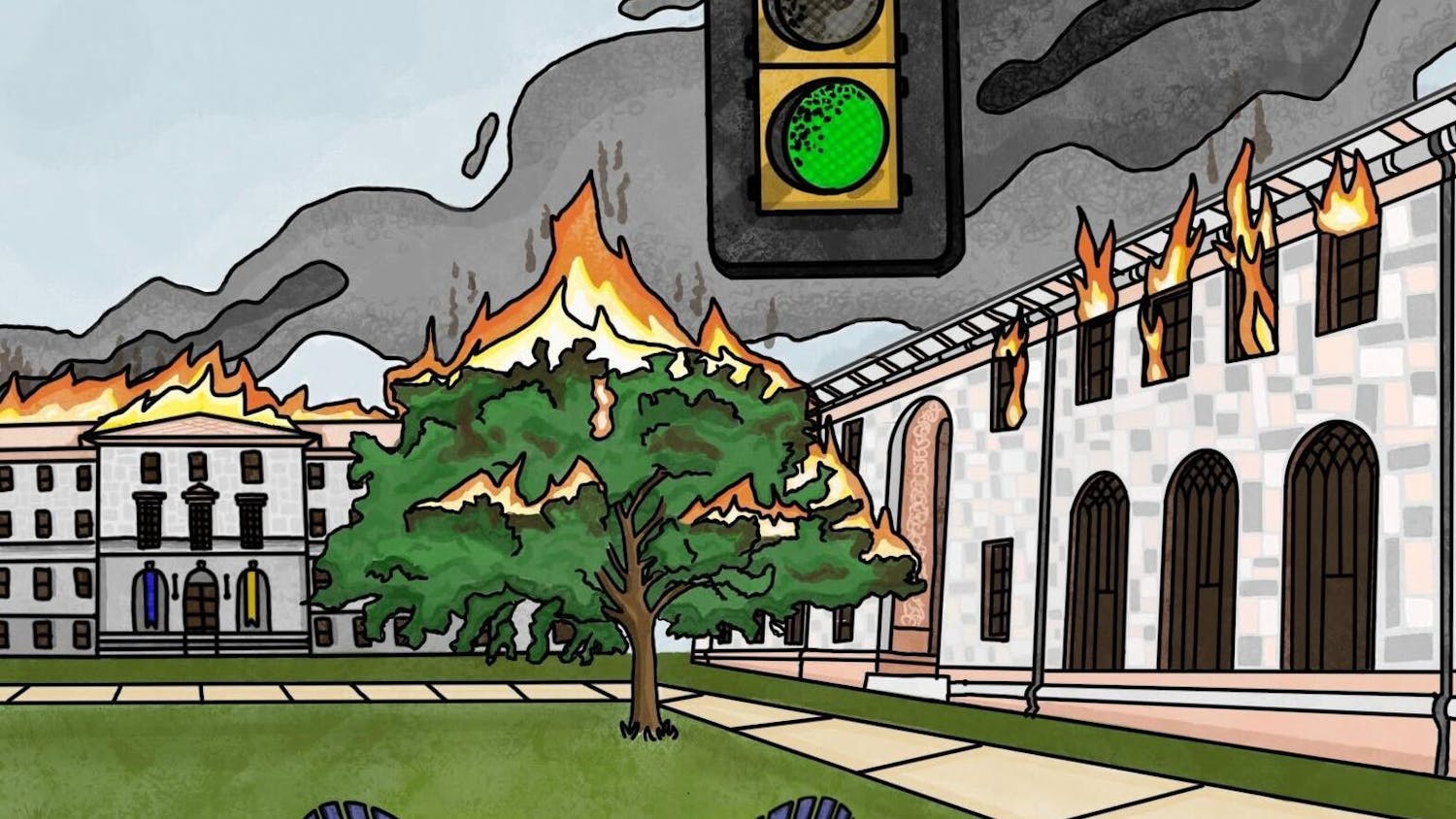
Every other Wednesday, Emory University students find newsstands filled with print editions and a myriad of diverse articles concerning campus, national and worldly news. But, such access is not guaranteed, as evidenced by the direct censorship of the Indiana Daily Student (IDS), the student-run newspaper at Indiana University Bloomington (IU).
On Oct. 14, IU administration terminated Director of Student Media Jim Rodenbush after he refused to censor for “.. nothing but information about homecoming — no other news at all, and particularly no traditional front page news coverage,” according to the publication. First, the University aimed to limit the IDS’s Oct. 16 homecoming print to information guides, a clear assault on the free press. After firing Rodenbush for noncompliance, the University told the student newspaper that it could only publish news coverage online. The University ordered the paper to cease printing new editions just days later.
IU Chancellor David Reingold reinstated the official student newspaper on Oct. 30, writing in a letter that IU administration had not handled this situation “as well as [they] should have.” Regardless of shallow apologies and cowardly backtracking, The Emory Wheel stands with the IDS and condemns the censorship of student publications both here and at all other universities where student press is under attack. In a letter the IDS published, Reingold framed the IU administration's decision around finances, noting that the termination of Rodenbush “coincided” with long-term concerns around student media spending. Reingold maintains that the “decision had nothing to do with editorial content of the IDS,” and that “contrary to what has been posted on social media and published, Indiana University has never attempted to censor editorial content, period. The IDS is, and remains, editorially independent.”
However, the actions of Indiana University and the Media School still constitute censorship. According to the editors of the IDS, “We’ve heard no rational justification for how cutting news distribution specifically on campus will help our finances.” By terminating Rodenbush in an effort to gain control of student journalists and limit coverage to what pleases the University, administration erases student voices while turning the paper into a marketing mechanism rather than a means of expanding students’ free expression. This decision silences the watchdog responsibilities of journalism and denies students the ability to hold their educational governing bodies accountable.
The American government condones the suppression of press freedom through federal funding cuts, executive orders and lawsuits, making it more important than ever to stand up for editorial independence nationwide. Free speech should never be taken for granted. The events at IU and other campuses across the country demonstrate a startling truth: Universities, the very institutions that should foster meaningful discourse and free thought are suppressing student voices and attempting to nullify the purpose of student journalism.
In September 2024, Penn State University removed the college’s independent student newspaper, The Daily Collegian, newsstands and papers from their on-campus locations without notifying the paper’s leadership. Of the 35 missing newsstands, three ran Kamala Harris advertisements and six ran voter registration ads in poster space above the paper. Similarly, on June 7, Purdue University (Ind.) informed its independent newspaper, the Purdue Exponent, that it would no longer help distribute copies or allow its name to be commercially associated with the paper and banned its staff from purchasing parking passes on campus. By stripping the Purdue Exponent of the necessary resources and access, the University turned its back on their independent, student-run press. Nationwide, student papers continue to be under fire and threat of disbandment, losing access to their printing power and their own voices, a microcosm of the ongoing threat to the national press on larger forums.
There is no excuse for censorship. As the federal government continues its assault on free speech and universities bend the knee, it becomes the responsibility of student newspapers to safeguard their own rights. If possible, student newspapers should seek out complete autonomy. The Emory Wheel is both financially and editorially independent from Emory University, meaning, we do not receive funding from nor are we subject to publishing restrictions by the institution. Thus, administration cannot have a hand — even implicitly — in what is published. However, at universities such as IU, dependence on administration-controlled budgets or university-employed advisors increases susceptibility to censorship while allowing censorship issues to be conflated with financial matters.
According to a 2024 study, 3,200 local newspapers have closed their doors since 2005, due to a changing media landscape and a shrinking audience for print journalism. As the decline of local news outlets continues, college publications have taken on a more significant role in localized reporting and responding to community news, keeping people informed in the wake of the slow decline of small-scale journalism. Student journalists bring creativity and on-scene coverage to their communities, utilizing new media forms to reach younger demographics. Protecting student journalism and preserving their independence is crucial to fostering the dialogue necessary to create a well-informed society.
In a world where journalism is constantly under attack, the Wheel encourages all members of our community to support other student journalists, read their work and translate their words into action. Our voices matter and the path to protecting those voices starts with listening to others.
Regardless of a paper’s financial connection to a university, the rights of student journalists remain vital. An independent student press enables investigations of the University, op-eds that criticize Emory policy and evocative cultural commentary. By protecting independent student journalism, we protect ourselves.
The above editorial represents the majority opinion of The Emory Wheel’s Editorial Board. The Editorial Board is composed of Editorial Board Editor Carly Aikens, Shreyal Aithal, Ananya Jain, Mira Krichavsky, Wayne Liang, Pierce McDade, Niki Rajani, Robyn Scott, Noah Stifelman, Ilka Tona, Meiya Weeks and Crystal Zhang.