
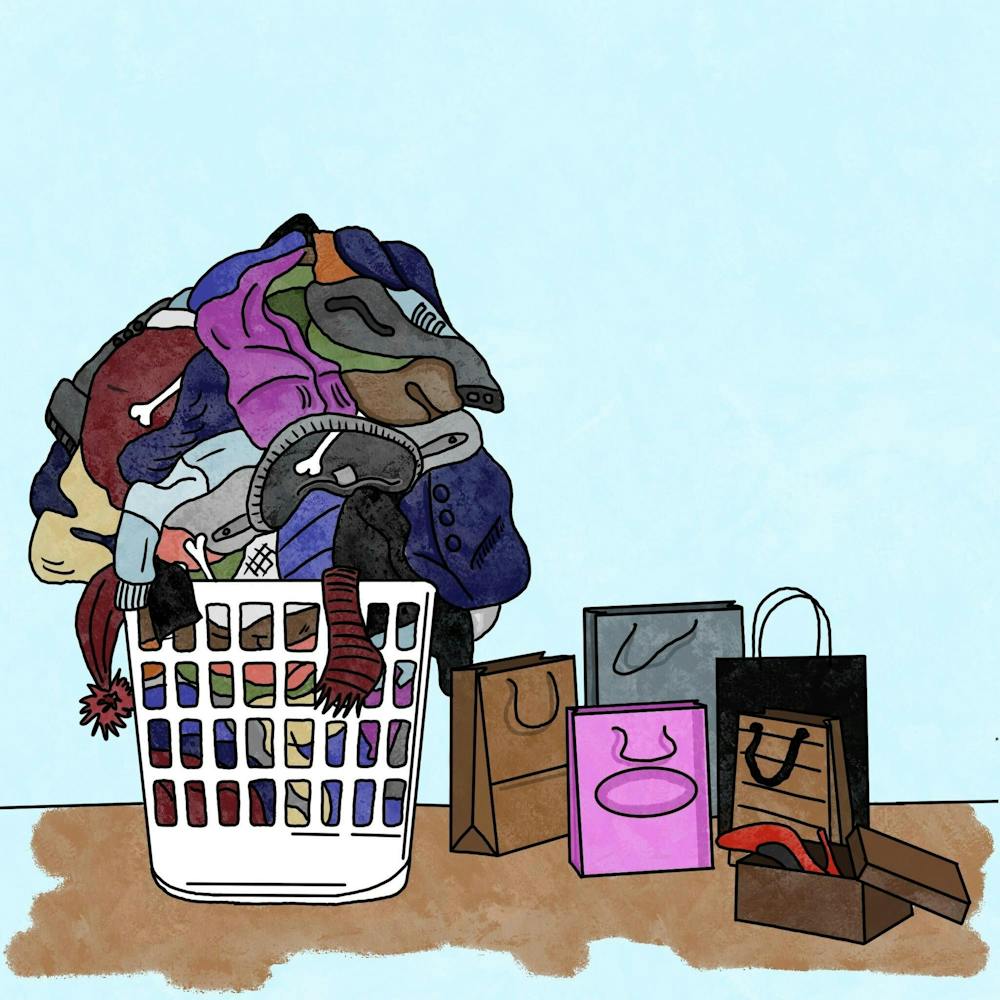
Fast fashion is a $150 billion growing industry that shows no signs of slowing. In the early 2000s, brands such as Zara, Forever 21 and H&M began cutting down on production time from design to racks, revolutionizing the speed of clothing manufacturing. Today, brands like Shein have taken this concept to new levels with social media and one-click shopping expediting the process even more. This revamped industry model allows companies to design, create and sell massive amounts of clothing, but this convenience and speed come at a cost: Discarded clothes end up at landfills at breakneck speeds, exacerbating the global textile waste problem while simultaneously harming foreign economies.
The amount of textile waste worldwide today is an estimated 92 million tons, expected to reach 130 million tonnes by the end of the decade. According to the U.S. Government Accountability Office, fast fashion is one of the top five contributors to this waste. Throwing away clothes sends them straight to the landfill, but there is an easy, more sustainable solution for consumers: donating. Many donation services offer an ecologically conscious way to extend the lives of used clothes, help someone in need and keep waste out of landfills. To match the cultural push towards more sustainable alternatives, even the clothing companies themselves have started adopting some sort of fabric recycling programs. Most notably, H&M’s garment collecting and recycling program claims to reuse or recycle used clothes in exchange for an in-store discount. While these programs sound ideal, a series of investigations has begun to peel back the mask surrounding the donation process, discovering that donated clothes are actually harming foreign economies and the environment.
The standard clothing donation process is fairly simple but differs slightly depending on the program's goals. The most common type of donation strategy is roadside bins. These bins are usually funded by nonprofit organizations that routinely collect the clothes and bring them back to a larger space for sorting based on wear, season and size. From there, clothes are distributed to re-enter the community they came from.
However, problems arise at the very beginning of the donation process when for-profit organizations capitalize on the good intentions of donors to turn a profit in sending clothes overseas. Many of these roadside bins use the same design scheme as the classic Goodwill collection containers in an attempt to signal to the donor that their clothes will be part of charity. Some for-profit organizations, such as PlanetAid and Narciso Recycling Company, copy the same Goodwill bin design, posing as charity to increase donations and profit margins without the legalities of being a non-profit organization. Although not illegal, these for-profit charities often ship donations overseas, harming the trust between consumers and donation organizations and undermining the purpose of charity since these shipments usually end up causing more harm than good.
Overseas clothes are shipped in bulk to developing nations such as Ghana, Bangladesh and Kenya, where they often wreak havoc on local economies. Unaffiliated scalpers usually gather these clothes and resell them for cheap prices in street markets. This is a massive problem for places like Zambia, one of the most common destinations for secondhand clothing overseas, where donated clothing scalpers have completely usurped the local textile and clothing markets. This excess of cheap clothes has destroyed local job opportunities for smaller-scale, sustainable textiles manufacturing. These jobs could have otherwise gone to the over 60% of Zambian citizens below the poverty line, but instead, the absence of the textile industry drastically worsens the country’s already-faltering economy.
The other common fate for overseas exports is textile mills. These processing plants advertise that clothes will be reverted back to their raw materials, where the thread can be reused. For most modern clothes made with highly blended and synthetic threads, however, this process becomes almost impossible, resulting in these clothes ending up in landfills. There is no point for these supposed recycling methods to exist if they simply end up shifting the waste back into landfills anyway.
In addition to many donation companies failing to adhere to their mission statements, large retail giants also fail to follow through on their promises. Shein, H&M and many other companies have fallen short of their sustainability goals. These companies often make unfounded claims about the sustainability of their clothes, carbon emissions or recycling practices. This crosses the line from just careful omission of information into purposeful and malicious greenwashing, representing a lack of concern for the environment and the communities receiving the shipments.
Despite these negative realities, donation is still a viable way to get rid of unwanted clothes while helping someone in need. Dress for Success and Atlanta Mission are both organizations that are transparent and uncompromising about their internal processes. Both companies limit their clothing intake to prevent excess that would otherwise be sent overseas, making sure that in-house volunteers sort the clothes they collect and redistribute them locally, saving many donated clothes from the landfills. The rise in big retailer donation programs, though, shows how retailers are responding to a shift in consumer priorities towards sustainability as a bid to curry favor. In this new era in consumerism, we must also accept a new era of consumer responsibility. It is up to us to remain vigilant in our trust and hold companies accountable to fulfilling their promises in order to make sure that they have the same impact we think they do.
The next time you feel like doing a good deed, first consider donating to local charities to produce positive change. That way, you can be assured that your donations are put to good use in your own community. If you do end up deciding to go with an unfamiliar donation organization, make sure to do some research on their methods prior to donating. Ask questions like whether they redistribute clothes locally, limit intake or sort their donations in house. Knowing where your clothes go ensures you have the final say on the positive impact they could have, so make sure to conduct your due diligence before sending them away because you might not know if where they end up could cause more harm than good.
Contact Lex Dubaquie-Sanchez at aleksi.dubaquie-sanchez@emory.edu


