When I was younger, my grandparents would take me to museums every time I visited them in New York City. At the Metropolitan Museum of Art, my grandmother would impart her seemingly infinite knowledge of Impressionist painters and I would marvel at all the grand marble statues lining the halls. No matter how many times I went, I was always blown away by the intricate, masterful artwork.
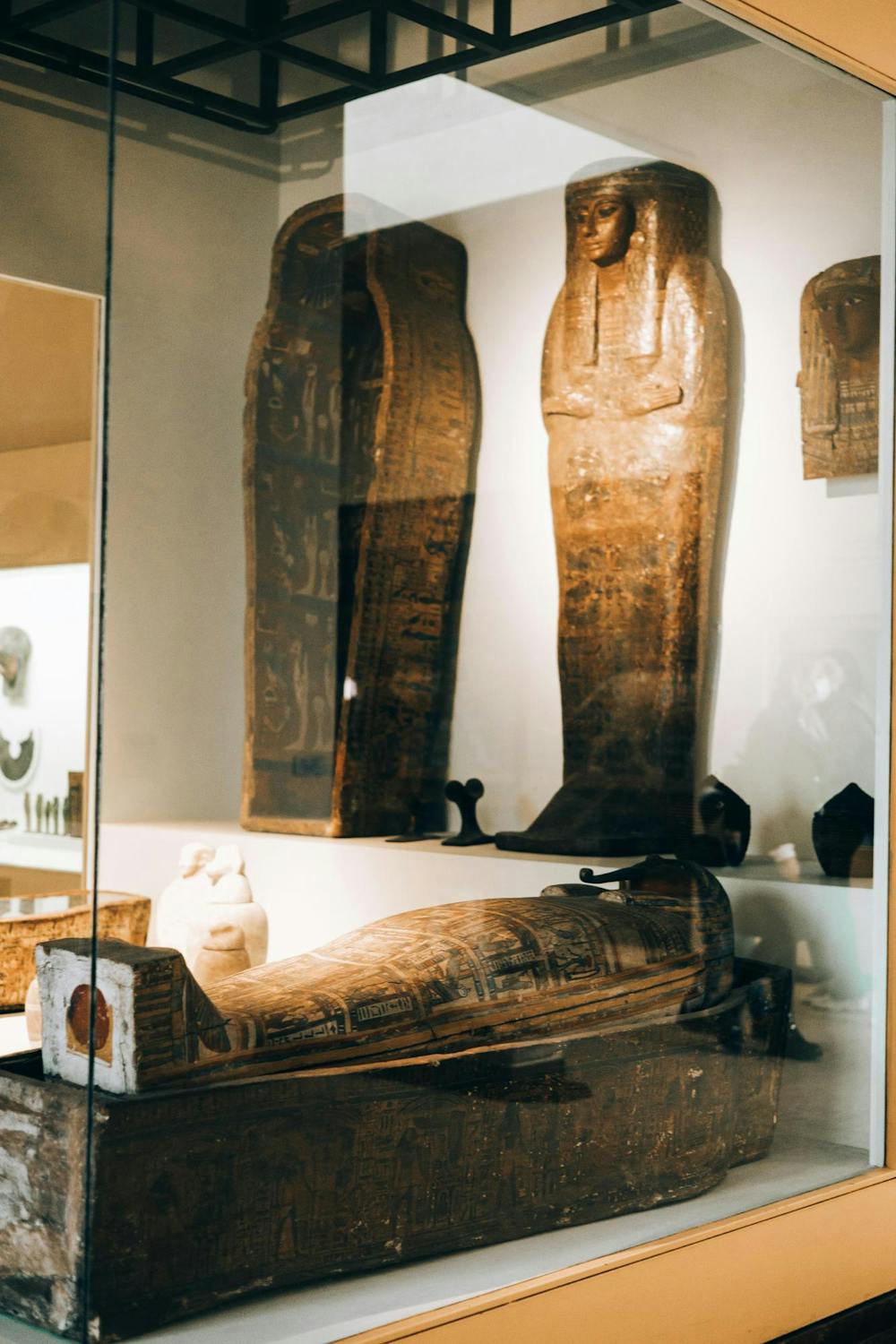
Even at a young age, one thing didn’t quite sit right with me: the mummies on display. The Met has thirteen Egyptian mummies in its collection, which reside in a long hall. Entering this room made me shudder as a child. Visitors essentially walk through an artificial gravesite, mere feet away from the bodies of people who had passed thousands of years ago. And instead of taking a moment to consider the gravity of being surrounded by corpses, thousands of visitors every day calmly stream by, gawking at the deceased.
While at Emory University, I have learned about overlooked illegal art trafficking, the growing pressure on museums to acknowledge and return looted artifacts and have interrogated the ethics of museums. In recent years, governments have ramped up their efforts to seize and return more and more looted art. While it is exceedingly important to continue conversations regarding the ownership and return of stolen art, one crucial facet of museum collections endures without appropriate examination: The human remains that should not be on display. In fact, there should be greater efforts among museums to repatriate human remains to their countries of origin, just like looted cultural artifacts, because the exhibition of dead bodies shatters the dignity of the dead. Emory’s own Michael C. Carlos Museum should not and does not escape this same scrutiny. The Carlos should not display human remains, regardless of their attraction value, and by doing so, Emory is actively contributing to this harmful trend in museum ethics.
This discourse is not new: the display of mummies at the Carlos has generated controversy in the past, and the display and collection of human remains at many American museums is a disturbing problem. In 1990, Congress passed the Native American Graves Protection and Repatriation Act, which mandates the “return of Native American human remains, funerary objects, sacred objects, and objects of cultural patrimony,” yet the numbers of artifacts and human remains that have not been made available for repatriation over 30 years later are staggering.
As of January 2025 the remains of 90,831 Native Americans in the collections of American institutions have not been made available for repatriation. Unclear laws regarding tribal recognition and limited financial resources have slowed the progress of completing this monumental task. Considering these museums have relegated Native communities’ cultural heritage to storage in their collections, museums should push the federal government to make more repatriation funds available. For many Native communities, their ancestors and gravesites contain spiritual meanings that are harmed when museums lock the bodies up in their facilities. Even if the process is slow, these ancestors must be returned because of the cultural and spiritual significance they hold, rather than languishing in museum collections for an untold number of years.
According to a ProPublica report, the Carlos Museum has made 100% of its Native American remains — amounting to two individuals’ remains — available for return, but a glaring issue remains among the museum’s expansive collection: the display of several mummies in one tall, imposing hall, including one body removed from its coffin.
One afternoon when I was sitting on the Quadrangle, a prospective student tour passed by the museum and the guide boasted about all the mummies the Carlos Museum has — nearly as many at the Met. For kids, prospective students and general museum enthusiasts, the mummies may be seen as a flashy selling point that draws them in. But these mummies were people originally buried over 6,000 miles away in Egyptian tombs where their descendants intended them to rest for eternity. These people did not agree to become part of a visual spectacle thousands of years after their deaths.
The urgent need to respect these sacred connections outweighs any scientific benefits museums may claim for resisting repatriations. I understand that mummies in the United States give conservators and professors unparalleled access to scientific studies of mummification. Here at Emory, conservators worked to repair damage to the Carlos Museum’s Egyptian Old Kingdom mummy, originally purchased by a theology professor in 1921. Students, faculty and Emory University Hospital doctors all contributed to the restoration, adding to a large body of knowledge on how the Egyptians innovated preservation techniques. Museums like the Met also acknowledge the power of collecting human remains for the purpose of conservation, research and teaching, while also being sensitive to the matter — the Met even offers a map for visitors who wish to avoid viewing dead bodies. Despite these benefits and protective measures, the very act of unearthing human remains and propping them up in an exhibition space turns someone’s body into a spectacle and removes its humanity.
Human remains should not be part of modern museum collections, and cultural institutions should ramp up repatriation efforts. Museum-goers must also recognize the magnitude of viewing foreign objects in places they were originally not meant to be, many of which were plundered, smuggled and sold from their place of origin. By normalizing the display of corpses, museum-goers harm the cultural heritage of other communities and overlook the cruelties of exploiting the deceased for artistic notoriety.
Contact Madeline Shapiro at madeline.shapiro@emory.edu

Madeline Shapiro (she/her) (26C) is from Stamford, Conn., majoring in creative writing and classic civilizations. She manages the Wheel’s opinion section. Outside of the Wheel, Shapiro can be found playing low-stakes games of soccer, spending time outdoors and watching as many Premier League games as possible.