
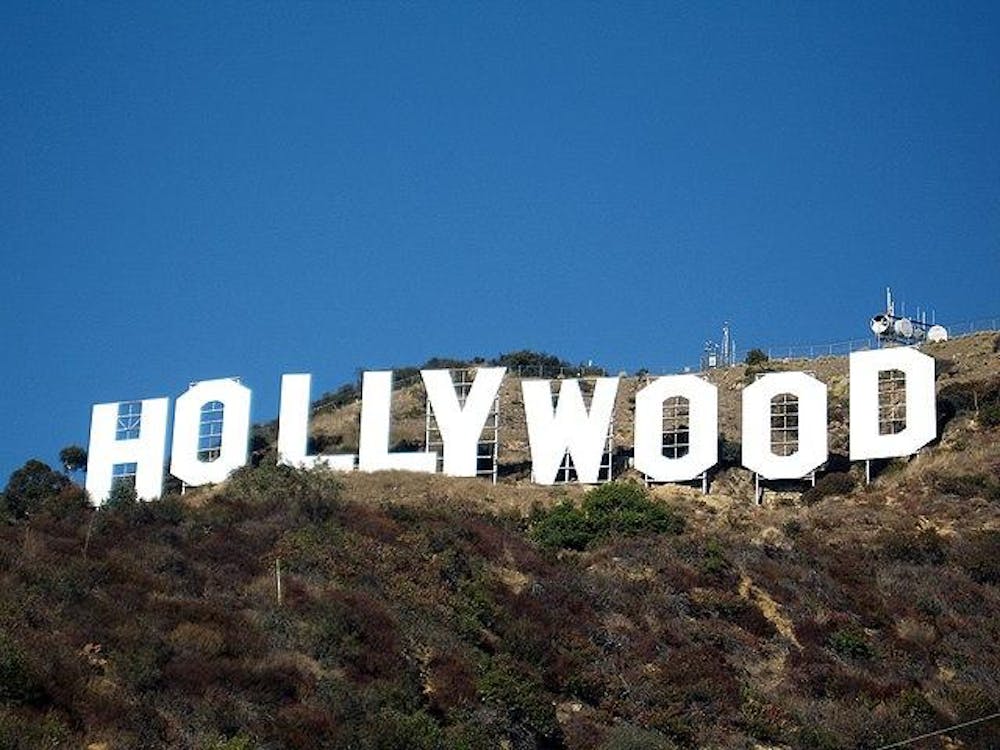
Two hours northwest of my hometown of Portland, Ore., is the small city of Astoria, Ore. With a population of just under 10,000, tourists could easily overlook the 10-square-mile stretch of land. Despite its small size and isolation, Astoria has become one of Oregon’s most iconic towns thanks to Hollywood.
In 1985, filmmaker Richard Donner released the cult classic “The Goonies” (1985). Set and filmed in Astoria, the movie turned the town into a symbol of ’80s adventure. Fans still travel to visit the various filming locations in Astoria and participate in the annual “Goonies Day” celebrations. While Astoria may be best known for its connection to this iconic story, the city’s history extends beyond its notable place in film, including ties to the Ku Klux Klan (KKK). This overshadowing of Astoria’s history by “The Goonies” is reflective of a larger trend in Hollywood where movies ignore the darker history of their filming locations with captivating fictional storylines. To combat this erasure, Hollywood must support the local communities where it films by investing in historical education and conservation efforts that help preserve the place’s true history.
KKK members moved to Astoria in 1921, and by the following year, Klan-backed candidates won seats in the local government. The Klan accumulated this power by capitalizing on local frustrations with lawlessness in the city, particularly with liquor violations, and by presenting itself as a moral reform at a time when the mayor and sheriff were accused of aiding bootleggers. That same year, a catastrophic fire destroyed over 200 local businesses and displaced thousands of residents. After the fire, the relationship between the townspeople and the Klan only grew more complex. While many people living in Astoria were initially receptive to the Klan, its failure to deliver on promises of reform and unity created a sense of betrayal that led to growing opposition and resistance, contributing to the dissolution of the KKK’s power in Astoria.
The Klan’s involvement in Astoria is a story of devastation and resilience for the city — a sobering part of Astoria’s past. Whenever I tell people about Astoria’s history, I am usually met with shock. To me, it seems the history of small towns is often overlooked in our history classes. Watching “The Goonies” tends to reinforce the idea of small-town charm, without any mention of its past. The Astoria of film almost does n0t feel like a real place with a real history, but rather something that exists only within the confines of your screen. This feeling risks promoting a false singular narrative of Astoria that overlooks its complicated history.
Astoria is not alone in this respect. Director Nick Cassavetes shot the iconic romance film “The Notebook” (2004) at several historic locations in South Carolina. Many of the most famous scenes in “The Notebook” were also sites where enslaved people lived and labored. One of them, Boone Hall Plantation and Gardens, served as the exterior of the female lead Allie’s (Rachel McAdams) summer home, and is one of the U.S.’s oldest plantations. Perhaps the film's most memorable image — a white house that Noah (Ryan Gosling), the male lead, builds for Allie — is located on Martins Point Plantation. When I watch the movie, I find myself getting lost in the beauty of the cinematography and invested in the plot, but behind this surface lies a more difficult and painful truth that Hollywood and viewers must recognize.
Likewise, Steven Spielberg filmed “Jurassic Park” (1993) on sites with complicated pasts. For instance, Mānāwaiopuna Falls in the Hanapepe Valley on Kauai, Hawaii, is the backdrop for the scene where the helicopter travels to the fictional Isla Nublar for the first time. While visually impressive, the valley's history is equally impactful. It was the site of the 1924 Hanapepe massacre, where conflict among Filipino strike organizers led to a violent clash between police officers and strikers that killed 16 Filipino laborers and four police officers. It is striking how a place that has brought joy to millions can also be the site of such violence, and this example highlights just how influential a film can be in shaping historical narratives.
Hollywood, intentionally or not, profits from this escapism. “The Goonies,” “The Notebook” and “Jurassic Park” made millions at the box office. The industry thrives on an audience's ability to lose themselves in realities different from their own. Therefore, it makes sense why Hollywood is interested in separating a location’s past from the story being told, but Hollywood cannot continue to leave the past unacknowledged.
I am not suggesting that we stop watching movies filmed in places with complex or painful histories. While I do find the selection of some filming locations distasteful, I do not think the fictional narratives of movies necessarily need to acknowledge the history of where they are shot. Instead, Hollywood should collaborate and uplift the communities of their filming locations. Film productions already boost local economies. In some instances, production introduces over a million dollars a day into local economies. However, studios can do more to financially back local history preservation efforts at these sites to ensure complicated histories of film backdrops are not lost to history.
Hollywood also needs to support specific historical institutions in the places it profits from. For example, the Heritage Museum in Astoria currently features an exhibit titled “Blocked Out: Race and Place in the Making of Modern Astoria.” It would be powerful for companies in Hollywood to spotlight exhibits like these so that fans drawn to Astoria for “The Goonies” can understand the city’s complicated history. If studios like Warner Bros. Discovery, which distributed “The Goonies,” also got publicly involved in maintaining Astoria’s history, it would send a message to the public about the importance of these communities to Hollywood beyond as a source of profit. While Hollywood does a great job telling fictional stories, it must support real ones too.
Contact Katie Gragg at katie.gragg@emory.edu


