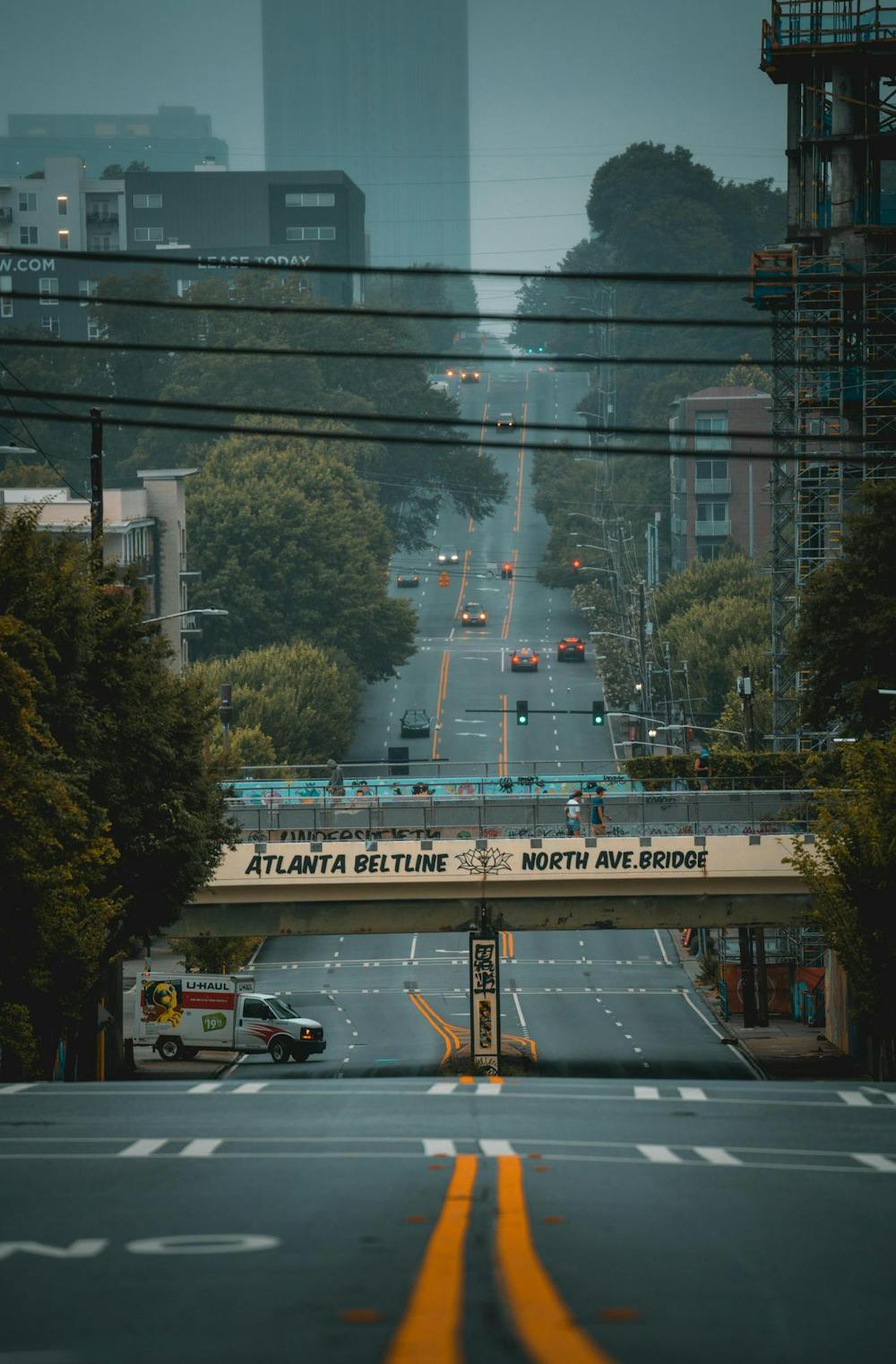
As Atlantans head to the polls this critical election season, the Atlanta Beltline’s promise of a “stronger, more inclusive Atlanta” hangs in the balance. That optimistic vision centers on using public investment to create affordable housing, prevent displacement and connect historically marginalized neighborhoods to economic and social opportunity. Yet, nearly two decades into the Beltline project, that vision remains unrealized. With key issues regarding zoning and public transit on the ballot, this election will determine whether Atlanta enforces equity as a condition of growth or continues to reward the illusion of progress that benefits only polished Beltline spaces.
The Beltline began with an ambitious, people-first vision. Created in 1999 by Georgia Institute of Technology student Ryan Gravel and formalized in 2005, the project promised to transform 22 miles of unused rail into trails, transit and green space. The plan also outlined a goal of creating or preserving 5,600 units of affordable housing by 2030. As of 2024, officials report having reached 74% of that goal within the Beltline Tax Allocation District, suggesting they remain on track to meet or even exceed this target. But, progress on paper does not always translate to immediate relief. Some projects are behind schedule, and for residents already displaced or struggling with rising rents in neighborhoods like Old Fourth Ward, that relief may come too late. The very trail that was supposed to unite the city has instead created a luxury corridor that is increasingly inaccessible to the working-class Atlantans it was meant to uplift.
The problem is not development itself. It is for whom the development is for, for whom it displaces and for whom it enriches. In West End, Peoplestown and Pittsburgh — neighborhoods historically home to Black working-class families — I have seen new condominiums with starting prices in the mid-$500,000s sit next to homes with boarded windows. The Beltline's Legacy Resident Retention Program has provided tax relief to just 70 homeowners out of an estimated 2,500 eligible participants, and renters in these neighborhoods remain effectively unprotected from rent hikes. Programs like Housing Choice vouchers do exist, but waitlists are as long as 24,000 people. Landlord opt-outs and weak legal safeguards often leave renters facing displacement pressures without real recourse. In Georgia, landlords’ participation in this program is entirely optional, making it even harder for low-income tenants to find stable housing, even as the city touts milestones like the 569 affordable units built in 2024. This pattern reveals a failure by city leaders to prioritize protections for vulnerable residents and a failure to treat community engagement as a serious part of the development process, instead of just a procedural formality.
The Beltline is often celebrated as a national model for urban redevelopment, repurposing a historic rail corridor into a multi-use pathway that includes parks and transit, connecting 45 neighborhoods around downtown Atlanta. For those of us living and studying in the city, it also exposes how equity is diluted when it is not prioritized. With the Beltline in our backyard, Emory University students observe this firsthand. As a Community Building and Social Change (CBSC) Fellow at Emory, I have spent the past year working in Atlanta’s housing and development landscape. Last year, our cohort’s final project revealed the ongoing realities of housing precarity, environmental injustice and systemic neglect across South Atlanta. We listened to residents who are fighting to stay in the neighborhoods their families built, despite rising property taxes, absentee landlords and creeping gentrification. These conversations reminded us that Emory students cannot afford to stay insulated from the city around us. We must recognize our role, ask harder questions of our city officials and engage directly with the neighborhoods that shape Atlanta.
The November mayoral and city council president races will determine who controls zoning, housing and public transit policy for the next four years. Incumbent Atlanta Mayor Andre Dickens’ platform has pointed to recent developments like the newly opened 250-unit Skyline Apartments along Hank Aaron Drive as evidence of progress. These units are designated for residents earning 60% or less of the area’s median income, and the Invest Atlanta board of directors cast the units’ opening as a milestone in affordable development. Despite these developments, Dickens’ administration has repeatedly failed to ensure that growth does not come at the expense of legacy Black neighborhoods.
City Council presidential candidate Rohit Malhotra (08C, 09C), on the other hand, has outlined a platform focused on community-level planning, increased investment in MARTA and stricter limits on tax abatements, which the city of Atlanta uses to incentivize luxury development at the expense of public revenue that could support affordable housing and essential services. Malhotra also supports expanding affordable housing supply and prioritizing long-time residents in development decisions. Voters should not rely on rhetoric about equity and instead must judge candidates by their specific commitments to affordable housing, transit access and policies that protect the communities most impacted by Beltline expansion.
This election is also a moment of reckoning for Emory. As a university with an $11.4 billion endowment that sits less than two miles from many of the Beltline’s most contested developments, Emory has long benefited from institutional insulation that separates campus life from city realities. The University cannot afford to remain an academic enclave. It must engage structurally and publicly with the civic landscape it occupies. Peer institutions have already done so: Drexel University (Pa.) has integrated neighborhood partnerships into undergraduate curricula through its Lindy Center for Civic Engagement, and the University of Pittsburgh’s Community Engagement Centers offer long-term, place-based collaborations with local neighborhoods. Emory should follow suit by embedding civic literacy and participatory democracy into its core educational commitments.
In order to build a more just and inclusive Atlanta, we as students must vote, research the candidates and show up on Election Day, using tools like BallotReady or CivicAtlanta to understand who is on the ballot and where they stand on housing, zoning and equity. We must also push Emory to institutionalize student involvement in Atlanta through paid fellowships, opportunities to engage with public forums and curriculum reform. The Beltline has already reshaped Atlanta’s skyline. It is up to voters and institutions like Emory to decide whether it will also reshape the city’s future with justice at its core.
Contact Eliana Liporace at eliana.liporace@emory.edu

Eliana Liporace (she/her/hers) (27C) is majoring in Neuroscience and Behavioral Biology and minoring in Community Building and Social Change. She is from Englewood Cliffs, New Jersey and is an avid matcha sipper and firm believer in the Oxford comma. When she’s not buried in research papers, she's curating the perfect Letterboxd list, adding to the nichest of Spotify playlists, and spending exuberant amounts of money on caffeine to fuel the pre-med grind. You can find her crafting her spiciest hot take in the School of Public Health.