
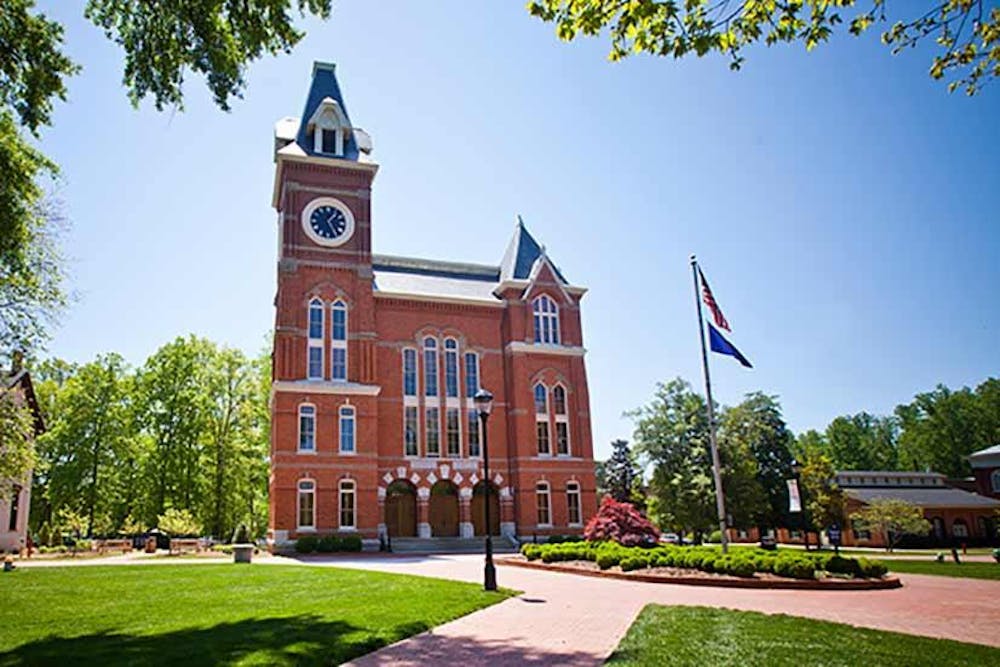
When I opened my admissions decision letter from Emory University, I had no idea why there were two campuses listed instead of one. Instead of screaming out with joy, I scrunched my eyebrows: I did not remember applying to this mysterious Oxford College. Upon checking, I found a blurb on Emory’s webpage explaining that Oxford is a two-year liberal arts college that emphasizes small class sizes and robust student leadership opportunities. I immediately fell in love with the idea of this campus and submitted my deposit the very next day. Like many incoming Oxford students, though, it did not take long for that joy to drain away.
As I searched the internet for current student perspectives, punch after punch of negative stories knocked me off my feet. Discussion platforms such as Reddit cautioned me that Oxford was isolated from bars and restaurants, making its social culture nearly nonexistent. Statistics revealed that an alarming percentage of Oxford’s Class of 2024 was graduating early to flee to Atlanta, with others transferring universities. The nail in my coffin was the first article I ever read from The Emory Wheel. Aimee Zhao (24Ox, 26C) trembled with worry in her op-ed, noting the lack of resources that the English department provided at Oxford — an expression of distress that, as an incoming humanities major, made me spiral. I remember dropping that article and breaking into tears, angry that I had damned myself to such a desolate future at Oxford.
When I arrived on campus as a first year, I did not give Oxford a chance. I hopped on the Atlanta shuttle every weekend, spending more time with my friends who go to the Atlanta campus than with my own roommate back at Oxford. I was envious of the endless guest lectures in Atlanta, the hundreds of research and involvement opportunities spread across its campus and easy access to a vibrant metropolis of excursions. My Oxford friends began to joke that the only time they saw me on campus was when I was waiting for the Atlanta shuttle, and I laughed with them.
In my second semester, Oxford’s lack of upper-level German classes allowed me to cross register and commute to Atlanta twice a week. I pounced on the opportunity, excited to embrace the Atlanta student I thought I was meant to be. I loved participating in classes that I knew Oxford would never offer, shaking hands with the Swiss Consulate General in Goodrich C. White Hall and quickly strolling down the Atlanta Beltline before classes. I was exhilarated by the constant whirlwind of energy in Atlanta, and it took months for me to realize I was missing my Oxford home.
My friends continued to joke that I was perpetually on the Atlanta shuttle, but I was not laughing anymore. More people from Oxford began telling me in passing that they were not seeing me around much. By the time that Oxford’s own dean saw me in the library and repeated the sentiment I heard too many times, I could already feel cracks splitting through my heart. I was struggling to keep up with Atlanta’s fast pace, further overwhelmed by the thousands of unknown faces that raced past me. Suddenly, my exhilaration devolved into anxiety. I began to dread my commutes and spent my hour on the shuttle wallowing about being away from my home campus. The backhanded comments I heard about Oxford students from my friends in Atlanta had grown too loud for me to ignore. I scrolled through texts from my friends telling each other where they were sitting in Lil’s, our dining hall, while I sat alone in the Dobbs Common Table. Each day eroded at the bright Atlanta experience I dreamt of and left a far colder reality in its place.
When I finally began looking at Oxford with the pride it deserved, I was surprised to find how much I had overlooked. A professor has invited me over for dinner on multiple occasions. Many of Oxford’s deans, who know me by name, often stop me to chat. During my freshman year, I designed and carried out my own research project, which was only possible because the faculty member who advised it knew me as more than a face in his class. I have learned that Oxford will truly support any endeavor that a student is passionate about, but that is only possible when a student asks. I firmly believe that it is easier to get swept up in various organizations and research in Atlanta even if you expect those activities to find you. Yet, when you are driven and seek out resources yourself, you will find the greater reward at Oxford. This reality was the problem that plagued me during the beginning of my time here and continues to infect too many other Oxford students — the potential to thrive at Oxford is there, but students cannot expect opportunities to simply fall into their laps.
I do not regret my decision to cross register, but I missed out on so much at Oxford by yearning to be somewhere I was not. We are just a few weeks into the semester, and I am already hearing many members of Oxford’s newest class express their desperation to graduate early. I worry that they are going to spoil their valuable time at this unique campus. I have heard discussions about the Wheel article criticizing humanities at Oxford far too often in conversation. This has made me realize that we, as Oxford students, bear a role in spreading positive stories about our campus — we create so much of the stigma our campus endures. I agree that Oxford has issues worth fixing, but these problems cannot be the only aspect of our campus that our student body portrays. I do not want future students to perpetuate the poisonous belief that Oxford is a lifeless, half-baked version of the Atlanta campus.
Normalizing love for Oxford is something that must come from our whole community, and I look especially to our newest members. To the Oxford Class of 2027: I implore you to look beyond the negativity and embrace Oxford for the amazing opportunity it truly is. I hate that it took time in Atlanta for me to understand what a truly special place Oxford is, but this is not the path everyone must take. What Oxford students seek is already here, but we must be ready to accept it. I just hope that, when our student body finally begins to appreciate Oxford, their love is not also shadowed by regret.
Contact Josselyn St. Clair at jmstcla@emory.edu
Josselyn St. Clair (26Ox, she/her) is a native of Eugene, Oregon, and is double majoring in International Relations and German on the pre-law track. Outside of the Wheel, she is an avid fiction writer and language learner. She hopes that she will be fluent in three or more languages by the time that she graduates from Emory.


