
1. ROLE MODEL
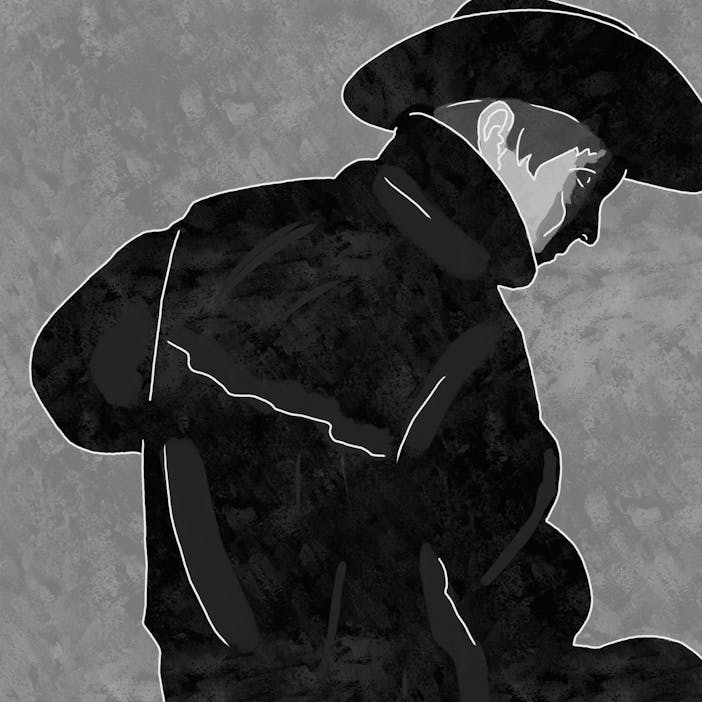
It has been nine long years since a man won the best new artist award at the Grammys, yet in 2026, the man who could have snagged the coveted title failed to gather any nominations. Tucker Pillsbury, also known as ROLE MODEL, took the internet by storm with the release of his hit song “Sally, When The Wine Runs Out” (2025). While the now-famous bridge will forever echo throughout shopping malls and teenage girls' cars, it is ROLE MODEL’s individual performances that truly stands out. At each festival or arena, ROLE MODEL invited a new “Sally” to the stage. Including a laundry list of celebrities, from Natalie Portman to Bowen Yang, ROLE MODEL created a pop-culture moment, one that showcased his own growing stardom and appeal while including his fans.
ROLE MODEL, however, is anything but a one-hit wonder. While “Sally” may get all the love on the charts, the singer’s other tracks accomplish a similar goal: They tell a story.
On “The Dinner” (2024), he strums his guitar while longing for home; on “Slipfast” (2024), he matches his words to his tune and on “Old Recliners” (2025), he chases a distant memory. Throughout his work, ROLE MODEL does the seemingly impossible — he captures the intangible, holding fleeting memories in his solid chord progressions and wistful lyricism. With “Something, Somehow, Someday” (2024), ROLE MODEL finds himself in a quieter tone, one with a subtle sincerity that carries his storytelling. Using simplistic yet heartfelt comparisons to showcase love, on “Something, Somehow, Someday,” ROLE MODEL evokes peace in the listener.
ROLE MODEL’s music feels comfortable, capturing midwestern nostalgia and a longing for a life the listener may have never lived. ROLE MODEL stands out because of his ability to unite crowds with his catchy chorus on “Sally, When the Wine Runs Out” and touch hearts on “Something, Somehow, Someday.” With a characteristic style and cohesion reminiscent of Olivia Rodrigo’s “SOUR” (2021), which won her best new artist in 2022, ROLE MODEL’s chart-topping year makes him worthy of at least a nomination for the same award — and his charming voice and personable lyrics mark ROLE MODEL as one to watch.
2. ‘That’s So True’ (2024) by Gracie Abrams
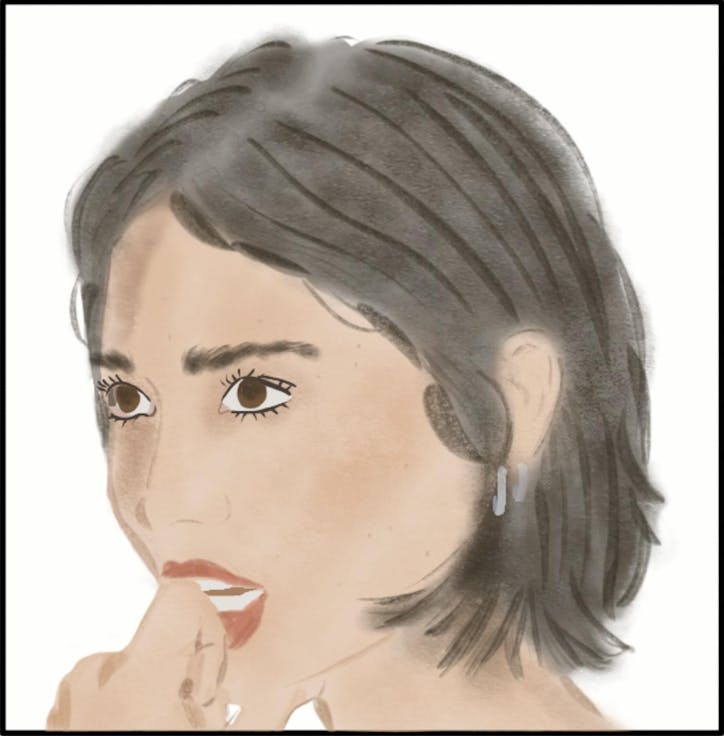
Gracie Abrams loves to chase a feeling: Be it hopeless yearning, somber sweetness or sour acceptance, she constantly strives for more: more passion, more freedom, more poetry. For Abrams, each line comes out in a rushed breath, as if she's fighting against the clock, ensuring each brazen idea, thought or feeling bursts from her gut into the air, finding peace only once it's shared. And on her 2024 song “That’s So True” (2024), Abrams' aggressive zeal shines, a risk that pays off as it awarded Abrams her first No. 1 hit on Billboard’s Streaming Songs chart. While popularity alone cannot, and should not, carry a song to a Grammy nomination, the genius of Abrams’ track does not lie in its cultural traction. On “That’s So True,” Abrams uses her signature, fast-paced style and pairs it with an intense guitar and layered vocals to create a passion-filled, inescapable atmosphere. “That’s So True” represents everything her music stands for: “Smiling through it all, yeah, that's my life,” she sings.
From endless “Ooh’s” to passive-aggressive quips, Abrams’ lyrical talents synergize with her emotional voice. She strives for a feeling so poignant she struggles to describe it, instead asking, “Don't you know the vibe? Don't you know the feeling?”
Abrams’ raw, scratchy voice matches the honesty she bears to herself and the listener. “But I think I like her, she's so fun / Wait, I think I hate her, I'm not that evolved, I'm sorry,” Abrams sings, aware of her flaws and accepting them. As the chorus builds to the bridge, Abrams exposes the white lies she tells herself: “Said that I was fine, said it from my coffin.” It is rare to find an artist so okay with reveling in their own denial, and even rarer to find one who can contrast their bitterness with a bubbly sound without sacrificing tonal cohesion.
A whirlwind of emotion and an accumulation of Abrams lyrical talent, “That’s So True” is fun and quirky, yet profound and relatable. As one of last year’s defining tracks, “That’s So True” is more than worthy of a Grammy nomination.
3. ‘So Close to What’ (2025) by Tate McRae
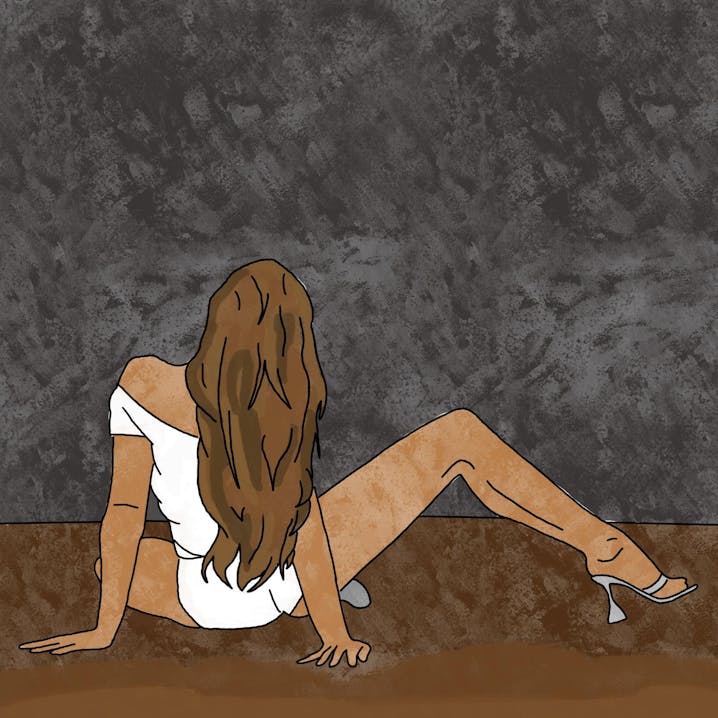
While Tate McRae received her first Grammy nomination for her song “Just Keep Watching” (2025), written for “F1: The Movie” (2025), McRae received no nominations for her most recent album, “So Close To What” (2025), despite being significantly more compelling than her nominated single.
On “So Close To What,” McRae reduced her sonic range but expanded her thematic range tenfold. The album contains danceable singles “It’s ok I’m ok” (2024), “2 hands” (2024) and “Sports car” (2025), but still incorporates sentimental tracks like “Nostalgia” (2025) and “Greenlight” (2025).
With “Purple Lace Bra” (2025), McRae fights hypersexualization, expressing her frustration with being viewed only as a sex symbol. Beginning with a darker tune and a gripping cello melody, the track abruptly switches to a hyper, digitalized McRae. As McRae questions, “Did my purple lace bra catch your attention? Uh,” the warm tone and removal of the previously drawn-out cello instantly drawing the listener in. With a chorus similar to Addison Rae’s “Diet Pepsi” (2025), “Purple Lace Bra” does not see McRae at her most original, but rather at her most provocative.
Quippier tracks “It’s ok, I’m ok” and “No I’m not in love” (2025) showcase a nonchalant, yet sassy side to McRae. “2 hands” captures a sweeter aspect of McRae’s romantic love, showcasing her desire for physical intimacy over thoughtless compliments and gifts. Like most tracks on the record, the song explodes during the chorus and includes a dance break later on. McRae dazzled audiences with a spellbinding VMA performance of “Sports Car,” and with the chorus in a spoken whisper, McRae seduces the listener.
Throughout the record, McRae utilizes production wisely, knowing when to pull back to let her voice shine and when to go all in. Sonically and thematically, the record is cohesive, popular and fun. After years in the music industry, McRae has finally found her stride — it is a shame the Grammys are still two steps behind.
4. ‘Virgin’ (2025) by Lorde
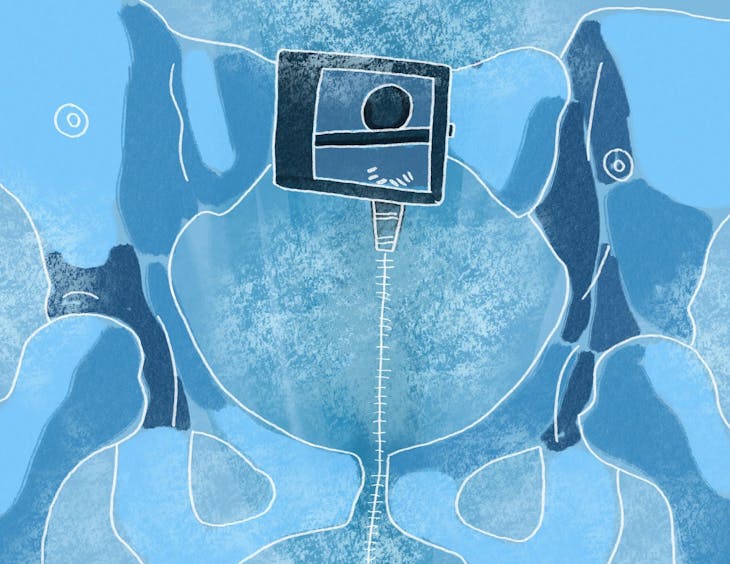
Nothing grasps an audience quite like sexuality — something singer-songwriter Lorde knows well, seeing as her most recent album’s cover art features an X-ray scan of a pelvis, complete with an IUD, zipper and belt buckle. But in “Virgin” (2025), Lorde’s sensual themes extend beyond just the cover and title, encompassing the project without limiting it. Despite its abounding depth, the record was notably missing from this year's Grammy nominations.
While the voting members did not award “Virgin” any nominations — let alone the highly sought-after album of the year award — the record remains a striking project worthy of exploration and praise. It is uncomfortable and captivating, never shying away from the dark essentials of human interaction.
On tracks like “Clearblue” (2025), Lorde embraces the harsher aspects of romantic love and womanhood. With a hollow voice and no instruments, Lorde mimics the numbness she feels, singing, “After the ecstasy, testing for pregnancy, praying in MP3.” But with tracks like “Broken Glass” (2025), Lorde becomes more introspective, reflecting on her sense of self, fighting against the woman she sees in the mirror. If Michelangelo’s marble “David” (1504) exemplifies the ideal man, Lorde’s “David” (2025) illustrates the dangers of over-idealizing a man. With intense pensiveness, Lorde describes her past sexual experiences in graphic detail, inviting the listener into the innermost workings of her mind and history. “If I'd had virginity, I would have given that too,” Lorde sings, baring her soul both to the world and the man who used her. Touching on topics of youth and power, “David” is heartbreaking in her repeated plea for closure as she questions, to no one in particular, “Am I ever gon' love again?”
“Virgin” encapsulates the human experience as messy yet manageable, unpredictable yet unlimited. As Lorde repeats in “What Was That” (2025), “Now we wake from a dream, well, baby, what was that?” Amidst Lorde’s grungy voice and against her words’ crushing weight, Lorde builds a record that thrives in its bitter rawness. Although the album lacks the pop power of Sabrina Carpenter’s “Man’s Best Friend” (2025) or Lady Gaga’s “MAYHEM” (2025), “Virgin” features a profound, cohesive depth otherwise lacking in the 2026 nominations cycle.

Amelia Bush (28C) is double-majoring in English and PPL (philosophy, politics and law). She is from Minneapolis, Minnesota, and enjoys walking around its many lakes. Outside of the Wheel, you can find her reading, scrapbooking, or attempting a New York Times crossword.


