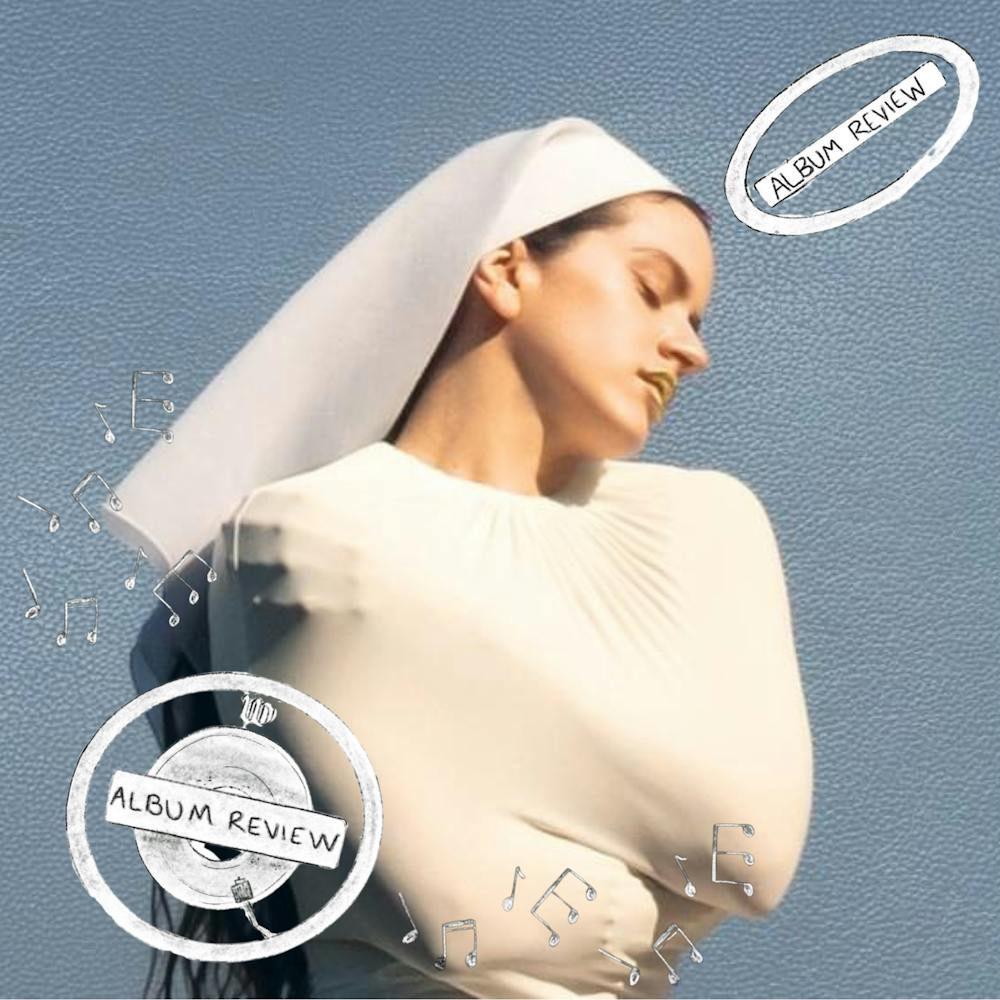
Like no other art form, music connects people across space and time. A language with limitless emotional power, music can uplift and depress, break hearts and stitch them back together. For Spanish artist Rosalía Vila Tobella, music remains amorphous and entirely malleable. On her latest album, “Lux,” released on Nov. 7, the singer bends music to her will. This trailblazing collection of songs blends classical and modern, spirituality and sin. Rosalía’s “Lux” ascends genres in what is an irresistible, career-defining masterpiece.
“Lux” begins with “Sexo, Violencia y Llantas,” a mournful ballad that sets the stage for an album laden with religious imagery. Entering to sing after crescendoing waves of piano, Rosalía contemplates the relationship between God, the mortal world and the people that inhabit it. “En el primero, sexo, violencia y llantas / Deportes de sangre, monedas en gargantas,” Rosalía sings, contrasting human sin with divine purity. A gorgeous sonic experience that incorporates undulating waves of strings, piano and vocals, “Sexo, Violencia y Llantas” serves as the perfect thesis for the rest of the record, taking a nuanced and cynical view of the human world.
Throughout “Lux,” Rosalía employs 13 languages, and on “Reliquia,” she cements her status as a world citizen. The track begins elegantly as Rosalía’s voice floats atop piano and violins fit for a religious sermon. Reverent toward the diverse cultures around her, Rosalía describes the pieces of herself she lost while traveling: “Yo que perdí mis manos en Jerez y mis ojos en Roma.” However, she assures her listeners that she will save and give her heart to them. Reminiscent of the contrast between soft-spoken lyrics and arresting instrumentals in her song “HENTAI” (2022), “Reliquia” concludes with an instrumental shift that heightens the song’s intensity and demonstrates a deeply affecting dynamism that Rosalía continues to achieve throughout the album.
On both “Divinize” and “Dios Es Un Stalker,” Rosalía delves into one of the main themes of “Lux:” obsession. On the dark and brooding “Divinize,” which features both Catalan, the official language of Andorra, and English, Rosalía pleads to a lover she hopes will worship her, an ironic juxtaposition between her yearning and the expectation of her lover’s all-consuming attention. On the provocative and light-hearted “Dios Es Un Stalker,” the singer plays a maniacal God, ensnaring her worshippers and judging them in the process. “No me gusta hacer intervención divina / Pero a mi baby hoy lo voy a stalkear / Pa’ poderle enamorar,” Rosalía sings, transforming herself into a figure hungry for attention who is more than willing to trap her prey. Both tracks paint a harsh portrait of fame’s drawbacks and idolatry while delivering arresting clashes of emotion.
“Porcelana” continues to explore darkness, employing a flamenco-inspired beat and discordant instrumentals as Rosalía describes herself as a delicate, breakable being: “Mi piel es fina, de porcelana / Rota en la esquina.” Her hushed, low voice and featured artist Dougie F’sc threatening incantations create a dangerous intrigue. As Rosalía begins exploring her own self-transformation midway through the track, a hollow clanking rings in the background, making the song feel all-consuming and immensely gratifying. On “Porcelana,” with a rush of languages and threatening lyrics, Rosalía intentionally confuses her listeners, thrusting them into a sonic unknown as incomprehensible words float into their ears.
But throughout “Lux,” Rosalía still finds light moments. On “La Perla,” she chides her ex-lover: “La decepción local, rompecorazones nacional / Un terrorista emocional, el mayor desastre mundial,” mocking him as a playboy whose swaggering demeanor cannot hide his capability for destruction. The track’s instrumentals — rhythmic, beachy and irresistibly catchy — beckon listeners to bob their heads and sway. Slinging insults to her ex-lover without forgoing sonic intricacy and pristine vocals, Rosalía crafts a summery song that maintains the record’s ingenuity.
As Rosalía switches her focus from mortal to divine, from worldly to otherworldly, “La Yugular” stands out for its poeticism. Throughout “La Yugular,” she masterfully builds and releases tension. With rising and falling drums, Rosalía confronts her mortality. “¿Cuántas peleas recuerdan / Las líneas de mis manos? / ¿Cuántas historias caben / Metidas en 21 gramos?” Rosalía sings, ironically referencing a debunked study on the weight of a human soul to emphasize that it is impossible to encapsulate the human experience with a simple measurement.
“Magnolias” concludes “Lux” with a heart-wrenching finality. Stepping outside herself to view her own death, Rosalía sets the scene of her own funeral, watching over her body as it burns: “Sobre mi ataúd KTMs quemando rueda / Lágrimas y goma se derriten en la madera.” Rosalía asks her fans to throw flowers at her, a striking image underscoring both the beautiful human connection that stems from art and an artist’s perpetual struggle with legacy. At the end of the song, Rosalía describes how gasoline consumes her coffin as she returns to dust while her music lives on.
“Lux” finds success in the gaps it occupies, residing somewhere between classical and modern, pop and experimental, heavenly and hellish. Rosalía covers as many genres as she does languages, but the record’s varying identities come together with strength and sincerity. She flicks her wrist, blesses her listeners with a slick religious reference, a snappy instrumental transition and heaven-sent vocal delivery, then charges forward toward her next divine moment of musicality. Employing the most complex and compelling lyricism of her career, Rosalía honors the world’s cultures and beauty while looking long and hard at the imperfect humans who inhabit it. On “Lux,” Rosalía harnesses music as its own religion — one that is entirely universal.

Hunter Buchheit (he/him) (28B) is majoring in U.S. History and Business. He loves writing about music, Emory events and politics, and in his free time enjoys playing piano, running and spending hours crafting the perfect Spotify playlist.